Loading...
This comparison has not been analyzed yet.
One-time AI generation (~1 minute). Scores and timeline are already available below.
Hu Jintao vs William Massey
William Massey leads by 3.3 pts · 2 figures compared
…

Hu Jintao
Politician · Modern
52.0Total
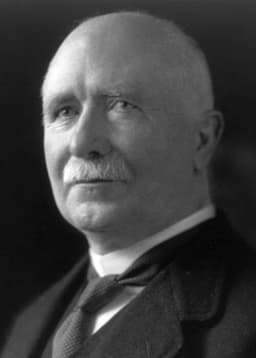
William Massey
Politician · Modern
55.3Total
Basic Information
Born
1942
1856
Died
—
1925
Era
Modern
Modern
Nationality
China
New Zealand
Occupation
Politician
Politician
Civilization
Eastern
Western
Score Comparison
Military (10%)
17.2
49.6
Political (20%)
59.3
60.0
Influence (20%)
62.0
52.5
Legacy (20%)
48.3
45.0
Leadership (15%)
72.0
85.0
Strategy (15%)
30.0
41.9
TOTAL
52.0
55.3
Hu Jintao — Complete Timeline
2002 AD
Appointed General Secretary of the Communist PartyPolitical Action◆ Major
Hu Jintao succeeded Jiang Zemin as General Secretary. He promoted the 'Scientific Development Concept', emphasizing balanced growth, environmental protection, and social welfare.
Party LeadershipIdeology
Impact: nationalconstructive
2005 AD
Promulgated the 'Harmonious Society' PolicyPolitical Action◆ Major
Hu Jintao introduced the 'Harmonious Society' policy to address social inequalities and reduce unrest. It focused on rural development, healthcare reform, and poverty alleviation.
Social PolicyWelfare
Impact: nationalconstructive
2008 AD
Hosted the 2008 Beijing OlympicsCultural◆ Major
Under Hu Jintao's presidency, China hosted the Summer Olympics in Beijing. The event showcased China's economic rise and modernization to the world.
OlympicsSoft Power
Impact: globalconstructive
Responded to the 2008 Sichuan EarthquakePolitical Action◆ Major
Hu Jintao oversaw the government's response to the magnitude 8.0 Sichuan earthquake, which killed over 69,000 people. The relief effort was massive but criticized for slow initial response.
Natural DisasterEmergency Response
Impact: national
William Massey — Complete Timeline
1912 AD
Became Prime Minister of New ZealandPolitical Action◆ Major
Massey became Prime Minister on 10 July 1912, leading the Reform Party. He succeeded Joseph Ward and began a 13-year tenure that shaped New Zealand's early 20th-century politics.
Prime MinisterReform Party
Impact: national
1914 AD
Led New Zealand in World War IWar◆ Major
Massey led New Zealand through World War I, committing troops to the Allied cause. He supported the British Empire's war effort and oversaw the mobilization of New Zealand's military and economy.
World War IMilitary Mobilization
Impact: global
1919 AD
Signed the Treaty of VersaillesPolitical Action◆ Major
Massey attended the Paris Peace Conference and signed the Treaty of Versailles on behalf of New Zealand. He secured New Zealand's membership in the League of Nations, marking a step in its international recognition.
Treaty of VersaillesLeague of Nations
Impact: globalconstructive
1925 AD
Died in OfficePolitical Action◆ Major
Massey died in office on 10 May 1925, becoming the first New Zealand prime minister to die while serving. His death marked the end of the Reform Party's long dominance.
Death in OfficeEnd of Era
Impact: nationaltragic
This comparison has not been analyzed yet.
One-time AI generation (~1 minute). Scores and timeline are already available below.
Rankings
🥇
William MasseyLeader
Mil: 49.6Pol: 60.0Inf: 52.5
55.3
🥈
Hu Jintao
Mil: 17.2Pol: 59.3Inf: 62.0
52.0
+3.3 behind
How This Comparison Works
Algorithm
Each figure is scored on 6 dimensions (0—100 scale) based on structured historical data: Military (10%), Political (20%), Influence (20%), Legacy (20%), Leadership (15%), Strategy (15%). The weighted total produces the final ranking.
Data Sources
Scores are computed from structured sub-indicators in the database. Scale factors adjust for era (Ancient ×0.85, Modern ×1.0) and civilization size (Eastern ×1.05, Other ×0.80) to account for differences in population and military scale.
Maximum 3 Figures
Comparisons are limited to 2—3 figures to ensure readability and statistical meaningfulness.
Error Margins
±5 points per dimension — Sub-scores are derived from historical records with inherent uncertainty. Two figures within 5 points on a dimension should be considered roughly equivalent in that area.
Total Score Accuracy
±3 points overall — The weighted combination of 6 dimensions produces a total score with approximately ±3 points of uncertainty. Differences of less than 3 points are not statistically significant— the figures are effectively tied.
Known Limitations
- Historical records are incomplete and uneven across civilizations
- Figures from oral-tradition societies may be underrepresented
- Occupation labels can misclassify multi-role figures
- Scores measure capability and impact, not moral character
- Quantitative scoring is a comparison tool, not absolute truth
Capability Radar
Military (10%) — Battles & Warfare
Battles
13
27
Win Rate
16
33
Expansion
18
36
Political (20%) — Governance & Reform
Reform
65
55
Diplomacy
70
60
Economy
75
50
Influence (20%) — Cultural & Global Reach
Cultural
40
30
Global
60
25
Legacy (20%) — Historical Impact
Historical
50
40
Longevity
30
30
Leadership (15%) — Power & Stability
Tenure
70
65
Stability
80
55
Strategy (15%) — Tactics & Innovation
Strategy
21
37
Tactics
29
38
Reform
29
45
Similar Comparisons
Comments & Discussion
No comments yet. Be the first to share your thoughts!