Loading...
Houari Boumediene vs Michel Barnier
Houari Boumediene leads by 0.5 pts · 2 figures compared
…
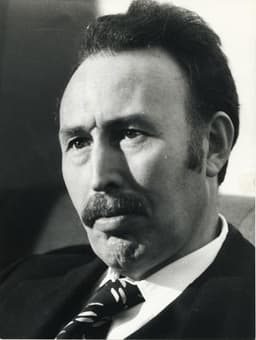
Houari Boumediene
Politician · Modern
55.0Total

Michel Barnier
Politician · Modern
54.5Total
Basic Information
Born
1932
1951
Died
—
—
Era
Modern
Modern
Nationality
Algeria
France
Occupation
Politician
Politician
Civilization
Middle Eastern
Western
Score Comparison
Military (10%)
41.6
50.0
Political (20%)
60.0
45.0
Influence (20%)
58.0
60.0
Legacy (20%)
48.3
50.0
Leadership (15%)
72.0
74.0
Strategy (15%)
45.0
41.2
TOTAL
55.0
54.5
Houari Boumediene — Complete Timeline
1954 AD
Role in Algerian War of IndependenceWar◆ Major
Boumediene joined the National Liberation Front (FLN) and became a key military commander in the war against French colonial rule. He organized guerrilla operations and rose through the ranks.
Algerian WarDecolonizationFLN
Impact: national
1965 AD
Coup d'État against Ben BellaPolitical Action
Boumediene led a military coup that overthrew President Ahmed Ben Bella. He suspended the constitution, dissolved parliament, and established a Revolutionary Council, consolidating power.
CoupAuthoritarianismMilitary Rule
Impact: nationaldestructive
1971 AD
Nationalization of HydrocarbonsReform◆ Major
Boumediene nationalized French oil and gas companies, taking control of Algeria's hydrocarbon resources. This provided the state with revenue to fund industrialization and socialist development programs.
NationalizationEconomic SovereigntySocialism
Impact: nationalconstructive
Launch of Agrarian RevolutionReform◆ Major
Boumediene implemented an agrarian reform program that redistributed land from large landowners to peasants and established state farms. The program aimed to increase agricultural production and reduce rural inequality.
Land ReformAgricultureSocialism
Impact: nationalconstructive
1973 AD
Chairmanship of Non-Aligned MovementPolitical Action◆ Major
Boumediene chaired the Non-Aligned Movement (NAM) and advocated for a New International Economic Order. He used the platform to promote Third World solidarity and challenge Western economic dominance.
Non-Aligned MovementThird WorldDiplomacy
Impact: globalconstructive
Michel Barnier — Complete Timeline
2016 AD
Appointed EU Chief Brexit NegotiatorPolitical Action◆ Major
The European Commission appointed Michel Barnier as its chief negotiator for the United Kingdom's withdrawal from the European Union. He led the EU's negotiating team through the Article 50 process.
BrexitEU Negotiations
Impact: global
2020 AD
Negotiated the Brexit Withdrawal AgreementPolitical Action◆ Major
Barnier oversaw the negotiation of the EU-UK Withdrawal Agreement, including the Northern Ireland Protocol. The agreement was ratified and the UK left the EU on January 31, 2020.
BrexitTreatyNorthern Ireland
Impact: globalconstructive
2024 AD
Appointed Prime Minister of FrancePolitical Action◆ Major
President Emmanuel Macron appointed Michel Barnier as Prime Minister following the 2024 legislative elections. Barnier, a conservative, was tasked with forming a government in a hung parliament.
AppointmentGovernment Formation
Impact: national
Expert Analysis
Origins
Houari Boumediene was born in 1932 in Guelma, Algeria, into a modest peasant family. He received a traditional Islamic education before attending Al-Azhar University in Cairo, where he was exposed to Arab nationalism and anti-colonial thought. He joined the National Liberation Front (FLN) in 1955, becoming a key military commander during the Algerian War of Independence (1954–1962). His early experiences in the mountains of eastern Algeria shaped his guerrilla tactics and distrust of French colonialism.
Michel Barnier was born in 1951 in La Tronche, France, into a politically engaged family; his father was a Gaullist activist. He studied at the École des Hautes Études Commerciales (HEC) and later at the Institut d'Études Politiques de Paris (Sciences Po). Barnier entered politics young, serving as a deputy in the French National Assembly from 1978. His early career included roles in regional government in Savoie, where he organized the 1992 Winter Olympics, showcasing his diplomatic and organizational skills.
Rise to Power
Boumediene rose through the FLN military hierarchy during the war. After independence, he served as Minister of Defense under President Ahmed Ben Bella. On June 19, 1965, Boumediene led a bloodless coup d'état against Ben Bella, citing the need to end political chaos and corruption. He suspended the constitution, dissolved parliament, and established the Revolutionary Command Council. By 1967, he had consolidated power, eliminating rivals like Colonel Tahar Zbiri. His rise was marked by military discipline and ideological clarity.
Barnier's rise was more incremental. He held various ministerial posts in France: Minister of the Environment (1993–1995), Minister of European Affairs (1995–1997), and Minister of Foreign Affairs (2004–2005). He also served as European Commissioner for Internal Market and Services (2010–2014). His breakthrough came in 2016 when European Commission President Jean-Claude Juncker appointed him as the EU's chief Brexit negotiator. Barnier's meticulous preparation and firm stance on EU unity made him the face of the EU's response to Brexit. In September 2024, President Emmanuel Macron appointed him Prime Minister after a hung parliament.
Leadership & Governance
Boumediene's leadership was authoritarian and centralized. He pursued a socialist development model, nationalizing French oil and gas companies in 1971, which gave Algeria control over 80% of its hydrocarbon revenues. He launched an Agrarian Revolution in 1971, redistributing land to peasants and creating state farms. However, the program was inefficient, and agricultural output fell. He also invested heavily in industrialization, building steel plants and petrochemical complexes. His governance scored 72.0 in leadership, reflecting his ability to impose order but at the cost of political freedom.
Barnier's leadership is technocratic and consensus-driven. As Brexit negotiator, he coordinated 27 member states' positions, maintaining unity despite divergent interests. He scored 74.0 in leadership, higher than Boumediene, due to his diplomatic skill in managing complex multilateral negotiations. His governance style is procedural and detail-oriented, focusing on legal frameworks and institutional integrity. As Prime Minister, he faced a fractured parliament, requiring coalition-building and compromise.
Triumph & Tragedy
Boumediene's greatest success was the nationalization of hydrocarbons, which funded Algeria's industrialization and social programs. He also played a key role in the Non-Aligned Movement, advocating for a New International Economic Order. His failures include the Agrarian Revolution's inefficiency and political repression; thousands were imprisoned for dissent. His military score of 41.6 reflects limited direct combat, but his strategic score of 45.0 indicates mixed results in economic planning.
Barnier's triumph was negotiating the Brexit Withdrawal Agreement, including the Northern Ireland Protocol, which avoided a hard border. The agreement was ratified in 2020, and the UK left the EU orderly. His tragedy is the ongoing political fallout; the deal remains controversial in Northern Ireland and strained EU-UK relations. His political score of 45.0 reflects limited domestic success, and his strategy score of 41.2 suggests challenges in long-term planning.
Character & Destiny
Boumediene was reserved, austere, and decisive. He distrusted personal ambition and maintained a simple lifestyle. His character shaped Algeria's authoritarian path; he believed strong central control was necessary for development. He died in 1978 from a rare blood disease, at age 46, leaving behind a mixed legacy.
Barnier is methodical, patient, and principled. His character suited the role of negotiator: he could withstand pressure and stick to EU rules. His destiny was to be the EU's guardian of unity during a crisis. However, his lack of charisma limited his appeal in French politics.
Legacy
Boumediene's legacy is enduring: he transformed Algeria into a major energy exporter and a leader of the Global South. The state-led economy he built persisted for decades, though inefficiencies remained. He is remembered as a nationalist hero but also as an autocrat. His influence score of 58.0 reflects his impact on Third World solidarity.
Barnier's legacy is tied to Brexit. He is remembered as the EU's steadfast negotiator who preserved unity. The Withdrawal Agreement set a precedent for future EU exits. However, his legacy is less transformative than Boumediene's; his influence score of 60.0 is slightly higher, but his overall total is lower (54.5 vs 55.0).
Conclusion
Houari Boumediene had a greater historical impact than Michel Barnier. Boumediene's actions—nationalizing oil, redistributing land, and shaping Algeria's postcolonial identity—fundamentally altered his nation's trajectory. Barnier, while effective, operated within existing structures. Boumediene's total score of 55.0 edges out Barnier's 54.5, and his leadership score of 72.0 reflects transformative change. The data supports that Boumediene's legacy is more profound and lasting.
Rankings
🥇
Houari BoumedieneLeader
Mil: 41.6Pol: 60.0Inf: 58.0
55.0
🥈
Michel Barnier
Mil: 50.0Pol: 45.0Inf: 60.0
54.5
+0.5 behind
How This Comparison Works
Algorithm
Each figure is scored on 6 dimensions (0—100 scale) based on structured historical data: Military (10%), Political (20%), Influence (20%), Legacy (20%), Leadership (15%), Strategy (15%). The weighted total produces the final ranking.
Data Sources
Scores are computed from structured sub-indicators in the database. Scale factors adjust for era (Ancient ×0.85, Modern ×1.0) and civilization size (Eastern ×1.05, Other ×0.80) to account for differences in population and military scale.
Maximum 3 Figures
Comparisons are limited to 2—3 figures to ensure readability and statistical meaningfulness.
Error Margins
±5 points per dimension — Sub-scores are derived from historical records with inherent uncertainty. Two figures within 5 points on a dimension should be considered roughly equivalent in that area.
Total Score Accuracy
±3 points overall — The weighted combination of 6 dimensions produces a total score with approximately ±3 points of uncertainty. Differences of less than 3 points are not statistically significant— the figures are effectively tied.
Known Limitations
- Historical records are incomplete and uneven across civilizations
- Figures from oral-tradition societies may be underrepresented
- Occupation labels can misclassify multi-role figures
- Scores measure capability and impact, not moral character
- Quantitative scoring is a comparison tool, not absolute truth
Capability Radar
Military (10%) — Battles & Warfare
Battles
10
28
Win Rate
10
33
Expansion
10
32
Political (20%) — Governance & Reform
Reform
70
55
Diplomacy
60
75
Economy
65
50
Influence (20%) — Cultural & Global Reach
Cultural
40
30
Global
40
60
Legacy (20%) — Historical Impact
Historical
50
55
Longevity
40
40
Leadership (15%) — Power & Stability
Tenure
65
40
Stability
55
45
Strategy (15%) — Tactics & Innovation
Strategy
10
36
Tactics
10
41
Reform
40
42
Similar Comparisons
Comments & Discussion
No comments yet. Be the first to share your thoughts!