Loading...
Hor-Aha vs Wonseong of Silla
Hor-Aha leads by 12.1 pts · 2 figures compared
…

Hor-Aha
Emperor · Ancient
53.9Total
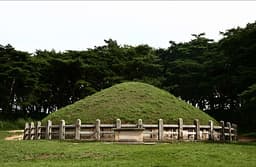
Wonseong of Silla
Emperor · Ancient
41.8Total
Basic Information
Born
-3100
-740
Died
-3050
—
Era
Ancient
Ancient
Nationality
Early Egypt
Korea
Occupation
Emperor
Emperor
Civilization
Middle Eastern
Eastern
Score Comparison
Military (10%)
50.0
25.9
Political (20%)
46.6
35.1
Influence (20%)
57.2
45.5
Legacy (20%)
54.0
36.7
Leadership (15%)
65.0
65.0
Strategy (15%)
43.3
36.8
TOTAL
53.9
41.8
Hor-Aha — Complete Timeline
3100 BC
Conducted Military Campaigns in NubiaWar◆ Major
Hor-Aha led military expeditions into Nubia to secure Egypt's southern borders and access to trade routes. These campaigns established Egyptian influence over the region and secured resources like gold and ivory.
NubiaMilitary CampaignTrade
Impact: regional
Unified Upper and Lower EgyptPolitical Action
Hor-Aha, as successor to Narmer, completed the unification of Upper and Lower Egypt, establishing the First Dynasty. He founded the capital at Memphis and consolidated control over the Nile Valley, creating the first centralized state in history.
UnificationFirst DynastyMemphis
Impact: globalconstructive
Founded the City of MemphisCultural◆ Major
Hor-Aha established Memphis (Ineb Hedj) at the junction of Upper and Lower Egypt. The city became the administrative and religious center of the early dynastic period, serving as the capital for centuries.
City FoundationCapitalAdministration
Impact: regionalconstructive
Built the Tomb at Abydos (Umm el-Qa'ab)Cultural
Hor-Aha constructed a large mudbrick tomb at Abydos, part of the royal necropolis. The tomb contained grave goods and subsidiary burials, reflecting the early development of pharaonic funerary practices.
TombAbydosFunerary
Wonseong of Silla — Complete Timeline
785 AD
Accession of Wonseong of SillaPolitical Action◆ Major
Wonseong ascended the Silla throne after the assassination of King Hyegong. His reign restored political stability to the kingdom, ending the immediate crisis and re-establishing royal authority after the coup that had killed his predecessor.
AccessionStabilitySilla
Impact: nationalconstructive
Expert Analysis
# The First and the Restorer
On the banks of the Nile, sometime around 3100 BCE, a young king stood at the juncture where the river fans into the Delta. He ordered the construction of white walls, a citadel that would become Memphis, the eternal city. Two thousand years later and half a world away, another king—older in years but no less burdened—climbed the steps of a wooden palace in Gyeongju, the capital of Silla. He had been summoned from a quiet life as a distant royal relative to take a throne still wet with the blood of his predecessor. One was building a civilization from scratch; the other was trying to keep one from crumbling.
Origins
Hor-Aha was born into the dawn of history itself. His father, Narmer, had already done the heavy lifting—unifying Upper and Lower Egypt through conquest and commemorating it on the famous palette that would become the world's first political document. Hor-Aha inherited not just a kingdom but an idea: that the Two Lands could be one. He grew up in a world where writing was being invented, where the state was being imagined, where every decision set a precedent for millennia. There was no template for kingship; he was making the mold.
Wonseong of Silla, born Kim Gyeong-sin in 740 CE, emerged into a very different kind of dawn—the twilight of a golden age. Silla had unified the Korean Peninsula in 668, but by the late eighth century, the kingdom was unraveling. The throne had become a revolving door of assassinations and noble coups. King Hyegong, a child ruler, was murdered in 780 after a rebellion, and for five years, chaos reigned. Wonseong was not raised as a prince. He was a descendant of King Naemul but lived quietly, a scholar-official watching his dynasty decay from the sidelines. He knew the rules of the game because he had seen them broken.
Rise to Power
Hor-Aha's path was straightforward: he was the son of the unifier. But straightforward does not mean easy. To rule a newly forged kingdom, he had to prove himself worthy of the double crown. His military campaigns into Nubia were not merely expansions; they were demonstrations. Every expedition south secured trade routes for gold, incense, and ivory—the economic arteries of the early Egyptian state. He also had to legitimize his rule through ritual. The tomb he built at Abydos, with its mudbrick chambers and subsidiary burials of servants and animals, proclaimed that the king of the living was also lord of the dead.
Wonseong's rise was anything but straightforward. He was in his mid-forties when the throne was offered to him—an old man by ancient standards. The Silla court was a nest of vipers: aristocratic families like the Kims, the Parks, and the Seoks had spent centuries scheming for power. Wonseong accepted the crown in 785, but he did so as a compromise candidate. He was old enough to be trusted not to start a new dynasty, weak enough to be controlled, and legitimate enough to unite the factions. His political score of 35.1 reflects the tightrope he walked—not a visionary, but a balancer.
Leadership & Governance
Hor-Aha governed with the confidence of a man who had no history to contradict him. His founding of Memphis was a masterstroke of political geography. By placing the capital at the junction of Upper and Lower Egypt, he made the city a living symbol of unity. Every official who traveled from the south to the north had to pass through its gates. Every merchant who traded along the Nile had to pay homage to its markets. His military score of 50 shows a king who understood that force, when used sparingly and precisely, creates order. The Nubian campaigns were not wars of annihilation but of pacification—the difference between a conqueror and a statesman.
Wonseong ruled with the caution of a man who had seen too many kings die. He knew that the greatest threat to Silla was not external invasion but internal collapse. The aristocratic families had grown so powerful that they owned private armies. The tax system had broken down, and the peasantry was suffering. Wonseong's response was not dramatic reform but patient restoration. He reorganized the administrative bureaucracy, rewarded loyal officials, and tried to stabilize the royal treasury. His leadership score of 65 matches Hor-Aha's—both men understood that ruling required more than charisma; it required the steady application of pressure on the levers of state.
Triumph & Tragedy
Hor-Aha's greatest moment was the completion of Memphis. It was not a single event but a process—the laying of walls, the digging of canals, the gathering of people from both lands. In that city, the unification of Egypt became a daily reality rather than a royal decree. His tragedy is that we know so little of him. The sands of Abydos have preserved his tomb but erased his voice. We have his name, his titles, his artifacts—but not his thoughts, not his fears, not the conversations he had with his generals and priests.
Wonseong's triumph was survival. He died on the throne—a feat that, in the context of late Silla, was remarkable. After five years of chaos, he restored enough stability for his son to succeed him peacefully. But his tragedy was that stability was not enough. The structural problems of Silla—the aristocratic overreach, the economic inequality, the ossified bone rank system—remained unsolved. His influence score of 45.5 is higher than his political score because he bought time, but time does not heal all wounds. Silla would eventually fall, and the seeds of that fall were already planted during his reign.
Character & Destiny
Hor-Aha was a builder. He thought in terms of stone and water, of walls and tombs, of cities that would outlast him. His legacy score of 54 reflects the durability of his creations. Memphis remained Egypt's capital for nearly three thousand years. The unification he completed was never undone. He was a man who understood that power, to be permanent, must be made physical.
Wonseong was a steward. He thought in terms of balance and patience, of avoiding mistakes rather than making breakthroughs. His legacy score of 36.7 is lower, but it is the score of a man who kept a sinking ship afloat long enough for the next generation to reach shore. He was not a builder of cities but a mender of cracks.
Legacy
Hor-Aha is remembered because he gave Egypt its first capital. Every pharaoh who ruled from Memphis walked in the shadow of his walls. Every historian who writes about the First Dynasty begins with his name. His combined Influence and Legacy score of 111.2—the highest in this comparison—reflects the simple truth that founding a civilization matters more than saving one.
Wonseong is remembered, if at all, as a footnote in Silla's long decline. His combined score of 82.2 is respectable but not remarkable. He did not reform the bone rank system, did not expand the kingdom, did not leave behind a monument. He left behind a stable succession—and in the brutal world of ancient politics, that is no small thing.
Conclusion
We tend to remember the builders, not the menders. Hor-Aha raised walls; Wonseong patched roofs. But both men faced the same fundamental challenge: the fragility of human institutions. One created a state from nothing; the other prevented a state from becoming nothing. The difference between a legacy score of 54 and 36.7 is not the difference between success and failure. It is the difference between founding a dynasty and preserving one. Both are acts of creation. Both require courage. And both, in their own way, deserve to be remembered.
Rankings
🥇
Hor-AhaLeader
Mil: 50.0Pol: 46.6Inf: 57.2
53.9
🥈
Wonseong of Silla
Mil: 25.9Pol: 35.1Inf: 45.5
41.8
+12.1 behind
How This Comparison Works
Algorithm
Each figure is scored on 6 dimensions (0—100 scale) based on structured historical data: Military (10%), Political (20%), Influence (20%), Legacy (20%), Leadership (15%), Strategy (15%). The weighted total produces the final ranking.
Data Sources
Scores are computed from structured sub-indicators in the database. Scale factors adjust for era (Ancient ×0.85, Modern ×1.0) and civilization size (Eastern ×1.05, Other ×0.80) to account for differences in population and military scale.
Maximum 3 Figures
Comparisons are limited to 2—3 figures to ensure readability and statistical meaningfulness.
Error Margins
±5 points per dimension — Sub-scores are derived from historical records with inherent uncertainty. Two figures within 5 points on a dimension should be considered roughly equivalent in that area.
Total Score Accuracy
±3 points overall — The weighted combination of 6 dimensions produces a total score with approximately ±3 points of uncertainty. Differences of less than 3 points are not statistically significant— the figures are effectively tied.
Known Limitations
- Historical records are incomplete and uneven across civilizations
- Figures from oral-tradition societies may be underrepresented
- Occupation labels can misclassify multi-role figures
- Scores measure capability and impact, not moral character
- Quantitative scoring is a comparison tool, not absolute truth
Capability Radar
Military (10%) — Battles & Warfare
Battles
40
10
Win Rate
45
10
Expansion
45
10
Political (20%) — Governance & Reform
Reform
45
30
Diplomacy
40
30
Economy
45
30
Influence (20%) — Cultural & Global Reach
Cultural
55
20
Global
50
10
Legacy (20%) — Historical Impact
Historical
60
20
Longevity
65
20
Leadership (15%) — Power & Stability
Tenure
50
40
Stability
50
60
Strategy (15%) — Tactics & Innovation
Strategy
40
10
Tactics
35
10
Reform
30
10
Similar Comparisons
Comments & Discussion
IronLens6/22/2026
Hor-Aha: First Dynasty, roughly 3100 BCE—think founding myth level. His conquest of Nubia is recorded on a single macehead. Wonseong: 785 CE, after Silla’s golden age. He suppressed revolts but lost the northern frontier. Both were consolidation kings, but Hor-Aha built the template for pharaonic rule. Wonseong just patched a crumbling roof.
ChariotChronc6/22/2026
Hor-Aha wasn’t a mere propagandist—he literally fused Upper and Lower Egypt with military campaigns, as the ivory tablets from Abydos show. Wonseong? A Silla king who fled from Tang forces during the chaos after the Protectorate was halved. Real unification vs. shaky survival. Don’t conflate dynastic theater with statecraft.
DataDeacon6/22/2026
The numbers tell the tale: Hor-Aha’s tomb at Umm el-Qaab stretches 70 meters, packed with ritual sacrifices and trade goods. Wonseong’s reign? Barely a dozen records in the Samguk Sagi, mostly about famine relief. One built an empire on the Nile; the other managed a declining kingdom. There’s no statistical tie here.
ScrollSage6/22/2026
As a classicist, I see Hor-Aha as the first true pharaoh of the First Dynasty, weaponizing the Narmer Palette’s symbolic conquest. Wonseong was a ninth-century king in a Korea fractured by the Later Three Kingdoms era—he couldn’t even hold Geumseong against peasant revolts. Comparing them is like weighing bronze vs. iron: different eras, but only one forged a state.
RevisionistRandy6/22/2026
Hold up—Wonseong’s “failure” is a smear. His reign stabilized Silla after the Great Rebellion of 822, and he even led a successful raid on Tang Hanseong in 828. Hor-Aha’s Egypt was a pre-literate backwater; we’ve got no proof his unification stuck. Give me a king who fought off two empires over one who left a few mud-brick tombs.