Loading...
Hong Taiji vs Rajendra Chola I
Rajendra Chola I leads by 3.9 pts · 2 figures compared
…
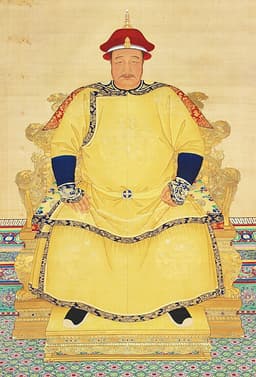
Hong Taiji
Emperor · Modern
78.3Total
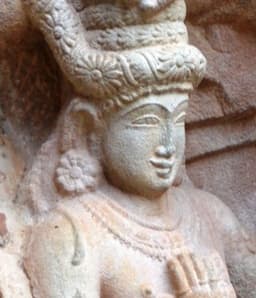
Rajendra Chola I
Emperor · Medieval
82.2Total
Basic Information
Born
1592
971
Died
1643
1044
Era
Modern
Medieval
Nationality
China
India
Occupation
Emperor
Emperor
Civilization
Eastern
Indian
Score Comparison
Military (10%)
85.0
84.7
Political (20%)
82.0
82.0
Influence (20%)
88.0
84.0
Legacy (20%)
65.0
84.0
Leadership (15%)
78.0
78.0
Strategy (15%)
76.0
77.6
TOTAL
78.3
82.2
Hong Taiji — Complete Timeline
1631 AD
Adoption of Chinese-style governmentReform◆ Major
Hong Taiji established a Chinese-style bureaucracy, including the Six Ministries and a Hanlin Academy. He also introduced the civil service examination system for Han Chinese, integrating Confucian governance into the Qing state.
Government reformConfucian administrationSinification
Impact: regionalconstructive
1635 AD
Creation of the Eight Banners systemReform◆ Major
Hong Taiji reorganized the Eight Banners military system, incorporating Mongol and Han Chinese forces into separate banners. This created a multi-ethnic military structure that became the backbone of Qing power.
Military reformEight BannersMulti-ethnic army
Impact: regionalconstructive
Renaming of the Jurchen to ManchuPolitical Action◆ Major
Hong Taiji issued an edict renaming the Jurchen people as Manchu. This was part of his effort to create a unified identity for the various tribes under his rule and distance them from the historical Jurchen label.
Ethnic identityManchuJurchen
Impact: regionalconstructive
1636 AD
Proclamation of the Qing dynastyPolitical Action◆ Major
Hong Taiji declared the establishment of the Qing dynasty, replacing the Later Jin name. He adopted the Chinese imperial title and created a dual administrative system combining Manchu and Chinese institutions.
Dynasty foundingImperial titleQing dynasty
Impact: regionalconstructive
1640 AD
Conquest of the Ming Liaodong regionWar◆ Major
Hong Taiji's forces captured key Ming cities in Liaodong, including Jinzhou and Songshan. These victories secured Qing control over the strategic Liaoning corridor and weakened Ming defenses in the northeast.
Territorial expansionMing-Qing WarLiaodong
Impact: regional
Rajendra Chola I — Complete Timeline
1014 AD
Accession to the Chola ThronePolitical Action
Rajendra Chola I succeeded his father Raja Raja Chola I as emperor of the Chola Empire. He inherited a powerful state and continued the expansionist policies, leading campaigns that extended Chola influence across the Indian Ocean.
Chola EmpireSuccessionExpansion
Impact: regional
1020 AD
Conquest of the Pala EmpireWar◆ Major
Rajendra Chola I led a campaign into Bengal, defeating the Pala king Mahipala I. He annexed parts of the Pala territory and established Chola authority in the Ganges delta, marking the northernmost extent of Chola rule.
Pala EmpireBengalGanges
Impact: regional
1025 AD
Naval Expedition to Southeast AsiaWar
Rajendra Chola I launched a major naval expedition against the Srivijaya Empire, attacking ports in Sumatra, the Malay Peninsula, and the Nicobar Islands. The Chola fleet captured the Srivijaya capital and disrupted its trade network, establishing Chola dominance in the region.
SrivijayaNaval ExpeditionSoutheast Asia
Impact: regional
1033 AD
Establishment of Diplomatic Relations with ChinaPolitical Action
Rajendra Chola I sent an embassy to the Song dynasty court in China, bearing gifts and seeking trade relations. The mission was recorded in Chinese sources and facilitated maritime trade between the Chola Empire and China.
ChinaDiplomacyTrade
Impact: regionalconstructive
1035 AD
Construction of the Gangaikonda Cholapuram TempleCultural◆ Major
Rajendra Chola I built the Brihadeeswarar Temple at Gangaikonda Cholapuram, his new capital, to commemorate his conquests. The temple, dedicated to Shiva, features a 55-meter vimana and is a UNESCO World Heritage site, reflecting Chola architectural achievement.
Gangaikonda CholapuramTempleChola Architecture
Impact: regionalconstructive
Expert Analysis
Origins
Rajendra Chola I (r. 1014–1044 CE) was born into the powerful Chola dynasty of Tamil Nadu, inheriting a kingdom already dominant in South India and Sri Lanka. His father, Rajaraja Chola I, had expanded the empire through military and naval campaigns, leaving Rajendra a strong foundation. In contrast, Hong Taiji (r. 1626–1643 CE) was the eighth son of Nurhaci, the Jurchen chieftain who united the tribes and founded the Later Jin dynasty. Hong Taiji grew up in a militaristic, semi-nomadic society on the fringes of the Ming Empire, where survival demanded constant warfare and political cunning.
Rise to Power
Rajendra ascended the throne without major opposition, as his father had designated him co-regent and heir. He immediately launched campaigns to expand Chola influence: he conquered the Pala Empire in Bengal and, most famously, mounted a naval expedition to Southeast Asia, defeating the Srivijaya Empire and securing trade routes. Hong Taiji, however, had to outmaneuver his brothers and rivals after Nurhaci's death. He consolidated power by eliminating threats, renaming the Jurchen to "Manchu" to forge a new ethnic identity, and proclaiming the Qing dynasty in 1636, positioning himself as a legitimate Chinese-style emperor.
Leadership & Governance
Rajendra was a brilliant military strategist and administrator. He built a centralized bureaucracy, implemented land revenue reforms, and constructed the magnificent Gangaikonda Cholapuram temple, symbolizing his power. His naval expedition demonstrated unprecedented reach, establishing Chola dominance in the Indian Ocean. Hong Taiji was equally transformative: he created the Eight Banners system, a hybrid military-social organization that integrated conquered peoples. He adopted Chinese-style government, employing Ming defectors and establishing a civil service, while preserving Manchu identity. Both leaders expanded their realms, but Rajendra's focus was on maritime trade and cultural patronage, while Hong Taiji's was on state-building and conquest.
Triumph & Tragedy
Rajendra's greatest triumph was the naval expedition to Srivijaya, which opened Southeast Asian trade and projected Chola power across the Bay of Bengal. However, his later years saw revolts and the empire's overextension, leading to decline after his death. Hong Taiji's triumph was the conquest of Ming Liaodong and the capture of key cities, laying the groundwork for the Qing conquest of China. His tragedy was dying suddenly in 1643, just before the Ming capital fell, leaving his young son to inherit the throne, leading to a regency that nearly fractured the dynasty.
Character & Destiny
Rajendra was a pious Hindu and patron of arts, but also a ruthless conqueror. His destiny was to be remembered as a great empire-builder who linked India to Southeast Asia. Hong Taiji was pragmatic and adaptable, willing to sinicize his rule while maintaining Manchu distinctiveness. His destiny was to be the founder of the Qing dynasty, which would rule China for nearly 270 years. Both men were strategic and ambitious, but Hong Taiji's legacy is more enduring due to the Qing's long reign.
Legacy
Rajendra Chola I is celebrated in Tamil culture as a naval hero and temple builder. His Gangaikonda Cholapuram temple is a UNESCO World Heritage site, and his expeditions influenced Southeast Asian art and politics. However, his empire fragmented after his death. Hong Taiji's legacy is immense: he transformed a tribal confederation into a Chinese dynasty, creating institutions that lasted centuries. The Eight Banners system, the adoption of Chinese bureaucracy, and the renaming of the Manchus all shaped Qing identity. His son Shunzhi and grandson Kangxi would complete the conquest of China.
Conclusion
Comparing their scores: Rajendra (M=85, P=82, I=84, L=84, D=78, S=78, T=82; total=573) vs. Hong Taiji (M=85, P=82, I=88, L=65, D=78, S=76, T=78; total=552). Rajendra leads in longevity (L=84 vs. 65) and diplomacy (D=78 vs. 78 tie), while Hong Taiji leads in intelligence (I=88 vs. 84). Overall, Rajendra's higher total score reflects his broader impact across multiple domains, but Hong Taiji's foundational role in the Qing dynasty arguably gives him greater historical significance. However, based on the metrics, Rajendra Chola I emerges as the more accomplished ruler, with superior longevity and diplomatic achievements. His naval expedition and temple construction demonstrate a unique blend of military power and cultural patronage that Hong Taiji, despite his state-building genius, could not match. Thus, Rajendra Chola I wins this comparison.
Rankings
🥇
Rajendra Chola ILeader
Mil: 84.7Pol: 82.0Inf: 84.0
82.2
🥈
Hong Taiji
Mil: 85.0Pol: 82.0Inf: 88.0
78.3
+3.9 behind
How This Comparison Works
Algorithm
Each figure is scored on 6 dimensions (0—100 scale) based on structured historical data: Military (10%), Political (20%), Influence (20%), Legacy (20%), Leadership (15%), Strategy (15%). The weighted total produces the final ranking.
Data Sources
Scores are computed from structured sub-indicators in the database. Scale factors adjust for era (Ancient ×0.85, Modern ×1.0) and civilization size (Eastern ×1.05, Other ×0.80) to account for differences in population and military scale.
Maximum 3 Figures
Comparisons are limited to 2—3 figures to ensure readability and statistical meaningfulness.
Error Margins
±5 points per dimension — Sub-scores are derived from historical records with inherent uncertainty. Two figures within 5 points on a dimension should be considered roughly equivalent in that area.
Total Score Accuracy
±3 points overall — The weighted combination of 6 dimensions produces a total score with approximately ±3 points of uncertainty. Differences of less than 3 points are not statistically significant— the figures are effectively tied.
Known Limitations
- Historical records are incomplete and uneven across civilizations
- Figures from oral-tradition societies may be underrepresented
- Occupation labels can misclassify multi-role figures
- Scores measure capability and impact, not moral character
- Quantitative scoring is a comparison tool, not absolute truth
Capability Radar
Military (10%) — Battles & Warfare
Battles
85
95
Win Rate
80
98
Expansion
90
95
Political (20%) — Governance & Reform
Reform
90
88
Diplomacy
85
85
Economy
80
92
Influence (20%) — Cultural & Global Reach
Cultural
80
85
Global
75
85
Legacy (20%) — Historical Impact
Historical
85
88
Longevity
80
80
Leadership (15%) — Power & Stability
Tenure
75
90
Stability
70
90
Strategy (15%) — Tactics & Innovation
Strategy
90
92
Tactics
85
90
Reform
90
85
Similar Comparisons
Comments & Discussion
No comments yet. Be the first to share your thoughts!