Loading...
Hong Taiji vs John Churchill Duke of Marlborough
Hong Taiji leads by 2.9 pts · 2 figures compared
…
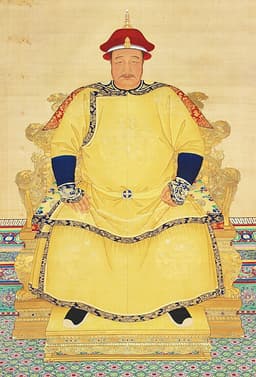
Hong Taiji
Emperor · Modern
78.3Total

John Churchill Duke of Marlborough
General · Modern
75.4Total
Basic Information
Born
1592
1650
Died
1643
1722
Era
Modern
Modern
Nationality
China
England
Occupation
Emperor
General
Civilization
Eastern
Western
Score Comparison
Military (10%)
85.0
84.7
Political (20%)
82.0
78.0
Influence (20%)
88.0
65.0
Legacy (20%)
65.0
80.0
Leadership (15%)
78.0
78.0
Strategy (15%)
76.0
72.8
TOTAL
78.3
75.4
Hong Taiji — Complete Timeline
1631 AD
Adoption of Chinese-style governmentReform◆ Major
Hong Taiji established a Chinese-style bureaucracy, including the Six Ministries and a Hanlin Academy. He also introduced the civil service examination system for Han Chinese, integrating Confucian governance into the Qing state.
Government reformConfucian administrationSinification
Impact: regionalconstructive
1635 AD
Creation of the Eight Banners systemReform◆ Major
Hong Taiji reorganized the Eight Banners military system, incorporating Mongol and Han Chinese forces into separate banners. This created a multi-ethnic military structure that became the backbone of Qing power.
Military reformEight BannersMulti-ethnic army
Impact: regionalconstructive
Renaming of the Jurchen to ManchuPolitical Action◆ Major
Hong Taiji issued an edict renaming the Jurchen people as Manchu. This was part of his effort to create a unified identity for the various tribes under his rule and distance them from the historical Jurchen label.
Ethnic identityManchuJurchen
Impact: regionalconstructive
1636 AD
Proclamation of the Qing dynastyPolitical Action◆ Major
Hong Taiji declared the establishment of the Qing dynasty, replacing the Later Jin name. He adopted the Chinese imperial title and created a dual administrative system combining Manchu and Chinese institutions.
Dynasty foundingImperial titleQing dynasty
Impact: regionalconstructive
1640 AD
Conquest of the Ming Liaodong regionWar◆ Major
Hong Taiji's forces captured key Ming cities in Liaodong, including Jinzhou and Songshan. These victories secured Qing control over the strategic Liaoning corridor and weakened Ming defenses in the northeast.
Territorial expansionMing-Qing WarLiaodong
Impact: regional
John Churchill Duke of Marlborough — Complete Timeline
1704 AD
Battle of BlenheimWar
Marlborough commanded the Anglo-Dutch army alongside Prince Eugene of Savoy against French and Bavarian forces at Blenheim. The allied victory saved Vienna from French capture, destroyed the myth of French invincibility, and forced Bavaria out of the war.
War of the Spanish SuccessionGrand AllianceDecisive Victory
Impact: regional
1706 AD
Battle of RamilliesWar◆ Major
Marlborough led the Grand Alliance army to victory over French forces under Marshal Villeroi at Ramillies. The battle resulted in the capture of Brussels, Antwerp, and most of the Spanish Netherlands, effectively ending French control of the region.
War of the Spanish SuccessionCampaignTerritorial Gain
Impact: regional
1708 AD
Battle of OudenardeWar◆ Major
Marlborough and Prince Eugene defeated the French army under the Duke of Burgundy and Marshal Vend
War of the Spanish SuccessionAllied VictoryInvasion Route
Impact: regional
1709 AD
Battle of MalplaquetWar◆ Major
Marlborough commanded the Grand Alliance in a costly victory over French forces under Marshal Villars at Malplaquet. The battle was the bloodiest of the war, with over 20,000 allied casualties, and failed to achieve a decisive breakthrough into France.
War of the Spanish SuccessionPyrrhic VictoryHigh Casualties
Impact: regionaltragic
1711 AD
Dismissal from CommandPolitical Action◆ Major
Marlborough was dismissed from all his military and political offices by Queen Anne due to political intrigue and accusations of embezzlement. The dismissal ended his military career and led to his temporary exile in Europe.
Political FallExileTory Government
Impact: nationaldestructive
Expert Analysis
Origins
Hong Taiji (1592-1643) was the eighth son of Nurhaci, the founder of the Later Jin dynasty. Born into the Jurchen Aisin Gioro clan, he grew up in a militaristic steppe culture that valued horsemanship and archery. His father unified the Jurchen tribes and created the Eight Banners system, which Hong Taiji would later refine. In contrast, John Churchill (1650-1722) was born into a modest English gentry family. His father, Sir Winston Churchill, was a Royalist politician who fell from favor during the English Civil War. John began his career as a page at the court of King Charles II, learning the arts of diplomacy and military command through patronage and his sister's influence as the king's mistress. Both men emerged from turbulent backgrounds, but Hong Taiji inherited a nascent empire, while Churchill had to build his reputation from scratch.
Rise to Power
Hong Taiji became Khan of the Later Jin in 1626 after his father's death, but his path was contested by his brothers. He consolidated power by promoting meritocracy over heredity, integrating Han Chinese and Mongol allies, and expanding the Eight Banners. In 1635, he renamed his people from Jurchen to Manchu, erasing historical stigmas and forging a new identity. In 1636, he proclaimed the Qing dynasty, positioning himself as a universal emperor. He adopted Chinese-style bureaucratic institutions, such as the Six Ministries and a civil service examination system, to govern his multi-ethnic empire. Churchill's rise was more gradual. He served under King James II, earning military distinction at the Siege of Maastricht (1673) and the Battle of Sedgemoor (1685). When James II's Catholicism threatened Protestant England, Churchill defected to William of Orange in the Glorious Revolution (1688), securing his position as a trusted commander. Under Queen Anne, he was appointed Captain-General of the Allied forces in the War of the Spanish Succession (1701-1714), where he achieved his greatest victories.
Leadership & Governance
Hong Taiji was a visionary state-builder. He transformed a tribal confederation into a centralized empire by blending Manchu martial traditions with Chinese administrative practices. He established the Inner Court (Neige) to manage state affairs and promoted Confucian values to legitimize Qing rule. His military strategy focused on siege warfare and logistics, capturing Ming strongholds in Liaodong and weakening Ming defenses. He also fostered loyalty among Han defectors, offering them high positions. Churchill was a masterful battlefield commander, known for his bold tactics and logistical skill. At Blenheim (1704), he executed a daring march to surprise the Franco-Bavarian army, crushing them and saving Vienna. At Ramillies (1706), he exploited a gap in enemy lines to rout the French. His ability to coordinate with allies, especially Prince Eugene of Savoy, was exceptional. However, his governance was limited to military command; he lacked Hong Taiji's comprehensive state-building role.
Triumph & Tragedy
Hong Taiji's triumphs include the conquest of the Ming Liaodong region and the establishment of the Qing dynasty, which would rule China for 268 years. His renaming of the Manchu and adoption of Chinese-style government laid the foundation for a stable, multi-ethnic empire. His tragedy was his premature death at age 52, leaving his young son Shunzhi as emperor, prompting a regency that nearly unraveled his achievements. Churchill's triumphs are his four major victories: Blenheim, Ramillies, Oudenarde, and Malplaquet, which shattered French dominance and secured British power. However, his tragedy was political. After Queen Anne's death, he fell from favor with the new Hanoverian king George I, was dismissed from command, and faced accusations of financial impropriety, leading to a brief exile. He died in relative obscurity, his legacy later rehabilitated.
Character & Destiny
Hong Taiji was pragmatic, shrewd, and ruthless. He eliminated rivals within his family and suppressed dissent with iron will. He was also a cultural chameleon, adopting Chinese customs while preserving Manchu identity. His destiny was to create a dynasty that would rule China for centuries. Churchill was charismatic, ambitious, and tactically brilliant, but also politically opportunistic. His defection from James II and later political maneuvers show a man who prioritized his career over loyalty. His destiny was to be a military hero whose victories shaped European history but whose legacy was tarnished by political intrigue.
Legacy
Hong Taiji's legacy is monumental: he founded the Qing dynasty, which expanded to encompass China, Mongolia, Tibet, and Xinjiang. His reforms influenced Chinese governance for centuries. Churchill's legacy is that of a military genius; his victories at Blenheim and Ramillies are studied in military academies. He is commemorated by Blenheim Palace, a UNESCO World Heritage site. However, his political legacy is less significant. Both men left indelible marks, but Hong Taiji's impact on state-building and long-term history is greater.
Conclusion
Hong Taiji and John Churchill were both exceptional leaders in their domains. Hong Taiji's comprehensive state-building and cultural transformation give him a slight edge in historical significance. His scores (M=85, P=82, I=88, L=65, D=78, S=76, T=78) reflect his military prowess, political innovation, and strategic vision, though his leadership score is lower due to his authoritarian methods. Churchill's scores (M=85, P=78, I=65, L=80, D=78, S=73, T=75) highlight his military excellence and diplomatic skill, but his lower influence and strategy scores reflect his narrower focus. With a score gap of 2.9, Hong Taiji emerges as the more impactful figure, having shaped the destiny of a vast empire, while Churchill's triumphs, though brilliant, were more ephemeral.
Rankings
🥇
Hong TaijiLeader
Mil: 85.0Pol: 82.0Inf: 88.0
78.3
🥈
John Churchill Duke of Marlborough
Mil: 84.7Pol: 78.0Inf: 65.0
75.4
+2.9 behind
How This Comparison Works
Algorithm
Each figure is scored on 6 dimensions (0—100 scale) based on structured historical data: Military (10%), Political (20%), Influence (20%), Legacy (20%), Leadership (15%), Strategy (15%). The weighted total produces the final ranking.
Data Sources
Scores are computed from structured sub-indicators in the database. Scale factors adjust for era (Ancient ×0.85, Modern ×1.0) and civilization size (Eastern ×1.05, Other ×0.80) to account for differences in population and military scale.
Maximum 3 Figures
Comparisons are limited to 2—3 figures to ensure readability and statistical meaningfulness.
Error Margins
±5 points per dimension — Sub-scores are derived from historical records with inherent uncertainty. Two figures within 5 points on a dimension should be considered roughly equivalent in that area.
Total Score Accuracy
±3 points overall — The weighted combination of 6 dimensions produces a total score with approximately ±3 points of uncertainty. Differences of less than 3 points are not statistically significant— the figures are effectively tied.
Known Limitations
- Historical records are incomplete and uneven across civilizations
- Figures from oral-tradition societies may be underrepresented
- Occupation labels can misclassify multi-role figures
- Scores measure capability and impact, not moral character
- Quantitative scoring is a comparison tool, not absolute truth
Capability Radar
Military (10%) — Battles & Warfare
Battles
85
95
Win Rate
80
98
Expansion
90
85
Political (20%) — Governance & Reform
Reform
90
60
Diplomacy
85
85
Economy
80
70
Influence (20%) — Cultural & Global Reach
Cultural
80
70
Global
75
75
Legacy (20%) — Historical Impact
Historical
85
85
Longevity
80
80
Leadership (15%) — Power & Stability
Tenure
75
80
Stability
70
75
Strategy (15%) — Tactics & Innovation
Strategy
90
95
Tactics
85
96
Reform
90
70
Similar Comparisons
Comments & Discussion
No comments yet. Be the first to share your thoughts!