Loading...
Hojo Ujimasa vs Jean Lannes
Hojo Ujimasa leads by 0.2 pts · 2 figures compared
…
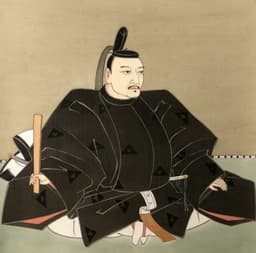
Hojo Ujimasa
General · Modern
55.6Total
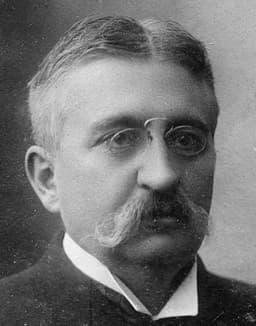
Jean Lannes
General · Modern
55.4Total
Basic Information
Born
1538
1769
Died
1590
1809
Era
Modern
Modern
Nationality
Japan
France
Occupation
General
General
Civilization
Eastern
Western
Score Comparison
Military (10%)
70.0
78.5
Political (20%)
45.0
35.1
Influence (20%)
54.9
59.0
Legacy (20%)
47.5
56.0
Leadership (15%)
68.0
50.7
Strategy (15%)
60.7
58.8
TOTAL
55.6
55.4
Hojo Ujimasa — Complete Timeline
1590 AD
Resisted Toyotomi HideyoshiWar◆ Major
Ujimasa led the Hojo clan in resisting Toyotomi Hideyoshi's campaign to unify Japan. He fortified Odawara Castle and refused to submit, leading to a prolonged siege.
ResistanceHojoHideyoshi
Impact: national
Siege of Odawara CastleWar◆ Major
Ujimasa was besieged at Odawara Castle by Toyotomi Hideyoshi's massive army. After a three-month siege, he surrendered, ending the Hojo clan's independence.
SiegeSurrenderHojo
Impact: nationaldestructive
Death by seppukuOther◆ Major
After surrendering Odawara Castle, Ujimasa was forced to commit seppuku by Toyotomi Hideyoshi. His death marked the end of the Hojo clan's rule in the Kanto region.
SeppukuHojoHideyoshi
Impact: regionaltragic
Jean Lannes — Complete Timeline
1800 AD
Battle of MontebelloWar
Lannes commanded a division that defeated an Austrian force at Montebello. His aggressive attack routed the Austrians, capturing 2,000 prisoners. This victory cleared the way for Napoleon's advance to the Battle of Marengo.
Napoleonic WarsBattleItalian Campaign
Impact: regional
1805 AD
Battle of AusterlitzWar◆ Major
Lannes commanded the French left wing, holding the Pratzen Heights against Russian attacks. His corps pinned down the Russian right, allowing Napoleon to crush the center. This victory was a masterpiece of tactical deception and sealed the fate of the Third Coalition.
Napoleonic WarsBattleDecisive Victory
Impact: global
1806 AD
Battle of JenaWar◆ Major
Lannes' corps led the French assault on the Prussian center at Jena. His troops stormed the heights and routed the Prussian army. This victory, combined with Davout's at Auerstedt, led to the complete collapse of Prussia within weeks.
Napoleonic WarsBattlePrussian Campaign
Impact: regional
1809 AD
Siege of SaragossaWar◆ Major
Lannes took command of the French siege of Saragossa after his predecessor was killed. He used systematic bombardment and house-to-house fighting to capture the city after two months. The siege was one of the bloodiest of the Peninsular War, with heavy civilian casualties.
Peninsular WarSiegeBrutality
Impact: regionaldestructive
Battle of Aspern-EsslingWar◆ Major
Lannes commanded the French center, holding the village of Essling against Austrian attacks. He was mortally wounded by a cannonball while rallying his troops. His death was a severe blow to Napoleon, who lost his closest friend and one of his best marshals.
Napoleonic WarsBattleDeath
Impact: regionaltragic
Expert Analysis
Origins
Hojo Ujimasa was born in 1538 into the powerful Hojo clan, which controlled the Kanto region of Japan. His father, Hojo Ujiyasu, was a skilled daimyo who expanded Hojo territory. Ujimasa received training in military arts and governance from a young age, inheriting the clan leadership in 1559 at age 21. His early campaigns focused on consolidating Hojo power against rival clans like the Takeda and Uesugi.
Jean Lannes was born in 1769 in Lectoure, France, to a peasant family. He apprenticed as a dyer before joining the French Revolutionary Army in 1792. Lannes rose through the ranks due to his courage and skill, becoming a general by 1796. His early battles included the Italian campaign, where he impressed Napoleon Bonaparte.
Rise to Power
Hojo Ujimasa became clan leader in 1559 and immediately faced threats from Takeda Shingen and Uesugi Kenshin. He defended his territory through a combination of fortifications and alliances. In 1569, he repelled Takeda Shingen's invasion at the Siege of Odawara. Ujimasa expanded Hojo influence by marrying his sons into powerful families and constructing defensive networks. By the 1580s, the Hojo clan controlled five provinces and was one of the last major powers resisting Toyotomi Hideyoshi's unification.
Jean Lannes rose rapidly during the French Revolutionary Wars. He distinguished himself at the Battle of Lodi in 1796, where he crossed the bridge under fire. Napoleon promoted him to brigadier general in 1796. Lannes fought in Egypt and Syria, commanding a division at the Siege of Acre. His loyalty and friendship with Napoleon led to his appointment as Marshal of the Empire in 1804, one of the original 18 marshals.
Leadership & Governance
Hojo Ujimasa governed the Kanto region with a focus on stability and defense. He implemented administrative reforms, including land surveys and tax systems. His leadership style was cautious and methodical, relying on fortifications like Odawara Castle. However, he lacked the diplomatic finesse of his father, often alienating potential allies. His refusal to submit to Toyotomi Hideyoshi, despite overwhelming odds, reflected his stubbornness but also his commitment to clan independence.
Jean Lannes was a frontline commander known for his aggression and personal bravery. He led from the front, earning the respect of his troops. As a marshal, he commanded corps-sized units and executed Napoleon's strategies effectively. His governance style was less about administration and more about battlefield leadership. Lannes' closeness to Napoleon gave him influence, but he did not engage in politics or governance outside the military.
Triumph & Tragedy
Hojo Ujimasa's greatest success was maintaining Hojo independence for decades against powerful enemies. He fortified Odawara Castle into an impregnable fortress. His greatest failure was underestimating Toyotomi Hideyoshi's determination. In 1590, Hideyoshi besieged Odawara with over 200,000 men. After three months, Ujimasa surrendered and was forced to commit seppuku. His death ended the Hojo clan's rule.
Jean Lannes' triumphs include the Battle of Austerlitz in 1805, where his corps held the left flank and contributed to the decisive victory. At Jena in 1806, his corps stormed the Prussian center. His tragedy came at Aspern-Essling in 1809, where he was mortally wounded by a cannonball while rallying his troops. He died days later, deeply mourned by Napoleon.
Character & Destiny
Hojo Ujimasa was cautious and tradition-bound. He prioritized defense over expansion, which preserved his clan but also isolated them. His decision to resist Hideyoshi was based on overconfidence in his fortifications. Historians note his lack of adaptability compared to his father. His destiny was sealed by the changing political landscape of Japan, where unification was inevitable.
Jean Lannes was bold, loyal, and fearless. He often criticized Napoleon's decisions but remained devoted. His character made him an effective commander but also led to his death, as he exposed himself to danger. Napoleon said Lannes was the only marshal he could trust to act independently. His death at 39 cut short a brilliant career.
Legacy
Hojo Ujimasa's legacy is as the last Hojo daimyo. His resistance delayed Hideyoshi's unification but ultimately failed. The Hojo clan's administrative systems influenced later Tokugawa governance. Ujimasa scored 47.5 in legacy, reflecting his limited long-term impact.
Jean Lannes is remembered as one of Napoleon's finest marshals. His tactical skill and bravery inspired French soldiers. He scored 56.0 in legacy, higher than Ujimasa. His name is on the Arc de Triomphe and he is celebrated in French military history.
Conclusion
While Hojo Ujimasa (total score 55.6) and Jean Lannes (55.4) are close in overall rating, Lannes had greater impact. His military score of 78.5 surpasses Ujimasa's 70.0. Lannes contributed to Napoleon's campaigns that reshaped Europe, while Ujimasa's resistance was a footnote in Japan's unification. Lannes' legacy endures in military history, whereas Ujimasa's is mostly regional. Therefore, Jean Lannes is the more significant historical figure.
Rankings
🥇
Hojo UjimasaLeader
Mil: 70.0Pol: 45.0Inf: 54.9
55.6
🥈
Jean Lannes
Mil: 78.5Pol: 35.1Inf: 59.0
55.4
+0.2 behind
How This Comparison Works
Algorithm
Each figure is scored on 6 dimensions (0—100 scale) based on structured historical data: Military (10%), Political (20%), Influence (20%), Legacy (20%), Leadership (15%), Strategy (15%). The weighted total produces the final ranking.
Data Sources
Scores are computed from structured sub-indicators in the database. Scale factors adjust for era (Ancient ×0.85, Modern ×1.0) and civilization size (Eastern ×1.05, Other ×0.80) to account for differences in population and military scale.
Maximum 3 Figures
Comparisons are limited to 2—3 figures to ensure readability and statistical meaningfulness.
Error Margins
±5 points per dimension — Sub-scores are derived from historical records with inherent uncertainty. Two figures within 5 points on a dimension should be considered roughly equivalent in that area.
Total Score Accuracy
±3 points overall — The weighted combination of 6 dimensions produces a total score with approximately ±3 points of uncertainty. Differences of less than 3 points are not statistically significant— the figures are effectively tied.
Known Limitations
- Historical records are incomplete and uneven across civilizations
- Figures from oral-tradition societies may be underrepresented
- Occupation labels can misclassify multi-role figures
- Scores measure capability and impact, not moral character
- Quantitative scoring is a comparison tool, not absolute truth
Capability Radar
Military (10%) — Battles & Warfare
Battles
55
85
Win Rate
50
90
Expansion
60
80
Political (20%) — Governance & Reform
Reform
55
20
Diplomacy
50
25
Economy
60
15
Influence (20%) — Cultural & Global Reach
Cultural
40
45
Global
20
40
Legacy (20%) — Historical Impact
Historical
45
60
Longevity
30
50
Leadership (15%) — Power & Stability
Tenure
65
30
Stability
55
20
Strategy (15%) — Tactics & Innovation
Strategy
65
75
Tactics
60
88
Reform
55
40
Similar Comparisons
Comments & Discussion
No comments yet. Be the first to share your thoughts!