Loading...
This comparison has not been analyzed yet.
One-time AI generation (~1 minute). Scores and timeline are already available below.
Hojo Soun vs Tenkamenin
Hojo Soun leads by 4.8 pts · 2 figures compared
…
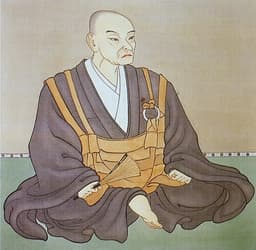
Hojo Soun
Emperor · Medieval
58.1Total

Tenkamenin
Emperor · Medieval
53.3Total
Basic Information
Born
1432
1030
Died
1519
1075
Era
Medieval
Medieval
Nationality
Japan
Ghana Empire
Occupation
Emperor
Emperor
Civilization
Eastern
Other
Score Comparison
Military (10%)
50.0
50.0
Political (20%)
68.0
60.0
Influence (20%)
53.3
54.1
Legacy (20%)
50.0
45.8
Leadership (15%)
74.0
72.0
Strategy (15%)
60.0
35.7
TOTAL
58.1
53.3
Hojo Soun — Complete Timeline
1491 AD
Became a Ronin and Founded the Later Hojo ClanPolitical Action
Hojo Soun, originally a samurai of the Imagawa clan, became a ronin after his lord's death. He seized control of Izu Province in 1491, establishing the Later Hojo clan and beginning his rise to power.
RoninLater HojoIzu
Impact: regional
1495 AD
Captured Odawara CastleWar◆ Major
Hojo Soun captured Odawara Castle from the Omori clan through a combination of military force and deception. Odawara became the Later Hojo clan's stronghold and a symbol of their power in the Kanto region.
CastleKantoMilitary
Impact: regional
1512 AD
Expanded Hojo Control Over Sagami ProvinceWar◆ Major
Hojo Soun expanded his territory by conquering Sagami Province, defeating local lords and the Uesugi clan. This established the Later Hojo as a major power in the Kanto region, controlling key trade routes.
ExpansionSagamiKanto
Impact: regional
Tenkamenin — Complete Timeline
1062 AD
Reign as King of GhanaPolitical Action◆ Major
Tenkamenin ruled the Ghana Empire during its golden age, known for his justice and effective administration. He maintained the empire's wealth through control of trans-Saharan gold and salt trade routes, ensuring stability and prosperity.
RuleGolden Age
Impact: regionalconstructive
1063 AD
Established justice systemReform
Tenkamenin was renowned for his commitment to justice, holding daily public audiences to hear cases from all subjects. He ensured fair treatment regardless of social status, which strengthened loyalty to the crown and reduced internal conflict.
JusticeGovernance
Impact: nationalconstructive
1065 AD
Expanded Ghana's gold tradePolitical Action◆ Major
Tenkamenin strengthened Ghana's monopoly on gold production and trade with North African merchants. He implemented strict controls over gold nuggets while allowing gold dust to circulate, maintaining the empire's economic power and the king's authority.
Economic policyTrade
Impact: regionalconstructive
This comparison has not been analyzed yet.
One-time AI generation (~1 minute). Scores and timeline are already available below.
Rankings
🥇
Hojo SounLeader
Mil: 50.0Pol: 68.0Inf: 53.3
58.1
🥈
Tenkamenin
Mil: 50.0Pol: 60.0Inf: 54.1
53.3
+4.8 behind
How This Comparison Works
Algorithm
Each figure is scored on 6 dimensions (0—100 scale) based on structured historical data: Military (10%), Political (20%), Influence (20%), Legacy (20%), Leadership (15%), Strategy (15%). The weighted total produces the final ranking.
Data Sources
Scores are computed from structured sub-indicators in the database. Scale factors adjust for era (Ancient ×0.85, Modern ×1.0) and civilization size (Eastern ×1.05, Other ×0.80) to account for differences in population and military scale.
Maximum 3 Figures
Comparisons are limited to 2—3 figures to ensure readability and statistical meaningfulness.
Error Margins
±5 points per dimension — Sub-scores are derived from historical records with inherent uncertainty. Two figures within 5 points on a dimension should be considered roughly equivalent in that area.
Total Score Accuracy
±3 points overall — The weighted combination of 6 dimensions produces a total score with approximately ±3 points of uncertainty. Differences of less than 3 points are not statistically significant— the figures are effectively tied.
Known Limitations
- Historical records are incomplete and uneven across civilizations
- Figures from oral-tradition societies may be underrepresented
- Occupation labels can misclassify multi-role figures
- Scores measure capability and impact, not moral character
- Quantitative scoring is a comparison tool, not absolute truth
Capability Radar
Military (10%) — Battles & Warfare
Battles
40
20
Win Rate
45
25
Expansion
55
15
Political (20%) — Governance & Reform
Reform
50
70
Diplomacy
55
65
Economy
50
75
Influence (20%) — Cultural & Global Reach
Cultural
40
40
Global
20
25
Legacy (20%) — Historical Impact
Historical
55
45
Longevity
50
30
Leadership (15%) — Power & Stability
Tenure
60
60
Stability
45
70
Strategy (15%) — Tactics & Innovation
Strategy
55
20
Tactics
50
15
Reform
30
10
Similar Comparisons
Comments & Discussion
No comments yet. Be the first to share your thoughts!