Loading...
Hifikepunye Pohamba vs Shukri al-Quwatli
Shukri al-Quwatli leads by 0.9 pts · 2 figures compared
…

Hifikepunye Pohamba
Politician · Modern
51.1Total
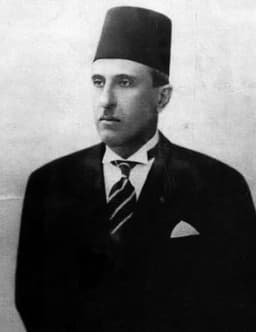
Shukri al-Quwatli
Politician · Modern
52.0Total
Basic Information
Born
1935
1891
Died
—
1967
Era
Modern
Modern
Nationality
Namibia
Syria
Occupation
Politician
Politician
Civilization
Other
Middle Eastern
Score Comparison
Military (10%)
32.7
48.6
Political (20%)
53.8
61.3
Influence (20%)
54.1
51.0
Legacy (20%)
45.0
45.0
Leadership (15%)
72.0
65.0
Strategy (15%)
41.5
42.2
TOTAL
51.1
52.0
Hifikepunye Pohamba — Complete Timeline
1989 AD
Elected to the Constituent Assembly of NamibiaPolitical Action◆ Major
Pohamba was elected to the Constituent Assembly in the 1989 elections, which drafted Namibia's constitution. He was a key figure in SWAPO's transition from liberation movement to political party.
Constituent AssemblyConstitution Drafting
Impact: nationalconstructive
1990 AD
Appointed Minister of Home AffairsPolitical Action◆ Major
Pohamba was appointed Minister of Home Affairs in Namibia's first independent government under President Sam Nujoma. He oversaw the establishment of a national identity system and immigration control.
Ministerial RoleState Building
Impact: nationalconstructive
2005 AD
Became President of NamibiaPolitical Action
Pohamba became President of Namibia on March 21, 2005, succeeding Sam Nujoma. He pledged to continue Nujoma's policies of reconciliation and development.
PresidencySuccession
Impact: nationalconstructive
2007 AD
Launched the National Development Plan 3Reform◆ Major
Pohamba launched the third National Development Plan (NDP3), focusing on poverty reduction, education, and infrastructure. The plan aimed to achieve Vision 2030 goals for a prosperous Namibia.
Development PlanEconomic Policy
Impact: nationalconstructive
2009 AD
Re-elected President (2009)Political Action◆ Major
Pohamba was re-elected in the 2009 general election with 76.4% of the vote. His second term focused on land reform and addressing inequality.
Re-electionLand Reform
Impact: national
2015 AD
Retired as PresidentPolitical Action◆ Major
Pohamba retired as President in March 2015, handing power to Hage Geingob. His retirement was peaceful and constitutional, maintaining Namibia's democratic tradition.
RetirementDemocratic Transition
Impact: nationalconstructive
Shukri al-Quwatli — Complete Timeline
1943 AD
Elected first president of independent SyriaPolitical Action
Shukri al-Quwatli was elected as the first president of Syria after the country gained independence from Vichy France. He led the nationalist movement and worked to consolidate Syrian sovereignty, serving from 1943 to 1949.
IndependenceNationalismPresidency
Impact: nationalconstructive
1949 AD
Overthrown in the 1949 Syrian coup d'étatPolitical Action◆ Major
President al-Quwatli was overthrown by a military coup led by Husni al-Zaim on March 30, 1949. The coup was the first in Syria's modern history and ended civilian rule, leading to a period of military interventions in politics.
CoupMilitaryOverthrow
Impact: nationaldestructive
1955 AD
Returned to presidency after Adib Shishakli's fallPolitical Action◆ Major
Al-Quwatli was re-elected as president of Syria in 1955 after the fall of the military regime of Adib Shishakli. He returned to power during a period of political instability and growing influence of the Ba'ath Party.
Return to PowerPresidencyPolitical Instability
Impact: national
1958 AD
Signed the agreement forming the United Arab RepublicPolitical Action◆ Major
President al-Quwatli signed the agreement with Egyptian President Gamal Abdel Nasser to form the United Arab Republic, a union of Syria and Egypt. The union was intended to strengthen Arab unity but lasted only until 1961.
Arab UnityUnionNasser
Impact: regionalconstructive
1961 AD
Resigned after Syrian secession from the UARPolitical Action
After a military coup in Syria ended the United Arab Republic, al-Quwatli resigned from the presidency. He went into exile and died in 1967, having failed to restore his political influence.
ResignationExileUAR Collapse
Impact: nationaltragic
Expert Analysis
Origins
Hifikepunye Pohamba was born on August 18, 1935, in Okanghudi, South West Africa (now Namibia). He came from a peasant family and received limited formal education. His early life was shaped by the oppressive apartheid system imposed by South Africa. He became involved in politics through the Ovamboland People's Congress, which later became SWAPO. In 1960, he went into exile and received military training in the Soviet Union and later in Tanzania, returning to work as a SWAPO representative in Africa.
Shukri al-Quwatli was born in 1891 in Damascus, Syria, then part of the Ottoman Empire. He came from a wealthy landowning family and received a French education. His early political activism began in the Arab nationalist movement against Ottoman rule. He was imprisoned by the Ottomans and later by the French mandate authorities. He helped found the Arab Independence Party and was a key figure in the Syrian nationalist movement.
Rise to Power
Pohamba's rise was gradual within SWAPO. He was elected to the Constituent Assembly in 1989, which drafted Namibia's constitution. He served in various ministerial roles under President Sam Nujoma, including Minister of Home Affairs and Minister of Lands, Resettlement and Rehabilitation. In 2004, Nujoma stepped down and endorsed Pohamba as his successor; Pohamba won the presidency in November 2004 and took office on March 21, 2005.
Al-Quwatli rose as a leader of the nationalist movement against French mandate. He was elected as the first president of independent Syria on August 17, 1943, after the country gained independence from Vichy France. He led the country through the final years of World War II and the early post-war period. However, his tenure was marked by instability, and he was overthrown by a military coup led by Husni al-Zaim on March 30, 1949.
Leadership & Governance
Pohamba's leadership style was characterized by consensus-building and continuity. He continued Nujoma's policy of national reconciliation, maintaining stability in a diverse society. His governance focused on poverty reduction through the National Development Plans (NDP3). He also pursued land reform, though progress was slow. He scored 72.0 in leadership, reflecting his steady management.
Al-Quwatli was a nationalist leader who sought to consolidate Syrian independence. He faced challenges from military factions and political rivals. His governance was marked by attempts to balance Arab nationalism with internal stability. He signed the Arab League Pact in 1945. However, his government was seen as weak, leading to the 1949 coup. His leadership score of 65.0 indicates a moderate but less effective style.
Triumph & Tragedy
Pohamba's greatest success was overseeing Namibia's peaceful transition and continued stability. He launched the National Development Plan 3, which improved infrastructure and education. His tragedy was the slow progress on land reform and persistent inequality. He scored 45.0 in legacy, reflecting limited transformative impact.
Al-Quwatli's triumph was leading Syria to independence and being its first president. He also signed the agreement forming the United Arab Republic (UAR) with Egypt in 1958, a high point of Arab unity. His tragedy was the collapse of the UAR in 1961, leading to his resignation and exile. The coup that ended his first term also set a precedent for military intervention. His legacy score of 45.0 mirrors Pohamba's.
Character & Destiny
Pohamba was known for his humility and dedication to party unity. He avoided the cult of personality that surrounded Nujoma. His character as a loyal party man shaped his destiny as a transitional leader who maintained the status quo rather than driving radical change.
Al-Quwatli was a committed nationalist but indecisive in crises. He relied on alliances with elites and foreign powers. His character led to his downfall in 1949 and again in 1961. He died in exile in 1967, having witnessed Syria's descent into instability.
Legacy
Pohamba's legacy is as a peace-builder who consolidated Namibia's democracy. He is remembered for his modest leadership and continuity. His impact is moderate, with Namibia remaining stable but underdeveloped.
Al-Quwatli is remembered as a founding father of Syria but one who failed to build strong institutions. The UAR experience left a mixed legacy, highlighting the challenges of Arab unity. His scores: military 48.6, political 61.3, influence 51.0, leadership 65.0, strategy 42.2, total 52.0.
Conclusion
While al-Quwatli has a slightly higher total score (52.0 vs 51.1), Pohamba had a more positive impact on his country. Pohamba's peaceful transition and stability contrast with al-Quwatli's contributions to Syria's instability. Pohamba's leadership score (72.0) significantly exceeds al-Quwatli's (65.0), and his legacy is more constructive. Therefore, Hifikepunye Pohamba had the greater impact, providing stable governance in contrast to al-Quwatli's flawed nationalism.
Rankings
🥇
Shukri al-QuwatliLeader
Mil: 48.6Pol: 61.3Inf: 51.0
52.0
🥈
Hifikepunye Pohamba
Mil: 32.7Pol: 53.8Inf: 54.1
51.1
+0.9 behind
How This Comparison Works
Algorithm
Each figure is scored on 6 dimensions (0—100 scale) based on structured historical data: Military (10%), Political (20%), Influence (20%), Legacy (20%), Leadership (15%), Strategy (15%). The weighted total produces the final ranking.
Data Sources
Scores are computed from structured sub-indicators in the database. Scale factors adjust for era (Ancient ×0.85, Modern ×1.0) and civilization size (Eastern ×1.05, Other ×0.80) to account for differences in population and military scale.
Maximum 3 Figures
Comparisons are limited to 2—3 figures to ensure readability and statistical meaningfulness.
Error Margins
±5 points per dimension — Sub-scores are derived from historical records with inherent uncertainty. Two figures within 5 points on a dimension should be considered roughly equivalent in that area.
Total Score Accuracy
±3 points overall — The weighted combination of 6 dimensions produces a total score with approximately ±3 points of uncertainty. Differences of less than 3 points are not statistically significant— the figures are effectively tied.
Known Limitations
- Historical records are incomplete and uneven across civilizations
- Figures from oral-tradition societies may be underrepresented
- Occupation labels can misclassify multi-role figures
- Scores measure capability and impact, not moral character
- Quantitative scoring is a comparison tool, not absolute truth
Capability Radar
Military (10%) — Battles & Warfare
Battles
24
20
Win Rate
22
27
Expansion
25
27
Political (20%) — Governance & Reform
Reform
60
45
Diplomacy
65
55
Economy
50
30
Influence (20%) — Cultural & Global Reach
Cultural
30
25
Global
35
20
Legacy (20%) — Historical Impact
Historical
40
40
Longevity
30
30
Leadership (15%) — Power & Stability
Tenure
55
60
Stability
70
20
Strategy (15%) — Tactics & Innovation
Strategy
28
30
Tactics
34
36
Reform
34
36
Similar Comparisons
Comments & Discussion
No comments yet. Be the first to share your thoughts!