Loading...
This comparison has not been analyzed yet.
One-time AI generation (~1 minute). Scores and timeline are already available below.
Henry VII vs Mahmud I of Mali
Henry VII leads by 8.4 pts · 2 figures compared
…
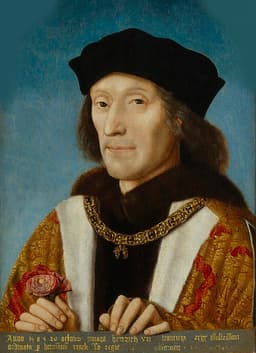
Henry VII
Emperor · Medieval
46.5Total

Mahmud I of Mali
Emperor · Medieval
38.1Total
Basic Information
Born
1275
1390
Died
1313
1400
Era
Medieval
Medieval
Nationality
Holy Roman Empire
Mali Empire
Occupation
Emperor
Emperor
Civilization
Western
Other
Score Comparison
Military (10%)
55.0
20.0
Political (20%)
37.9
32.1
Influence (20%)
52.5
45.5
Legacy (20%)
41.7
35.0
Leadership (15%)
48.4
44.5
Strategy (15%)
45.0
45.0
TOTAL
46.5
38.1
Henry VII — Complete Timeline
1308 AD
Elected King of GermanyPolitical Action◆ Major
Henry VII of Luxembourg was elected King of Germany after the assassination of Albert I. His election was supported by the prince-electors, who sought a compromise candidate to end the Habsburg dominance.
ElectionLuxembourgGerman Kingdom
Impact: regional
1310 AD
Led Campaign in ItalyWar◆ Major
Henry VII of Luxembourg led a military campaign into Italy to assert imperial authority over the Guelph and Ghibelline factions. He captured several cities but faced resistance from Florence and the Papal States, leading to a prolonged conflict.
Military CampaignItalyImperial Authority
Impact: regional
1312 AD
Crowned Holy Roman EmperorPolitical Action
Henry VII of Luxembourg was crowned Holy Roman Emperor by Pope Clement V in Rome. This coronation was the first imperial coronation in Rome since Frederick II, and it revived the imperial ideal of universal rule.
CoronationHoly Roman EmpirePapacy
Impact: globalconstructive
1313 AD
Died of Malaria in BuonconventoOther◆ Major
Henry VII of Luxembourg died of malaria in Buonconvento, Italy, while preparing to attack Florence. His death ended his Italian campaign and the Luxembourg dynasty's ambitions in Italy, leading to a new interregnum.
DeathItalyLuxembourg
Impact: regionaltragic
Mahmud I of Mali — Complete Timeline
1390 AD
Reign during Mali declinePolitical Action
Mahmud I ruled the Mali Empire during a period of decline. His reign was brief and marked by internal strife and loss of territory, as the empire weakened following the usurpation of Maghan II. No major military or administrative reforms are recorded.
Mali EmpireDeclineReign
Impact: national
This comparison has not been analyzed yet.
One-time AI generation (~1 minute). Scores and timeline are already available below.
Rankings
🥇
Henry VIILeader
Mil: 55.0Pol: 37.9Inf: 52.5
46.5
🥈
Mahmud I of Mali
Mil: 20.0Pol: 32.1Inf: 45.5
38.1
+8.4 behind
How This Comparison Works
Algorithm
Each figure is scored on 6 dimensions (0—100 scale) based on structured historical data: Military (10%), Political (20%), Influence (20%), Legacy (20%), Leadership (15%), Strategy (15%). The weighted total produces the final ranking.
Data Sources
Scores are computed from structured sub-indicators in the database. Scale factors adjust for era (Ancient ×0.85, Modern ×1.0) and civilization size (Eastern ×1.05, Other ×0.80) to account for differences in population and military scale.
Maximum 3 Figures
Comparisons are limited to 2—3 figures to ensure readability and statistical meaningfulness.
Error Margins
±5 points per dimension — Sub-scores are derived from historical records with inherent uncertainty. Two figures within 5 points on a dimension should be considered roughly equivalent in that area.
Total Score Accuracy
±3 points overall — The weighted combination of 6 dimensions produces a total score with approximately ±3 points of uncertainty. Differences of less than 3 points are not statistically significant— the figures are effectively tied.
Known Limitations
- Historical records are incomplete and uneven across civilizations
- Figures from oral-tradition societies may be underrepresented
- Occupation labels can misclassify multi-role figures
- Scores measure capability and impact, not moral character
- Quantitative scoring is a comparison tool, not absolute truth
Capability Radar
Military (10%) — Battles & Warfare
Battles
35
5
Win Rate
40
5
Expansion
30
5
Political (20%) — Governance & Reform
Reform
30
10
Diplomacy
45
10
Economy
25
10
Influence (20%) — Cultural & Global Reach
Cultural
25
5
Global
20
5
Legacy (20%) — Historical Impact
Historical
30
5
Longevity
20
5
Leadership (15%) — Power & Stability
Tenure
40
10
Stability
20
10
Strategy (15%) — Tactics & Innovation
Strategy
35
5
Tactics
30
5
Reform
20
5
Similar Comparisons
Comments & Discussion
No comments yet. Be the first to share your thoughts!