Loading...
Henry the Young King vs Qutuz
Qutuz leads by 21.6 pts · 2 figures compared
…
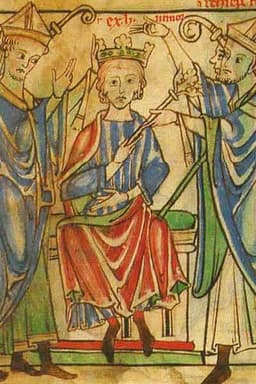
Henry the Young King
Emperor · Medieval
40.8Total
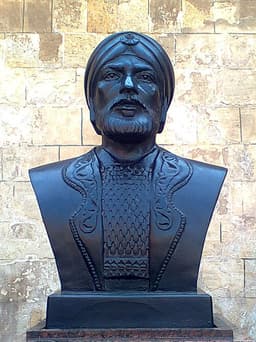
Qutuz
Emperor · Medieval
62.4Total
Basic Information
Born
1155
1220
Died
1183
1260
Era
Medieval
Medieval
Nationality
England
Egypt
Occupation
Emperor
Emperor
Civilization
Western
Middle Eastern
Score Comparison
Military (10%)
14.9
82.0
Political (20%)
40.8
68.0
Influence (20%)
47.1
55.0
Legacy (20%)
35.8
55.0
Leadership (15%)
49.9
64.0
Strategy (15%)
50.0
68.5
TOTAL
40.8
62.4
Henry the Young King — Complete Timeline
1170 AD
Coronation as Junior KingPolitical Action◆ Major
Henry the Young King was crowned as junior king of England by his father Henry II, a practice to secure succession. This coronation gave him nominal authority but no real power, leading to future conflict.
CoronationSuccession
Impact: national
1172 AD
Second CoronationPolitical Action
To assert his status, Henry the Young King was crowned again at Winchester by the Archbishop of York, after his first coronation was performed by the Archbishop of Canterbury, causing a dispute.
CoronationChurch Dispute
Impact: national
1173 AD
Rebellion of 1173-1174War◆ Major
Henry the Young King led a major rebellion against his father Henry II, joined by his brothers Richard and Geoffrey, and supported by King Louis VII of France. The revolt failed after 18 months, and Henry was forced to submit.
RebellionCivil WarFamily Conflict
Impact: regionaldestructive
1183 AD
Death from DysenteryOther◆ Major
Henry the Young King died of dysentery at Martel in Quercy, France, at age 28. His death ended his rivalry with his father and brothers, and he was buried in Rouen Cathedral.
DeathDisease
Impact: regionaltragic
Qutuz — Complete Timeline
1257 AD
Regency for Al-Mansur Ali (1257-1259)Political Action◆ Major
After Aybak's murder, Qutuz became regent for Aybak's young son Al-Mansur Ali. He effectively ruled Egypt as the power behind the throne. This period saw the consolidation of Mamluk power and preparation for the Mongol threat.
RegencyMamluk SultanatePower Consolidation
Impact: regional
1259 AD
Accession as Sultan (1259)Political Action◆ Major
Qutuz deposed Al-Mansur Ali and proclaimed himself Sultan of Egypt. He justified this by the need for strong leadership against the impending Mongol invasion. His accession was accepted by the Mamluk commanders, uniting Egypt under his rule.
SuccessionMamluk SultanateMongol Threat
Impact: regional
1260 AD
Battle of Ain Jalut (1260)War
Qutuz led the Mamluk army to victory against the Mongols at Ain Jalut in Palestine. This was the first major defeat of the Mongol Empire. The battle halted Mongol expansion into the Middle East and secured Mamluk control over Syria.
Mongol InvasionBattleMamluk Victory
Impact: globalconstructive
Assassination of Qutuz (1260)Other◆ Major
Shortly after the victory at Ain Jalut, Qutuz was assassinated by Baybars and other Mamluk commanders during a hunting expedition. Baybars then seized the sultanate. Qutuz's death ended his brief but decisive reign and elevated Baybars to power.
AssassinationSuccessionMamluk Sultanate
Impact: regionaltragic
Expert Analysis
Origins
Henry the Young King was born in 1155, the eldest surviving son of King Henry II of England and Eleanor of Aquitaine. As part of the Angevin Empire, he was groomed for kingship from an early age, but his father retained real power. Henry the Young King received a knightly education and was crowned junior king in 1170 at age 15, a practice intended to secure succession but which created tensions. His upbringing was marked by lavish displays and courtly culture, but he lacked administrative experience.
Qutuz, born around 1220, was a Mamluk of Turkic origin, likely from the Khwarezmian region. He was captured and sold into slavery, rising through the Mamluk military hierarchy in Egypt. His early life is obscure, but he became a trusted commander under Sultan Aybak. The Mamluks were slave-soldiers who had seized power in Egypt in 1250, and Qutuz's background reflected their meritocratic system, where military skill and loyalty determined advancement.
Rise to Power
Henry the Young King's rise was defined by his coronation as junior king in 1170, which gave him nominal authority but no real power. Frustrated by his father's control, he rebelled in 1173-1174, allying with his brothers Richard and Geoffrey, and King Louis VII of France. The rebellion failed after 18 months, and Henry was forced to submit. He spent the rest of his life attempting to assert his independence, often clashing with his father over lands and influence.
Qutuz rose to power through the Mamluk system. After Aybak's murder in 1257, Qutuz became regent for Aybak's young son, Al-Mansur Ali, effectively ruling Egypt. In 1259, facing the Mongol threat, he deposed Al-Mansur and proclaimed himself Sultan. His accession was justified by the need for decisive leadership. He quickly consolidated power, securing support from key Mamluk factions and preparing for war.
Leadership & Governance
Henry the Young King's leadership was characterized by his focus on chivalric display and tournament culture. He spent heavily on his court and was known for his generosity, but he lacked administrative skills and never governed effectively. His style was reactive, often seeking validation through rebellion rather than constructive rule. He scored 49.9 in leadership and 50.0 in strategy, reflecting average capability for a medieval prince.
Qutuz governed with a clear strategic vision. As sultan, he prioritized military preparedness and centralized authority. He implemented reforms to strengthen the Mamluk army, including mobilizing resources for the defense against the Mongols. His leadership was decisive; he personally led campaigns and made strategic alliances, such as with the Crusader states at Acre, allowing his army to pass through their territory. He scored 64.0 in leadership and 68.5 in strategy, demonstrating strong command.
Triumph & Tragedy
Henry the Young King's greatest triumph was his coronation as junior king, which symbolized his status. However, his major rebellion of 1173-1174 ended in failure, and he never achieved independent rule. His death from dysentery in 1183 at age 28, while again in conflict with his father, marked a tragic end. He left no lasting political achievements.
Qutuz's triumph was the Battle of Ain Jalut in 1260, where he led the Mamluk army to a decisive victory over the Mongols, halting their expansion into the Middle East. This was the first major defeat of the Mongol Empire. However, his tragedy came shortly after: he was assassinated by Baybars and other commanders during a hunting expedition, likely due to Baybars' ambition and Qutuz's failure to reward his subordinates adequately. Qutuz scored 82.0 in military, reflecting his battlefield success.
Character & Destiny
Henry the Young King was charismatic and popular among knights, but he was impulsive and lacked patience. His character drove him to rebel repeatedly, but his inability to compromise or govern led to his marginalization. Historians view him as a figure of unrealized potential, his destiny shaped by a father who refused to share power.
Qutuz was pragmatic, ruthless, and strategic. He was willing to seize power and make tough decisions, such as deposing a child sultan. His character enabled him to unite the Mamluks against a common enemy, but his failure to manage rivalries led to his assassination. His destiny was cut short, but his victory at Ain Jalut secured his legacy.
Legacy
Henry the Young King's legacy is minimal. He is remembered primarily as a rebellious son of Henry II, his life overshadowed by his father and brother Richard the Lionheart. His score of 35.8 in legacy reflects his limited impact. No institutions or reforms survived him.
Qutuz's legacy is significant. His victory at Ain Jalut halted Mongol expansion into Africa and the Middle East, preserving Islamic civilization. The battle also paved the way for Baybars' rise, who built on Qutuz's foundation to create a powerful Mamluk Sultanate. Qutuz scored 55.0 in legacy, and his military achievements are studied as a turning point in world history.
Conclusion
Qutuz had a greater impact than Henry the Young King. Qutuz's total score of 62.4 exceeds Henry's 40.8 by 21.6 points, reflecting superior performance across all categories. While Henry's life was a series of failed rebellions with no lasting effect, Qutuz's victory at Ain Jalut changed the course of history, ending Mongol invincibility and establishing the Mamluks as a dominant power. In a direct comparison, Qutuz's strategic and military accomplishments far outweigh Henry's short-lived ambitions.
Rankings
🥇
QutuzLeader
Mil: 82.0Pol: 68.0Inf: 55.0
62.4
🥈
Henry the Young King
Mil: 14.9Pol: 40.8Inf: 47.1
40.8
+21.6 behind
How This Comparison Works
Algorithm
Each figure is scored on 6 dimensions (0—100 scale) based on structured historical data: Military (10%), Political (20%), Influence (20%), Legacy (20%), Leadership (15%), Strategy (15%). The weighted total produces the final ranking.
Data Sources
Scores are computed from structured sub-indicators in the database. Scale factors adjust for era (Ancient ×0.85, Modern ×1.0) and civilization size (Eastern ×1.05, Other ×0.80) to account for differences in population and military scale.
Maximum 3 Figures
Comparisons are limited to 2—3 figures to ensure readability and statistical meaningfulness.
Error Margins
±5 points per dimension — Sub-scores are derived from historical records with inherent uncertainty. Two figures within 5 points on a dimension should be considered roughly equivalent in that area.
Total Score Accuracy
±3 points overall — The weighted combination of 6 dimensions produces a total score with approximately ±3 points of uncertainty. Differences of less than 3 points are not statistically significant— the figures are effectively tied.
Known Limitations
- Historical records are incomplete and uneven across civilizations
- Figures from oral-tradition societies may be underrepresented
- Occupation labels can misclassify multi-role figures
- Scores measure capability and impact, not moral character
- Quantitative scoring is a comparison tool, not absolute truth
Capability Radar
Military (10%) — Battles & Warfare
Battles
10
75
Win Rate
5
80
Expansion
5
70
Political (20%) — Governance & Reform
Reform
0
50
Diplomacy
10
70
Economy
0
55
Influence (20%) — Cultural & Global Reach
Cultural
5
60
Global
5
70
Legacy (20%) — Historical Impact
Historical
10
75
Longevity
5
65
Leadership (15%) — Power & Stability
Tenure
10
45
Stability
5
50
Strategy (15%) — Tactics & Innovation
Strategy
10
82
Tactics
10
85
Reform
0
60
Similar Comparisons
Comments & Discussion
No comments yet. Be the first to share your thoughts!