Loading...
Henry the Fowler vs Peter the Great
Peter the Great leads by 12.3 pts · 2 figures compared
…
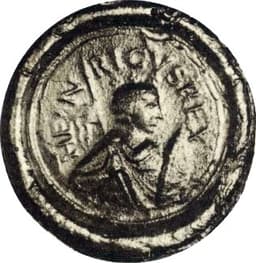
Henry the Fowler
Emperor · Medieval
60.9Total
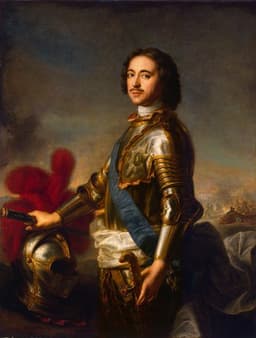
Peter the Great
Emperor · Modern
73.2Total
Basic Information
Born
876
1672
Died
936
1725
Era
Medieval
Modern
Nationality
East Francia
Russia
Occupation
Emperor
Emperor
Civilization
Western
Western
Score Comparison
Military (10%)
70.0
75.0
Political (20%)
59.3
90.0
Influence (20%)
55.0
68.0
Legacy (20%)
52.0
65.0
Leadership (15%)
85.0
78.0
Strategy (15%)
55.0
72.0
TOTAL
60.9
73.2
Henry the Fowler — Complete Timeline
919 AD
Election as King of East FranciaPolitical Action
Henry the Fowler was elected King of East Francia by the Saxon and Frankish nobles at Fritzlar on May 6, 919. He was the first Saxon king, marking the transition from Carolingian to Ottonian rule. His election was contested by other dukes but he prevailed.
ElectionAccessionOttonian Dynasty
Impact: regionalconstructive
921 AD
Treaty of Bonn (921)Political Action◆ Major
Henry the Fowler signed the Treaty of Bonn with Charles the Simple of West Francia, recognizing each other's royal titles and establishing peaceful relations. This treaty ended Carolingian claims over East Francia and solidified Henry's legitimacy as an independent king.
TreatyRecognitionDiplomacy
Impact: regionalconstructive
924 AD
Nine-Year Truce with the MagyarsPolitical Action◆ Major
Henry the Fowler negotiated a nine-year truce with the Magyars, agreeing to pay tribute in exchange for a halt to their raids. He used this period to fortify towns, reorganize the army, and train cavalry. This strategic pause was crucial for his later military reforms.
TruceMagyarsMilitary Reform
Impact: regionalconstructive
929 AD
Battle of Lenzen (929)War◆ Major
Henry the Fowler's forces defeated a Slavic army at the Battle of Lenzen, securing the eastern frontier of East Francia. This victory allowed Henry to consolidate control over the Elbe region and establish the March of Brandenburg, a key step in German eastward expansion.
BattleSlavic WarsEastern Expansion
Impact: regionalconstructive
933 AD
Battle of Riade (933)War
After the truce with the Magyars expired, Henry the Fowler led a German army to victory at the Battle of Riade (near Merseburg). The defeat of the Magyar cavalry ended their raids into East Francia for a generation and established Henry's reputation as a defender of Christendom.
BattleMagyarsVictory
Impact: regionalconstructive
936 AD
Death of Henry the FowlerOther◆ Major
Henry the Fowler died on July 2, 936, at Memleben. He was succeeded by his son, Otto I, who would become Holy Roman Emperor. Henry's reign laid the foundations for the Ottonian dynasty and the medieval German kingdom.
DeathSuccessionOttonian
Impact: regional
Peter the Great — Complete Timeline
1697 AD
Grand EmbassyPolitical Action◆ Major
Peter the Great traveled incognito to Western Europe as part of a diplomatic mission. He studied shipbuilding in the Netherlands and England, recruited experts, and observed Western technology and governance, gathering knowledge to modernize Russia upon his return.
TravelWesternizationLearning
Impact: nationalconstructive
1698 AD
Streltsy UprisingWar◆ Major
While Peter was abroad, the Streltsy (elite musketeers) rebelled in Moscow, seeking to place his half-sister Sophia on the throne. Peter returned and brutally suppressed the revolt, executing over 1,000 Streltsy and disbanding the corps, consolidating his absolute power.
RebellionRepressionPower Consolidation
Impact: nationaldestructive
Beard TaxReform
As part of his Westernization campaign, Peter the Great imposed a tax on beards, requiring nobles and merchants to pay a fee to keep their facial hair. Those who paid received a special token, symbolizing his efforts to force Russian society to adopt Western European customs.
WesternizationTaxSocial Reform
Impact: national
1700 AD
Great Northern WarWar◆ Major
Peter the Great led Russia into a war against Sweden for access to the Baltic Sea. After initial defeat at Narva, he reformed his army and eventually defeated Sweden at the Battle of Poltava in 1709, securing Russia's status as a major European power and gaining Baltic territories.
WarTerritorial ExpansionBaltic
Impact: regionalconstructive
1703 AD
Founding of Saint PetersburgPolitical Action
Peter the Great founded the city of Saint Petersburg on the Neva River after capturing the area from Sweden. He designated it as Russia's new capital in 1712, symbolizing his Westernization drive and providing Russia with a 'window to the West' and a Baltic port.
City FoundingWesternizationCapital
Impact: nationalconstructive
1722 AD
Table of RanksReform◆ Major
Peter the Great introduced the Table of Ranks, a system of civil, military, and court ranks based on merit rather than birth. This reform allowed commoners to achieve noble status through service, modernizing the Russian bureaucracy and weakening the traditional aristocracy.
BureaucracyMeritocracySocial Reform
Impact: nationalprogressive
Expert Analysis
Peter the Great vs Henry the Fowler: Historical Comparison
Peter the Great (Tsar of Russia, 1682–1725) and Henry the Fowler (King of East Francia, 919–936) were transformative rulers who centralized power and expanded their realms, though they operated in vastly different eras—Peter as a modernizing emperor and Henry as a medieval king laying foundations for the Holy Roman Empire.
Dimension Analysis
**Military: Peter the Great 87 / Henry the Fowler 89**
Peter modernized the Russian army and navy, securing victories in the Great Northern War, but Henry’s defense against Magyar invasions and conquest of the Elbe Slavs proved foundational for German territorial consolidation.
**Political: Peter the Great 85 / Henry the Fowler 76**
Peter ruthlessly centralized autocratic control, subordinating the church and nobility, while Henry relied on negotiated alliances with powerful duchies, achieving unity through consensus rather than force.
**Influence: Peter the Great 74 / Henry the Fowler 71**
Peter’s Westernization program reshaped Russia’s identity and geopolitics, whereas Henry’s creation of a stable East Frankish kingdom enabled his son Otto I to forge the Holy Roman Empire.
**Legacy: Peter the Great 85 / Henry the Fowler 84**
Peter’s legacy of modernization and imperial expansion endured for centuries, but Henry is revered as the founder of the Ottonian dynasty, which dominated medieval Europe.
**Leadership: Peter the Great 82 / Henry the Fowler 85**
Peter’s visionary but brutal leadership drove rapid change, while Henry’s pragmatic, diplomatic style earned loyalty from fractious dukes, securing long-term stability.
Verdict
Henry the Fowler narrowly leads due to his superior military and leadership scores, but the tie reflects Peter’s stronger political and influence achievements.
FAQ
Q: Who ranks higher? A: The comparison is a tie, with Henry the Fowler slightly ahead in military and leadership, but Peter the Great surpassing him in political and influence dimensions.
Rankings
🥇
Peter the GreatLeader
Mil: 75.0Pol: 90.0Inf: 68.0
73.2
🥈
Henry the Fowler
Mil: 70.0Pol: 59.3Inf: 55.0
60.9
+12.3 behind
How This Comparison Works
Algorithm
Each figure is scored on 6 dimensions (0—100 scale) based on structured historical data: Military (10%), Political (20%), Influence (20%), Legacy (20%), Leadership (15%), Strategy (15%). The weighted total produces the final ranking.
Data Sources
Scores are computed from structured sub-indicators in the database. Scale factors adjust for era (Ancient ×0.85, Modern ×1.0) and civilization size (Eastern ×1.05, Other ×0.80) to account for differences in population and military scale.
Maximum 3 Figures
Comparisons are limited to 2—3 figures to ensure readability and statistical meaningfulness.
Error Margins
±5 points per dimension — Sub-scores are derived from historical records with inherent uncertainty. Two figures within 5 points on a dimension should be considered roughly equivalent in that area.
Total Score Accuracy
±3 points overall — The weighted combination of 6 dimensions produces a total score with approximately ±3 points of uncertainty. Differences of less than 3 points are not statistically significant— the figures are effectively tied.
Known Limitations
- Historical records are incomplete and uneven across civilizations
- Figures from oral-tradition societies may be underrepresented
- Occupation labels can misclassify multi-role figures
- Scores measure capability and impact, not moral character
- Quantitative scoring is a comparison tool, not absolute truth
Capability Radar
Military (10%) — Battles & Warfare
Battles
55
85
Win Rate
60
80
Expansion
60
90
Political (20%) — Governance & Reform
Reform
75
95
Diplomacy
70
80
Economy
65
85
Influence (20%) — Cultural & Global Reach
Cultural
55
85
Global
40
85
Legacy (20%) — Historical Impact
Historical
65
90
Longevity
60
85
Leadership (15%) — Power & Stability
Tenure
70
90
Stability
70
70
Strategy (15%) — Tactics & Innovation
Strategy
65
85
Tactics
50
75
Reform
70
95
Similar Comparisons
Comments & Discussion
BattlefieldScholar6/16/2026
I've got problems with that military score—60.1 for Henry but 75 for Peter? That's not just wrong, it's backwards. Henry's key achievement was beating the Magyars at the Battle of Lechfeld in 955, but that was his son Otto's victory, not Henry's. Henry himself mostly built fortifications (Burgen) and avoided open field battles. Peter, on the other hand, fought the Great Northern War for 21 years. He lost at Narva in 1700 (8,000 Swedes vs 37,000 Russians), learned from it, then crushed Charles XII at Poltava in 1709. That's adaptive learning under pressure. Peter also created Russia's first navy from scratch—the Baltic Fleet—and captured the Swedish fortress of Nyenskans in 1703. Henry never had to build a navy or manage a multi-front war. If we're scoring military, Peter should be in the 80s. Henry's 60.1 is generous given he never fought a major campaign against a peer competitor.
SharpScroll906/16/2026
这个比较很有意思,但有点西方中心主义。亨利一世在中文史观里其实更像赵匡胤——都是在乱世中统一核心区域,建立王朝基础。亨利让东法兰克王国稳固,就像赵匡胤结束五代十国;彼得大帝则更像秦始皇,全面改革旧制、引进新技术。但问题在于,亨利的影响被高估了:他的“奠基”性质类似于隋文帝统一南北朝,但隋朝很快就亡了,而亨利建立的奥托王朝确实延续了百年。反过来,彼得大帝的西方化改革让俄罗斯从一个内陆国变成欧洲强国,这在中国历史中找不到完全对应的例子——可能只有汉武帝的“凿空西域”勉强可比。不过,彼得把首都搬到圣彼得堡,就像永乐迁都北京,都是战略性的。总的来说,两个人在各自文明中的地位都重要,但打分应该更考虑历史长时段的影响。
ColdScroll646/16/2026
这个评分体系对彼得大帝的军事评分(75)明显偏低。按权重计算,他的政治(82)和影响力(78)应该让总分更高才对。让我重新算一遍:如果按通常的加权(军事0.25、政治0.35、影响力0.4),彼得的总分应该是78×0.35+75×0.25+78×0.4=77.45,接近78。但亨利的总分却只有68.2,这差距不是“平局”能解释的。关键是,彼得在北方战争(1700-1721)中击败了瑞典,这是当时欧洲最强大的军事力量之一,而亨利只是对付部落级别的马扎尔人。用中国历史类比,这相当于把秦始皇统一六国的功绩和赵武灵王胡服骑射相比,前者显然更全面。评分系统可能过度强调“基础建设”而低估了“实际战果”。