Loading...
Henry the Fowler vs Mao Zedong
Mao Zedong leads by 18.5 pts · 2 figures compared
…
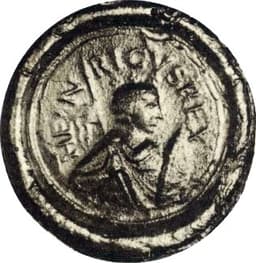
Henry the Fowler
Emperor · Medieval
60.9Total
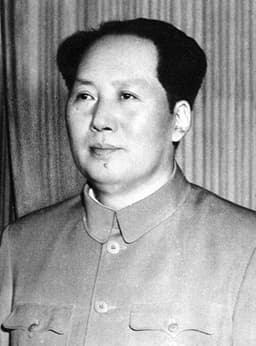
Mao Zedong
Politician · Modern
79.4Total
Basic Information
Born
876
1893
Died
936
1976
Era
Medieval
Modern
Nationality
East Francia
China
Occupation
Emperor
Politician
Civilization
Western
Eastern
Score Comparison
Military (10%)
70.0
75.0
Political (20%)
59.3
88.0
Influence (20%)
55.0
85.0
Legacy (20%)
52.0
70.0
Leadership (15%)
85.0
85.0
Strategy (15%)
55.0
72.0
TOTAL
60.9
79.4
Henry the Fowler — Complete Timeline
919 AD
Election as King of East FranciaPolitical Action
Henry the Fowler was elected King of East Francia by the Saxon and Frankish nobles at Fritzlar on May 6, 919. He was the first Saxon king, marking the transition from Carolingian to Ottonian rule. His election was contested by other dukes but he prevailed.
ElectionAccessionOttonian Dynasty
Impact: regionalconstructive
921 AD
Treaty of Bonn (921)Political Action◆ Major
Henry the Fowler signed the Treaty of Bonn with Charles the Simple of West Francia, recognizing each other's royal titles and establishing peaceful relations. This treaty ended Carolingian claims over East Francia and solidified Henry's legitimacy as an independent king.
TreatyRecognitionDiplomacy
Impact: regionalconstructive
924 AD
Nine-Year Truce with the MagyarsPolitical Action◆ Major
Henry the Fowler negotiated a nine-year truce with the Magyars, agreeing to pay tribute in exchange for a halt to their raids. He used this period to fortify towns, reorganize the army, and train cavalry. This strategic pause was crucial for his later military reforms.
TruceMagyarsMilitary Reform
Impact: regionalconstructive
929 AD
Battle of Lenzen (929)War◆ Major
Henry the Fowler's forces defeated a Slavic army at the Battle of Lenzen, securing the eastern frontier of East Francia. This victory allowed Henry to consolidate control over the Elbe region and establish the March of Brandenburg, a key step in German eastward expansion.
BattleSlavic WarsEastern Expansion
Impact: regionalconstructive
933 AD
Battle of Riade (933)War
After the truce with the Magyars expired, Henry the Fowler led a German army to victory at the Battle of Riade (near Merseburg). The defeat of the Magyar cavalry ended their raids into East Francia for a generation and established Henry's reputation as a defender of Christendom.
BattleMagyarsVictory
Impact: regionalconstructive
936 AD
Death of Henry the FowlerOther◆ Major
Henry the Fowler died on July 2, 936, at Memleben. He was succeeded by his son, Otto I, who would become Holy Roman Emperor. Henry's reign laid the foundations for the Ottonian dynasty and the medieval German kingdom.
DeathSuccessionOttonian
Impact: regional
Mao Zedong — Complete Timeline
1934 AD
Long MarchWar
Mao Zedong led the Chinese Red Army on a strategic retreat from Nationalist forces, covering approximately 6,000 miles over 370 days. The march solidified Mao's leadership within the Chinese Communist Party and became a foundational myth of the Communist revolution.
Chinese Civil WarCommunist RevolutionRetreat
Impact: national
1949 AD
Proclamation of the People's Republic of ChinaPolitical Action
Mao Zedong declared the founding of the People's Republic of China from Tiananmen Gate in Beijing. This ended the Chinese Civil War and established Communist rule over mainland China, with Mao as Chairman of the Central People's Government.
Founding of PRCCommunist VictoryRevolution
Impact: global
1958 AD
Great Leap ForwardReform◆ Major
Mao launched a campaign to rapidly industrialize China and collectivize agriculture. The policy led to widespread mismanagement, resulting in a famine that caused an estimated 15-45 million deaths between 1959 and 1961.
FamineIndustrializationCollectivization
Impact: nationaldestructive
1960 AD
Sino-Soviet SplitPolitical Action◆ Major
Mao's ideological differences with Soviet leader Nikita Khrushchev led to a breakdown in relations between China and the Soviet Union. The split ended the Sino-Soviet alliance and reshaped global Cold War dynamics, with China pursuing an independent path.
Cold WarIdeological ConflictAlliance Breakdown
Impact: global
1966 AD
Cultural RevolutionPolitical Action
Mao initiated a sociopolitical movement to purge capitalist and traditional elements from Chinese society. The Red Guard youth groups attacked intellectuals and officials, leading to widespread violence, destruction of cultural artifacts, and an estimated 1-2 million deaths.
Political PurgeSocial UpheavalRed Guard
Impact: nationaldestructive
1971 AD
Ping-Pong DiplomacyCultural◆ Major
Mao approved an invitation for the U.S. table tennis team to visit China, initiating a thaw in Sino-American relations. This cultural exchange paved the way for President Nixon's visit to China in 1972 and the eventual normalization of diplomatic ties.
DiplomacyU.S.-China RelationsCultural Exchange
Impact: globalconstructive
Expert Analysis
Mao Zedong vs Henry the Fowler
# The Forger of Nations: Henry the Fowler and Mao Zedong
On a May morning in 919, in the small town of Fritzlar, a Saxon duke named Henry accepted a crown from Frankish nobles who had no emperor to pledge allegiance to. East Francia was a fractured realm, bleeding from Magyar raids, its borders uncertain. More than a millennium later, on October 1, 1949, a man in a Sun Yat-sen suit stood atop Tiananmen Gate in Beijing and declared to a million gathered souls that the Chinese people had stood up. Both moments were births—of a dynasty, of a nation. But what drove these two men, separated by a thousand years and half a world, to forge such different destinies?
Origins
Henry the Fowler was born in 876 into the Liudolfing family, Saxon nobles who had carved out power in the chaotic aftermath of Charlemagne’s empire. His nickname came from a legend: while trapping birds, messengers arrived to inform him of his election as king—a story that may be myth but captures his earthy, pragmatic roots. His was a world of small kingdoms, tribal loyalties, and constant threat. He learned early that survival meant compromise.
Mao Zedong was born in 1893 in Shaoshan, a village in Hunan province, to a prosperous peasant family. China was collapsing—the Qing dynasty was rotting, foreign powers carved up its ports, and famine stalked the countryside. Mao grew up surrounded by the smell of failure and humiliation. He devoured classical Chinese texts and revolutionary pamphlets alike, his mind forged in the crucible of national shame. Where Henry inherited a fragmented realm, Mao inherited a broken civilization.
Rise to Power
Henry’s path was one of careful negotiation. In 919, when the Saxon and Frankish nobles elected him king at Fritzlar, he did not claim universal rule. He accepted the crown but refused extreme unction—a gesture that signaled his power was secular, not divine. He then spent years securing recognition from the other German duchies: Swabia, Bavaria, Franconia. He did not conquer them; he married his sons to their daughters and offered them autonomy. His was a rise built on patience and marriage beds.
Mao’s rise was a brutal climb through war and ideology. In 1934, during the Long March, he emerged as the leader of the Chinese Communist Party, guiding the Red Army on a 6,000-mile retreat through mountains and marshes. It was a journey of survival, and Mao’s strategic vision—his willingness to sacrifice thousands for the cause—cemented his authority. By 1949, when he proclaimed the People’s Republic, he had defeated both the Japanese and the Nationalists. His rise was a revolution, not a negotiation.
Leadership & Governance
Henry ruled as a pragmatist. In 921, he signed the Treaty of Bonn with Charles the Simple of West Francia, recognizing each other’s titles—a diplomatic coup that stabilized his western border. In 924, facing the terrifying Magyar horsemen who had raided Europe for decades, he did not fight. He paid them tribute, securing a nine-year truce. This was not cowardice; it was strategy. He used the peace to build fortified towns, train a new cavalry, and consolidate his realm. When the truce expired in 933, he led his army to victory at the Battle of Riade, near Merseburg, shattering the Magyar myth of invincibility. Henry governed as a builder: walls, alliances, and patience.
Mao governed as a transformer. In 1958, he launched the Great Leap Forward, a campaign to industrialize China overnight. Peasants were forced into communal farms, backyard steel furnaces were built, and grain quotas were inflated. The result was catastrophic: widespread mismanagement, famine, and an estimated 15 to 45 million deaths. Yet Mao did not retreat. In 1966, he initiated the Cultural Revolution, mobilizing millions of Red Guards to purge “capitalist” and “traditional” elements from society. Temples were destroyed, intellectuals were humiliated, and chaos reigned. Mao’s governance was a forge, and he was willing to burn everything to remake China.
Triumph & Tragedy
Henry’s greatest triumph came at the Battle of Lenzen in 929, where his forces crushed a Slavic army and secured the eastern frontier of East Francia. It was a victory of discipline over numbers, and it opened the way for German expansion into the Slavic lands. His tragedy was subtler: he never became emperor. He died in 936 at Memleben, a king but not a Caesar, his son Otto I destined to claim the imperial crown.
Mao’s triumph was the founding of the People’s Republic itself—a moment of national rebirth after a century of humiliation. His tragedy was the cost of his vision. The Great Leap Forward and Cultural Revolution left scars that still mark China. Even his diplomatic successes, like the 1971 Ping-Pong Diplomacy that thawed relations with the United States, were shadowed by the millions who perished under his policies.
Character & Destiny
Henry was a survivor, not a visionary. He knew that power was fragile, that a kingdom could be lost in a single battle. His decisions were cautious, his reforms incremental. He built a dynasty that would last for generations, but he did so by accepting the world as it was.
Mao was a revolutionary, not a manager. He believed that history could be bent to the will of a determined leader. “Political power grows out of the barrel of a gun,” he wrote, and he lived by that creed. His character—ruthless, charismatic, utopian—drove him to remake China at any cost. Where Henry adapted to circumstances, Mao sought to annihilate them.
Legacy
Henry the Fowler is remembered as the founder of the Ottonian dynasty, the father of the German nation. His legacy is a stable kingdom that became the Holy Roman Empire. He is a figure of marble and chronicles, respected but not loved.
Mao Zedong is a ghost that haunts modern China. His image still hangs in Tiananmen Square, his writings are still studied, but his policies are quietly repudiated. He is remembered as both liberator and tyrant, the man who united China and the man who broke it.
Conclusion
One built walls; the other burned them. Henry the Fowler forged a kingdom by knowing when to pay tribute and when to fight. Mao Zedong forged a nation by knowing when to sacrifice and when to proclaim. Both were products of their times: Henry of a fractured Europe that needed consolidation, Mao of a humiliated China that needed redemption. In the end, the difference between them is not of skill or vision, but of scale. Henry built a kingdom; Mao remade a civilization. And the cost of remaking a civilization is always measured in blood.
Rankings
🥇
Mao ZedongLeader
Mil: 75.0Pol: 88.0Inf: 85.0
79.4
🥈
Henry the Fowler
Mil: 70.0Pol: 59.3Inf: 55.0
60.9
+18.5 behind
How This Comparison Works
Algorithm
Each figure is scored on 6 dimensions (0—100 scale) based on structured historical data: Military (10%), Political (20%), Influence (20%), Legacy (20%), Leadership (15%), Strategy (15%). The weighted total produces the final ranking.
Data Sources
Scores are computed from structured sub-indicators in the database. Scale factors adjust for era (Ancient ×0.85, Modern ×1.0) and civilization size (Eastern ×1.05, Other ×0.80) to account for differences in population and military scale.
Maximum 3 Figures
Comparisons are limited to 2—3 figures to ensure readability and statistical meaningfulness.
Error Margins
±5 points per dimension — Sub-scores are derived from historical records with inherent uncertainty. Two figures within 5 points on a dimension should be considered roughly equivalent in that area.
Total Score Accuracy
±3 points overall — The weighted combination of 6 dimensions produces a total score with approximately ±3 points of uncertainty. Differences of less than 3 points are not statistically significant— the figures are effectively tied.
Known Limitations
- Historical records are incomplete and uneven across civilizations
- Figures from oral-tradition societies may be underrepresented
- Occupation labels can misclassify multi-role figures
- Scores measure capability and impact, not moral character
- Quantitative scoring is a comparison tool, not absolute truth
Capability Radar
Military (10%) — Battles & Warfare
Battles
55
85
Win Rate
60
80
Expansion
60
85
Political (20%) — Governance & Reform
Reform
75
95
Diplomacy
70
80
Economy
65
70
Influence (20%) — Cultural & Global Reach
Cultural
55
90
Global
40
90
Legacy (20%) — Historical Impact
Historical
65
95
Longevity
60
85
Leadership (15%) — Power & Stability
Tenure
70
95
Stability
70
60
Strategy (15%) — Tactics & Innovation
Strategy
65
85
Tactics
50
75
Reform
70
90
Similar Comparisons
Comments & Discussion
The Anvil King6/16/2026
Henry the Fowler didn’t just beat the Magyars—he fundamentally rewired East German defense, building fortified towns and a mobile cavalry from scratch after 924. Compare that to Mao’s Long March mythmaking. Henry’s pragmatism created a lasting kingdom out of chaos; Mao’s cult of personality left China devastated by famines. One forged nations, the other fractured them. Check the grain requisition records if you doubt me. 🏰
骑兵先生6/16/2026
亨利靠的是实战智慧——他利用莱比锡战役的九年休战期,在萨克森建起密集堡垒网,把民兵变成职业骑兵。而毛泽东呢?大跃进三年饿死三千万人,真当历史是纸糊的?别被延安光环骗了,一个是打铁匠,一个是画饼匠。证据就是那些淤塞在农场仓库里的粮食账本📜