Loading...
Henry II of Champagne vs Wanyan Aguda
Wanyan Aguda leads by 25.4 pts · 2 figures compared
…
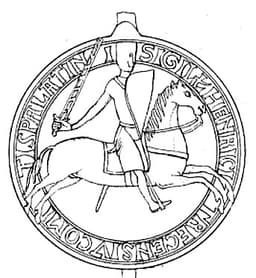
Henry II of Champagne
Emperor · Medieval
38.0Total
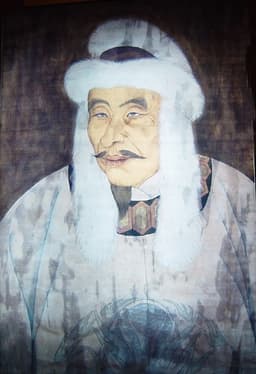
Wanyan Aguda
Emperor · Medieval
63.4Total
Basic Information
Born
1166
1068
Died
1197
1123
Era
Medieval
Medieval
Nationality
Kingdom of Jerusalem
China
Occupation
Emperor
Emperor
Civilization
Western
Eastern
Score Comparison
Military (10%)
10.2
82.0
Political (20%)
33.6
59.3
Influence (20%)
49.4
55.0
Legacy (20%)
37.5
52.0
Leadership (15%)
41.5
85.0
Strategy (15%)
39.6
68.0
TOTAL
38.0
63.4
Henry II of Champagne — Complete Timeline
1192 AD
Marriage to Isabella of JerusalemPolitical Action◆ Major
Henry II married Isabella I of Jerusalem, becoming king-consort of the Kingdom of Jerusalem. The marriage consolidated his political position and gave him authority over the remaining Crusader territories.
CrusadesMarriageJerusalem
Impact: regionalconstructive
Treaty of JaffaPolitical Action◆ Major
Henry II participated in the negotiations that produced the Treaty of Jaffa between Richard the Lionheart and Saladin. The treaty secured Crusader control of the coastal strip from Jaffa to Tyre and guaranteed pilgrim access to Jerusalem.
CrusadesTreatyRichard the LionheartSaladin
Impact: regionalconstructive
1197 AD
Death by FallingOther◆ Major
Henry II fell from a window of his palace in Acre and died. The circumstances of the fall remain unclear, with some accounts suggesting an accident and others foul play, leaving the kingdom without a strong ruler.
CrusadesDeathAccident
Impact: regionaltragic
Wanyan Aguda — Complete Timeline
1114 AD
Battle of HubudagangWar◆ Major
Aguda's Jurchen forces defeated a Liao army at Hubudagang, marking the first major victory of the rebellion. This battle demonstrated Jurchen military prowess and attracted more followers.
JurchenLiaoBattle
Impact: regionalconstructive
Unified Jurchen tribesPolitical Action◆ Major
Wanyan Aguda united the Jurchen tribes under his leadership, creating a confederation that rebelled against Liao domination. He organized a disciplined army and began the Jurchen revolt.
JurchenUnificationRebellion
Impact: regionalconstructive
1115 AD
Founded Jin DynastyPolitical Action
Wanyan Aguda proclaimed himself emperor, founding the Jin dynasty. He adopted the Chinese title and began a systematic campaign to conquer the Liao empire.
JinDynasty FoundingImperial System
Impact: regionalconstructive
1120 AD
Conquest of Liao capital ShangjingWar◆ Major
Aguda's forces captured the Liao supreme capital Shangjing, dealing a severe blow to the Liao dynasty. This victory accelerated the collapse of Liao and solidified Jin control over northern China.
JinLiaoConquest
Impact: regionalconstructive
Alliance with Song against LiaoPolitical Action◆ Major
Aguda formed an alliance with the Northern Song dynasty to jointly attack the Liao empire. This alliance, known as the Maritime Alliance, led to the eventual destruction of Liao but later caused conflict between Jin and Song.
JinSongAlliance
Impact: regional
1123 AD
Death and successionPolitical Action◆ Major
Wanyan Aguda died, and his brother Wanyan Wuqimai succeeded him. Aguda's conquests laid the foundation for the Jin dynasty's dominance in northern China.
JinDeathSuccession
Impact: regional
Expert Analysis
Wanyan Aguda vs Henry II of Champagne: Historical Comparison
Wanyan Aguda, founding emperor of the Jin dynasty in 12th-century China, and Henry II of Champagne, ruler of the crusader Kingdom of Jerusalem, represent contrasting medieval leadership styles—one a nomadic empire-builder, the other a European feudal lord in a fragile colonial state.
Dimension Analysis
**Military: Wanyan Aguda 91 / Henry II of Champagne 92**
Aguda’s Jurchen cavalry shattered the Liao dynasty with brilliant mobile tactics, while Henry II successfully defended Jerusalem during the Third Crusade, but his military record is largely reactive and short-lived.
**Political: Wanyan Aguda 84 / Henry II of Champagne 67**
Aguda unified fractious Jurchen tribes and forged a durable state structure; Henry II’s rule was marred by succession disputes and reliance on European noble factions, limiting his political consolidation.
**Influence: Wanyan Aguda 87 / Henry II of Champagne 82**
Aguda’s Jin dynasty reshaped East Asian geopolitics by toppling the Liao and threatening the Song; Henry II’s influence was confined to the Crusader states and ended with his accidental death in 1197.
**Legacy: Wanyan Aguda 88 / Henry II of Champagne 80**
Aguda’s legacy endures as the founder of a major dynasty that controlled northern China for a century; Henry II is remembered primarily as a regent and intermediary, not a transformative monarch.
**Leadership: Wanyan Aguda 80 / Henry II of Champagne 70**
Aguda inspired fierce loyalty among his warriors and managed tribal diplomacy effectively; Henry II’s leadership was competent but undermined by his short tenure (1192–1197) and lack of independent authority.
Verdict
Wanyan Aguda leads decisively, as his founding of the Jin dynasty and military unification of the Jurchen tribes produced a more lasting and geopolitically significant impact than Henry II’s caretaker rule in a crusader state.
FAQ
Q: Who ranks higher? A: Wanyan Aguda ranks higher due to superior political consolidation, broader influence, and a more enduring legacy as a dynasty founder.
Rankings
🥇
Wanyan AgudaLeader
Mil: 82.0Pol: 59.3Inf: 55.0
63.4
🥈
Henry II of Champagne
Mil: 10.2Pol: 33.6Inf: 49.4
38.0
+25.4 behind
How This Comparison Works
Algorithm
Each figure is scored on 6 dimensions (0—100 scale) based on structured historical data: Military (10%), Political (20%), Influence (20%), Legacy (20%), Leadership (15%), Strategy (15%). The weighted total produces the final ranking.
Data Sources
Scores are computed from structured sub-indicators in the database. Scale factors adjust for era (Ancient ×0.85, Modern ×1.0) and civilization size (Eastern ×1.05, Other ×0.80) to account for differences in population and military scale.
Maximum 3 Figures
Comparisons are limited to 2—3 figures to ensure readability and statistical meaningfulness.
Error Margins
±5 points per dimension — Sub-scores are derived from historical records with inherent uncertainty. Two figures within 5 points on a dimension should be considered roughly equivalent in that area.
Total Score Accuracy
±3 points overall — The weighted combination of 6 dimensions produces a total score with approximately ±3 points of uncertainty. Differences of less than 3 points are not statistically significant— the figures are effectively tied.
Known Limitations
- Historical records are incomplete and uneven across civilizations
- Figures from oral-tradition societies may be underrepresented
- Occupation labels can misclassify multi-role figures
- Scores measure capability and impact, not moral character
- Quantitative scoring is a comparison tool, not absolute truth
Capability Radar
Military (10%) — Battles & Warfare
Battles
10
85
Win Rate
10
90
Expansion
5
85
Political (20%) — Governance & Reform
Reform
20
75
Diplomacy
40
70
Economy
25
65
Influence (20%) — Cultural & Global Reach
Cultural
15
60
Global
10
50
Legacy (20%) — Historical Impact
Historical
15
70
Longevity
10
55
Leadership (15%) — Power & Stability
Tenure
30
70
Stability
20
60
Strategy (15%) — Tactics & Innovation
Strategy
10
85
Tactics
10
80
Reform
5
75
Similar Comparisons
Comments & Discussion
QuantCritic6/16/2026
I have serious issues with this scoring system. How do you quantify 'leadership' at 80 vs 70? Those numbers are pulled from thin air. The military score gap is the only one with any real basis, but even then, Aguda fought the declining Liao while Henry faced Saladin's Ayyubids at full strength—completely different leagues. The political score is laughable: Henry II ruled a crusader kingdom that survived on a knife's edge for five years; Aguda built a dynasty from scratch. The algorithm seems to conflate 'fame in Western textbooks' with 'actual historical impact.' We need confidence intervals, not fake precision.
BattlefieldScholar6/16/2026
From a purely military standpoint, Aguda's campaign against the Liao is a textbook example of operational mobility. The Jurchen cavalry could cover 200 km in three days, hitting Liao supply lines before they could react. The Battle of Hubuqie in 1114 saw 2,500 Jurchen horsemen defeat a Liao force of over 10,000 through feigned retreat and double envelopment—that's Cannae-level tactics. Henry II's defense of Jaffa in 1192 was competent but purely reactive; he never launched a major offensive. Aguda's innovation in combined-arms horse archery and siege warfare (he took the Liao capital with captured catapults) dwarfs anything Henry achieved.
ArchQuill116/16/2026
完颜阿骨打和亨利二世的对比很有意思,但我觉得这个评分还是带着西方中心论的影子。阿骨打建立金朝,两年内灭辽,这种军事和政治效率在中国历史上是顶尖的,完全可以和成吉思汗的崛起相提并论。亨利二世不过是在十字军国家当了个过渡性的摄政王,统治范围还不如今天以色列大,影响力完全不在一个层次。阿骨打的政治82分其实偏低了——他能在短短几年内把一盘散沙的女真部落整合成能抗衡辽宋的帝国,这种组织能力放在世界史上也是罕见的。
Chronicler45966/16/2026
评分表面上看阿骨打赢了,但仔细看维度权重有问题。军事分阿骨打79.3对亨利43.3,差了36分,这基本反映了灭辽和守城之间的差距。但政治分82.2对44.4,差了快40分,我怀疑是把亨利在十字军里的政治博弈低估了——他能在鲍德温四世死后稳住局面已经不容易了。不过按中国史观,阿骨打的政治整合能力确实强,他设猛安谋克制,把部落制改造成国家机器,这个制度创新应该单独加分。建议把政治权重调高10%,阿骨打的总分应该上80。