Loading...
This comparison has not been analyzed yet.
One-time AI generation (~1 minute). Scores and timeline are already available below.
Henri Christophe vs Moshweshwe I
Moshweshwe I leads by 4.9 pts · 2 figures compared
…
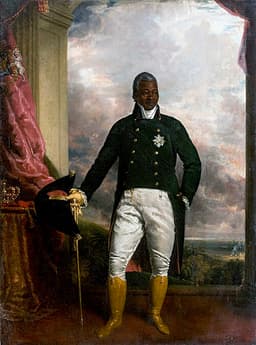
Henri Christophe
Emperor · Modern
59.2Total
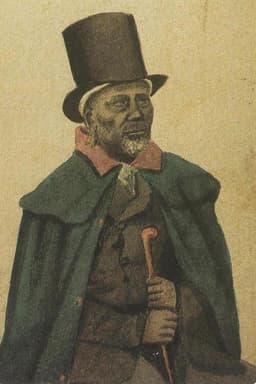
Moshweshwe I
Emperor · Modern
64.1Total
Basic Information
Born
1767
1786
Died
1820
1870
Era
Modern
Modern
Nationality
Haiti
Lesotho
Occupation
Emperor
Emperor
Civilization
Other
Other
Score Comparison
Military (10%)
72.5
55.0
Political (20%)
59.3
72.0
Influence (20%)
58.3
60.0
Legacy (20%)
56.0
58.0
Leadership (15%)
53.2
78.0
Strategy (15%)
65.4
66.3
TOTAL
59.2
64.1
Henri Christophe — Complete Timeline
1805 AD
Construction of the Citadelle LaferrièreCultural◆ Major
Christophe ordered the construction of the Citadelle Laferri
FortressArchitectureIndependence
Impact: nationalconstructive
1811 AD
Proclaimed King of HaitiPolitical Action◆ Major
Henri Christophe proclaimed himself King Henri I of Haiti, establishing a constitutional monarchy in the northern part of the country. He created a nobility and implemented a feudal system of labor.
MonarchyHaitiConstitution
Impact: national
1820 AD
Suicide by GunshotOther◆ Major
Facing a rebellion and paralysis from a stroke, Henri Christophe shot himself with a silver bullet. His death ended the Kingdom of Haiti, and the country was reunified under Jean-Pierre Boyer.
SuicideRebellionEnd of Kingdom
Impact: nationaltragic
Moshweshwe I — Complete Timeline
1824 AD
Unification of Basotho at Thaba-BosiuPolitical Action
Moshoeshoe I established his stronghold at Thaba-Bosiu, a mountain fortress, and began uniting various Sotho clans into the Basotho nation. This provided a safe haven during the Difaqane and laid the foundation for Lesotho.
Basotho NationUnificationThaba-Bosiu
Impact: regionalconstructive
1853 AD
Defeat of SekonyelaWar◆ Major
Moshoeshoe's forces captured the Tlokwa stronghold of Sekonyela, ending the long conflict between the Basotho and Tlokwa. This victory consolidated Basotho control over the region and absorbed many Tlokwa into the nation.
BasothoTlokwaVictory
Impact: regionalconstructive
1868 AD
Request for British ProtectionPolitical Action
Facing threats from the Orange Free State, Moshoeshoe requested British annexation of Basutoland. The British agreed, making Basutoland a protectorate and preserving Basotho independence from Boer rule.
British ProtectionBasutolandDiplomacy
Impact: regionalconstructive
1869 AD
Signing of the Treaty of Aliwal NorthPolitical Action◆ Major
Moshoeshoe signed a treaty with the British that defined the boundaries of Basutoland (modern Lesotho). The treaty ceded some territory to the Orange Free State but secured British protection for the Basotho.
TreatyBoundariesBritish Protection
Impact: regional
This comparison has not been analyzed yet.
One-time AI generation (~1 minute). Scores and timeline are already available below.
Rankings
🥇
Moshweshwe ILeader
Mil: 55.0Pol: 72.0Inf: 60.0
64.1
🥈
Henri Christophe
Mil: 72.5Pol: 59.3Inf: 58.3
59.2
+4.9 behind
How This Comparison Works
Algorithm
Each figure is scored on 6 dimensions (0—100 scale) based on structured historical data: Military (10%), Political (20%), Influence (20%), Legacy (20%), Leadership (15%), Strategy (15%). The weighted total produces the final ranking.
Data Sources
Scores are computed from structured sub-indicators in the database. Scale factors adjust for era (Ancient ×0.85, Modern ×1.0) and civilization size (Eastern ×1.05, Other ×0.80) to account for differences in population and military scale.
Maximum 3 Figures
Comparisons are limited to 2—3 figures to ensure readability and statistical meaningfulness.
Error Margins
±5 points per dimension — Sub-scores are derived from historical records with inherent uncertainty. Two figures within 5 points on a dimension should be considered roughly equivalent in that area.
Total Score Accuracy
±3 points overall — The weighted combination of 6 dimensions produces a total score with approximately ±3 points of uncertainty. Differences of less than 3 points are not statistically significant— the figures are effectively tied.
Known Limitations
- Historical records are incomplete and uneven across civilizations
- Figures from oral-tradition societies may be underrepresented
- Occupation labels can misclassify multi-role figures
- Scores measure capability and impact, not moral character
- Quantitative scoring is a comparison tool, not absolute truth
Capability Radar
Military (10%) — Battles & Warfare
Battles
65
45
Win Rate
60
60
Expansion
55
40
Political (20%) — Governance & Reform
Reform
75
70
Diplomacy
50
90
Economy
70
50
Influence (20%) — Cultural & Global Reach
Cultural
65
55
Global
55
45
Legacy (20%) — Historical Impact
Historical
70
60
Longevity
60
65
Leadership (15%) — Power & Stability
Tenure
60
75
Stability
40
65
Strategy (15%) — Tactics & Innovation
Strategy
75
70
Tactics
70
65
Reform
80
55
Similar Comparisons
Comments & Discussion
No comments yet. Be the first to share your thoughts!