Loading...
This comparison has not been analyzed yet.
One-time AI generation (~1 minute). Scores and timeline are already available below.
Helen Suzman vs Kapil Sibal
Helen Suzman leads by 4.4 pts · 2 figures compared
…

Helen Suzman
Politician · Modern
57.4Total
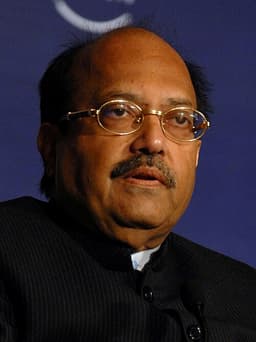
Kapil Sibal
Politician · Modern
53.0Total
Basic Information
Born
1917
1948
Died
2009
—
Era
Modern
Modern
Nationality
South Africa
India
Occupation
Politician
Politician
Civilization
Other
Indian
Score Comparison
Military (10%)
50.0
52.9
Political (20%)
72.0
68.0
Influence (20%)
58.3
52.5
Legacy (20%)
52.0
41.7
Leadership (15%)
68.0
53.2
Strategy (15%)
38.3
60.0
TOTAL
57.4
53.0
Helen Suzman — Complete Timeline
1961 AD
Elected to Parliament as Progressive Party MPPolitical Action
Suzman was elected to the South African Parliament as a member of the Progressive Party, which opposed apartheid. She became the sole parliamentary voice against the government's racial policies for over a decade.
ParliamentAnti-ApartheidProgressive Party
Impact: nationalconstructive
Lone Anti-Apartheid Voice in ParliamentPolitical Action◆ Major
For 13 years, Suzman was the only MP consistently opposing apartheid legislation. She used parliamentary privilege to question ministers, expose abuses, and advocate for the rights of non-white South Africans, often facing hostility from fellow MPs.
Anti-ApartheidParliamentAdvocacy
Impact: nationalconstructive
1967 AD
Visited Nelson Mandela in PrisonPolitical Action◆ Major
Suzman visited Nelson Mandela on Robben Island, becoming one of the few people allowed to see him. She reported on his conditions and helped maintain contact between political prisoners and the outside world.
Nelson MandelaRobben IslandPrison Visit
Impact: nationalconstructive
1978 AD
Received the United Nations Human Rights PrizeCultural◆ Major
Suzman was awarded the United Nations Human Rights Prize in recognition of her courageous opposition to apartheid. The award highlighted her international reputation as a symbol of resistance to racial oppression.
Human RightsAwardInternational Recognition
Impact: globalconstructive
1989 AD
Retired from ParliamentPolitical Action◆ Major
Suzman retired from Parliament after 36 years of service. By then, the anti-apartheid movement had grown, and she had mentored a new generation of opposition MPs. Her retirement marked the end of an era of lone parliamentary opposition.
RetirementParliamentLegacy
Impact: nationalconstructive
Kapil Sibal — Complete Timeline
2009 AD
Appointed Telecom Minister and introduced 3G spectrum auctionPolitical Action◆ Major
Kapil Sibal became Minister of Communications and Information Technology. He oversaw the auction of 3G spectrum in 2010, which raised over
TelecomSpectrum AuctionTechnology
Impact: nationalconstructive
2010 AD
Controversy over 2G spectrum allocationPolitical Action◆ Major
Sibal faced criticism for the 2G spectrum allocation process under his predecessor A. Raja. He defended the government's actions in court and in public, but the controversy led to the Supreme Court cancelling 122 licenses in 2012, damaging his reputation.
TelecomScandal2G
Impact: nationaldestructive
2012 AD
Introduced the Right to Education Act as HRD MinisterReform◆ Major
As Minister of Human Resource Development, Sibal implemented the Right to Education Act, making education a fundamental right for children aged 6-14. He also pushed for the National Curriculum Framework and the creation of new IITs and IIMs.
EducationRight to EducationReform
Impact: nationalprogressive
This comparison has not been analyzed yet.
One-time AI generation (~1 minute). Scores and timeline are already available below.
Rankings
🥇
Helen SuzmanLeader
Mil: 50.0Pol: 72.0Inf: 58.3
57.4
🥈
Kapil Sibal
Mil: 52.9Pol: 68.0Inf: 52.5
53.0
+4.4 behind
How This Comparison Works
Algorithm
Each figure is scored on 6 dimensions (0—100 scale) based on structured historical data: Military (10%), Political (20%), Influence (20%), Legacy (20%), Leadership (15%), Strategy (15%). The weighted total produces the final ranking.
Data Sources
Scores are computed from structured sub-indicators in the database. Scale factors adjust for era (Ancient ×0.85, Modern ×1.0) and civilization size (Eastern ×1.05, Other ×0.80) to account for differences in population and military scale.
Maximum 3 Figures
Comparisons are limited to 2—3 figures to ensure readability and statistical meaningfulness.
Error Margins
±5 points per dimension — Sub-scores are derived from historical records with inherent uncertainty. Two figures within 5 points on a dimension should be considered roughly equivalent in that area.
Total Score Accuracy
±3 points overall — The weighted combination of 6 dimensions produces a total score with approximately ±3 points of uncertainty. Differences of less than 3 points are not statistically significant— the figures are effectively tied.
Known Limitations
- Historical records are incomplete and uneven across civilizations
- Figures from oral-tradition societies may be underrepresented
- Occupation labels can misclassify multi-role figures
- Scores measure capability and impact, not moral character
- Quantitative scoring is a comparison tool, not absolute truth
Capability Radar
Military (10%) — Battles & Warfare
Battles
23
42
Win Rate
25
47
Expansion
29
47
Political (20%) — Governance & Reform
Reform
85
55
Diplomacy
75
50
Economy
30
45
Influence (20%) — Cultural & Global Reach
Cultural
60
30
Global
60
25
Legacy (20%) — Historical Impact
Historical
70
30
Longevity
65
20
Leadership (15%) — Power & Stability
Tenure
65
60
Stability
40
40
Strategy (15%) — Tactics & Innovation
Strategy
32
51
Tactics
35
54
Reform
38
56
Similar Comparisons
Comments & Discussion
No comments yet. Be the first to share your thoughts!