Loading...
Ferdinand Marcos vs Kapil Sibal
Kapil Sibal leads by 6.3 pts · 2 figures compared
…

Ferdinand Marcos
Politician · Modern
46.7Total
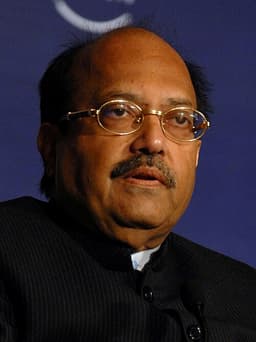
Kapil Sibal
Politician · Modern
53.0Total
Basic Information
Born
1917
1948
Died
1989
—
Era
Modern
Modern
Nationality
Philippines
India
Occupation
Politician
Politician
Civilization
Eastern
Indian
Score Comparison
Military (10%)
36.6
52.9
Political (20%)
48.0
68.0
Influence (20%)
54.9
52.5
Legacy (20%)
43.3
41.7
Leadership (15%)
40.0
53.2
Strategy (15%)
53.0
60.0
TOTAL
46.7
53.0
Ferdinand Marcos — Complete Timeline
1972 AD
Declared Martial LawPolitical Action
Ferdinand Marcos declared martial law, citing communist insurgency and Muslim rebellion. He suspended the constitution, dissolved Congress, and arrested political opponents. This began 14 years of authoritarian rule.
Martial LawAuthoritarianismPhilippines
Impact: nationaldestructive
1978 AD
New Society Movement (Kilusang Bagong Lipunan)Political Action◆ Major
Marcos established the Kilusang Bagong Lipunan (New Society Movement) as his political party. It dominated elections and served as a vehicle for his continued rule, winning a majority in the Interim Batasang Pambansa.
Political PartyElectionControl
Impact: national
1983 AD
Assassination of Benigno Aquino Jr.Political Action
Opposition leader Benigno Aquino Jr. was assassinated upon returning to the Philippines from exile. The murder sparked massive protests and eroded Marcos's legitimacy, leading to the People Power Revolution.
AssassinationOppositionProtests
Impact: nationaltragic
1986 AD
Ousted by People Power RevolutionPolitical Action
After a fraudulent snap election, millions of Filipinos protested in the People Power Revolution. Marcos fled to Hawaii, ending his 20-year rule. He died in exile in 1989.
RevolutionExileEnd of Rule
Impact: nationaltragic
Kapil Sibal — Complete Timeline
2009 AD
Appointed Telecom Minister and introduced 3G spectrum auctionPolitical Action◆ Major
Kapil Sibal became Minister of Communications and Information Technology. He oversaw the auction of 3G spectrum in 2010, which raised over
TelecomSpectrum AuctionTechnology
Impact: nationalconstructive
2010 AD
Controversy over 2G spectrum allocationPolitical Action◆ Major
Sibal faced criticism for the 2G spectrum allocation process under his predecessor A. Raja. He defended the government's actions in court and in public, but the controversy led to the Supreme Court cancelling 122 licenses in 2012, damaging his reputation.
TelecomScandal2G
Impact: nationaldestructive
2012 AD
Introduced the Right to Education Act as HRD MinisterReform◆ Major
As Minister of Human Resource Development, Sibal implemented the Right to Education Act, making education a fundamental right for children aged 6-14. He also pushed for the National Curriculum Framework and the creation of new IITs and IIMs.
EducationRight to EducationReform
Impact: nationalprogressive
Expert Analysis
Origins
Ferdinand Marcos was born on September 11, 1917, in Sarrat, Ilocos Norte, Philippines. His father was a politician and his mother a schoolteacher. He studied law at the University of the Philippines and was a skilled orator. Marcos's early life was marked by ambition; he was convicted of murder in 1939 but later acquitted on appeal, a case that shaped his legal career. Kapil Sibal was born on August 8, 1948, in Jalandhar, India, into a prominent political family. His father, Hira Lall Sibal, was a lawyer and politician. Sibal studied at Harvard Law School and became a leading Supreme Court lawyer. His legal background formed the basis of his political career.
Rise to Power
Marcos rose to power as a war hero, claiming to be the most decorated Filipino soldier during World War II. He was elected to the House of Representatives in 1949 and later to the Senate in 1959. In 1965, he won the presidency on a platform of reform. He was re-elected in 1969, but growing unrest led him to declare martial law on September 21, 1972, citing a communist insurgency. He suspended the constitution, dissolved Congress, and arrested opponents. Kapil Sibal's rise was through the legal profession. He entered politics in the 1990s, joining the Indian National Congress. He served as Minister of Science and Technology and later as Minister of Communications and Information Technology. His major political breakthrough came when he was appointed Telecom Minister in 2009, overseeing the 3G spectrum auction.
Leadership & Governance
Marcos ruled as a dictator from 1972 to 1981 under martial law, centralizing power and suppressing dissent. He established the Kilusang Bagong Lipunan (New Society Movement) to control politics. His governance focused on infrastructure projects, but was marred by corruption and human rights abuses. The economy initially grew but later stagnated due to cronyism. Sibal's leadership style was technocratic and reformist. As Telecom Minister, he introduced the 3G spectrum auction in 2010, which raised over ₹1 lakh crore for the government. As Human Resource Development Minister, he implemented the Right to Education Act (RTE) in 2009, making education a fundamental right for children aged 6-14. However, his tenure was overshadowed by the 2G spectrum allocation controversy, which he inherited from his predecessor.
Triumph & Tragedy
Marcos's greatest success was maintaining political stability during the Cold War and building infrastructure like the San Juanico Bridge. However, his greatest failure was the suppression of democracy and human rights, leading to economic decline and the assassination of opposition leader Benigno Aquino Jr. in 1983. The subsequent People Power Revolution in 1986 ousted him. Sibal's triumphs include the successful 3G auction and the RTE Act, which expanded educational access. His tragedy was the 2G spectrum scandal, where the Supreme Court cancelled 122 licences in 2012, though Sibal was not personally implicated. The controversy damaged his reputation and the Congress party's image.
Character & Destiny
Marcos was charismatic and ruthless, driven by a desire for power and wealth. His character led to an authoritarian regime that ultimately collapsed due to popular resistance. Historical assessments point to his corruption and nepotism. Sibal is seen as a brilliant lawyer and reformer, but his association with a scandal-plagued ministry tarnished his legacy. He scored 68.0 in political acumen compared to Marcos's 48.0, reflecting his legal and strategic skills. However, his destiny was tied to the Congress party's decline.
Legacy
Marcos's legacy is mixed: he is remembered as a dictator who ruined the Philippine economy, but some credit his infrastructure projects. His regime's human rights abuses remain a stain. Sibal's legacy is more positive in education policy, but the 2G scandal overshadows his achievements. Marcos's influence score is 54.9, slightly higher than Sibal's 52.5, due to his longer rule. However, Sibal's total score of 53.0 exceeds Marcos's 46.7.
Conclusion
Kapil Sibal had a more positive impact through legal and educational reforms, despite the 2G controversy. Marcos's authoritarian rule caused long-term damage to Philippine democracy and economy. Sibal's score of 53.0 versus Marcos's 46.7 reflects his greater effectiveness in governance and policy. While Marcos's influence was broader, Sibal's contributions to education and telecom have lasting benefits.
Rankings
🥇
Kapil SibalLeader
Mil: 52.9Pol: 68.0Inf: 52.5
53.0
🥈
Ferdinand Marcos
Mil: 36.6Pol: 48.0Inf: 54.9
46.7
+6.3 behind
How This Comparison Works
Algorithm
Each figure is scored on 6 dimensions (0—100 scale) based on structured historical data: Military (10%), Political (20%), Influence (20%), Legacy (20%), Leadership (15%), Strategy (15%). The weighted total produces the final ranking.
Data Sources
Scores are computed from structured sub-indicators in the database. Scale factors adjust for era (Ancient ×0.85, Modern ×1.0) and civilization size (Eastern ×1.05, Other ×0.80) to account for differences in population and military scale.
Maximum 3 Figures
Comparisons are limited to 2—3 figures to ensure readability and statistical meaningfulness.
Error Margins
±5 points per dimension — Sub-scores are derived from historical records with inherent uncertainty. Two figures within 5 points on a dimension should be considered roughly equivalent in that area.
Total Score Accuracy
±3 points overall — The weighted combination of 6 dimensions produces a total score with approximately ±3 points of uncertainty. Differences of less than 3 points are not statistically significant— the figures are effectively tied.
Known Limitations
- Historical records are incomplete and uneven across civilizations
- Figures from oral-tradition societies may be underrepresented
- Occupation labels can misclassify multi-role figures
- Scores measure capability and impact, not moral character
- Quantitative scoring is a comparison tool, not absolute truth
Capability Radar
Military (10%) — Battles & Warfare
Battles
5
42
Win Rate
5
47
Expansion
5
47
Political (20%) — Governance & Reform
Reform
30
55
Diplomacy
40
50
Economy
35
45
Influence (20%) — Cultural & Global Reach
Cultural
30
30
Global
30
25
Legacy (20%) — Historical Impact
Historical
40
30
Longevity
20
20
Leadership (15%) — Power & Stability
Tenure
75
60
Stability
20
40
Strategy (15%) — Tactics & Innovation
Strategy
5
51
Tactics
5
54
Reform
10
56
Similar Comparisons
Comments & Discussion
No comments yet. Be the first to share your thoughts!