Loading...
This comparison has not been analyzed yet.
One-time AI generation (~1 minute). Scores and timeline are already available below.
Heinrich Friedrich Karl vom Stein vs Sonam Topgay Dorji
Heinrich Friedrich Karl vom Stein leads by 1.5 pts · 2 figures compared
…
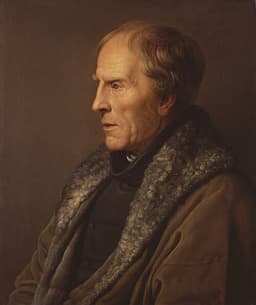
Heinrich Friedrich Karl vom Stein
Politician · Modern
57.4Total

Sonam Topgay Dorji
Politician · Modern
55.9Total
Basic Information
Born
1757
1896
Died
1831
1953
Era
Modern
Modern
Nationality
Prussia
Bhutan
Occupation
Politician
Politician
Civilization
Western
Indian
Score Comparison
Military (10%)
47.9
22.9
Political (20%)
72.0
72.0
Influence (20%)
55.0
54.9
Legacy (20%)
55.0
49.2
Leadership (15%)
68.0
72.0
Strategy (15%)
41.5
60.0
TOTAL
57.4
55.9
Heinrich Friedrich Karl vom Stein — Complete Timeline
1807 AD
October EdictReform
Stein issued the October Edict, which abolished serfdom in Prussia. The reform granted personal freedom to peasants and allowed them to own land, ending feudal obligations.
SerfdomEmancipationReform
Impact: nationalprogressive
1808 AD
Prussian Municipal OrdinanceReform◆ Major
Stein introduced the Prussian Municipal Ordinance, granting cities self-government. The reform established elected city councils and mayors, reducing royal control over local administration.
Local GovernmentReformPrussia
Impact: nationalprogressive
Exile by NapoleonPolitical Action◆ Major
Napoleon forced Stein to resign and exiled him from Prussia after Stein's anti-French activities. Stein fled to Austria and later Russia, where he advised Tsar Alexander I on German affairs.
ExileNapoleonPrussia
Impact: nationaltragic
1815 AD
Congress of ViennaPolitical Action◆ Major
Stein attended the Congress of Vienna as an advisor to Tsar Alexander I. He advocated for a unified German state but failed to achieve his goal, settling for the German Confederation.
Congress of ViennaGerman UnificationDiplomacy
Impact: global
Sonam Topgay Dorji — Complete Timeline
1910 AD
Negotiated the Treaty of PunakhaPolitical Action◆ Major
Sonam Topgay Dorji played a key role in negotiating the Treaty of Punakha between Bhutan and British India. The treaty revised earlier agreements, granting Bhutan increased autonomy in internal affairs while Britain retained control over foreign relations.
DiplomacyTreatyBritish India
Impact: regionalconstructive
1917 AD
Appointed as Gongzim (Chief Minister)Political Action◆ Major
Sonam Topgay Dorji was appointed as Gongzim, the chief minister of Bhutan, under King Ugyen Wangchuck. This position made him the de facto first Prime Minister of Bhutan, centralizing administrative power and initiating modernization efforts.
Bhutanese PoliticsModernizationAdministration
Impact: nationalconstructive
1920 AD
Initiated Educational ReformsReform◆ Major
Sonam Topgay Dorji established the first secular schools in Bhutan, moving beyond monastic education. He sent Bhutanese students to study in India, laying the foundation for a modern civil service and introducing Western-style education.
EducationModernizationReform
Impact: nationalprogressive
1952 AD
Facilitated Bhutan's Entry into the Colombo PlanPolitical Action
Sonam Topgay Dorji oversaw Bhutan's accession to the Colombo Plan, a regional organization for economic development. This move secured foreign aid and technical assistance, integrating Bhutan into post-colonial Asian cooperation frameworks.
Foreign PolicyEconomic DevelopmentInternational Relations
Impact: regionalconstructive
This comparison has not been analyzed yet.
One-time AI generation (~1 minute). Scores and timeline are already available below.
Rankings
🥇
Heinrich Friedrich Karl vom SteinLeader
Mil: 47.9Pol: 72.0Inf: 55.0
57.4
🥈
Sonam Topgay Dorji
Mil: 22.9Pol: 72.0Inf: 54.9
55.9
+1.5 behind
How This Comparison Works
Algorithm
Each figure is scored on 6 dimensions (0—100 scale) based on structured historical data: Military (10%), Political (20%), Influence (20%), Legacy (20%), Leadership (15%), Strategy (15%). The weighted total produces the final ranking.
Data Sources
Scores are computed from structured sub-indicators in the database. Scale factors adjust for era (Ancient ×0.85, Modern ×1.0) and civilization size (Eastern ×1.05, Other ×0.80) to account for differences in population and military scale.
Maximum 3 Figures
Comparisons are limited to 2—3 figures to ensure readability and statistical meaningfulness.
Error Margins
±5 points per dimension — Sub-scores are derived from historical records with inherent uncertainty. Two figures within 5 points on a dimension should be considered roughly equivalent in that area.
Total Score Accuracy
±3 points overall — The weighted combination of 6 dimensions produces a total score with approximately ±3 points of uncertainty. Differences of less than 3 points are not statistically significant— the figures are effectively tied.
Known Limitations
- Historical records are incomplete and uneven across civilizations
- Figures from oral-tradition societies may be underrepresented
- Occupation labels can misclassify multi-role figures
- Scores measure capability and impact, not moral character
- Quantitative scoring is a comparison tool, not absolute truth
Capability Radar
Military (10%) — Battles & Warfare
Battles
31
45
Win Rate
34
49
Expansion
34
52
Political (20%) — Governance & Reform
Reform
85
70
Diplomacy
70
60
Economy
75
55
Influence (20%) — Cultural & Global Reach
Cultural
65
40
Global
65
30
Legacy (20%) — Historical Impact
Historical
75
50
Longevity
70
45
Leadership (15%) — Power & Stability
Tenure
40
65
Stability
60
60
Strategy (15%) — Tactics & Innovation
Strategy
36
50
Tactics
40
57
Reform
43
60
Similar Comparisons
Comments & Discussion
No comments yet. Be the first to share your thoughts!