Loading...
This comparison has not been analyzed yet.
One-time AI generation (~1 minute). Scores and timeline are already available below.
Hassan Gouled Aptidon vs Roelof Botha
Hassan Gouled Aptidon leads by 8.6 pts · 2 figures compared
…
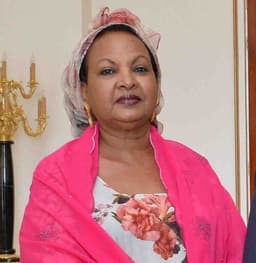
Hassan Gouled Aptidon
Politician · Modern
53.9Total

Roelof Botha
Politician · Modern
45.3Total
Basic Information
Born
1916
1932
Died
2006
—
Era
Modern
Modern
Nationality
Djibouti
South Africa
Occupation
Politician
Politician
Civilization
Other
Other
Score Comparison
Military (10%)
44.2
47.1
Political (20%)
68.0
33.6
Influence (20%)
53.3
49.4
Legacy (20%)
45.0
40.0
Leadership (15%)
72.0
58.8
Strategy (15%)
38.9
43.7
TOTAL
53.9
45.3
Hassan Gouled Aptidon — Complete Timeline
1977 AD
Led Djibouti to IndependencePolitical Action
Aptidon led the independence movement from France, becoming the first President of Djibouti on June 27, 1977. He negotiated the transfer of power and established the new nation's government.
IndependenceDjiboutiDecolonization
Impact: nationalconstructive
1981 AD
Established One-Party StatePolitical Action◆ Major
Aptidon's government declared Djibouti a one-party state under the People's Rally for Progress (RPP). This consolidated his power but suppressed political opposition.
One-Party StateAuthoritarianismDjibouti
Impact: nationaldestructive
1991 AD
Hosted Peace Talks for SomaliaPolitical Action◆ Major
Aptidon hosted the Djibouti Peace Conference aimed at ending the Somali Civil War. The talks led to a temporary ceasefire but failed to achieve lasting peace.
Peace TalksSomaliaDiplomacy
Impact: regionalconstructive
Roelof Botha — Complete Timeline
1975 AD
Appointed South African Ambassador to the United NationsPolitical Action◆ Major
Botha was appointed South Africa's ambassador to the United Nations. He defended the apartheid government's policies on the international stage, often facing criticism and isolation from other member states.
AmbassadorUnited NationsApartheid
Impact: global
1977 AD
Appointed Minister of Foreign AffairsPolitical Action◆ Major
Botha was appointed Minister of Foreign Affairs under Prime Minister B.J. Vorster and later P.W. Botha. He oversaw South Africa's foreign policy during a period of increasing international isolation and sanctions.
Foreign MinisterIsolationSanctions
Impact: global
1980 AD
Engaged in 'Constructive Engagement' with the WestPolitical Action◆ Major
Botha pursued a policy of 'constructive engagement' with Western countries, particularly the United States under President Ronald Reagan. He sought to counter international sanctions and maintain diplomatic and economic ties.
Constructive EngagementWestern RelationsSanctions
Impact: global
1984 AD
Negotiated the Nkomati AccordPolitical Action◆ Major
Botha played a key role in negotiating the Nkomati Accord with Mozambique. The agreement was a non-aggression pact that aimed to reduce cross-border violence, but it was criticized for legitimizing the apartheid regime.
Nkomati AccordMozambiqueDiplomacy
Impact: regional
1990 AD
Participated in Transition NegotiationsPolitical Action◆ Major
Botha participated in the early negotiations for a democratic South Africa, representing the National Party government. He was involved in talks with the ANC and other parties, leading to the unbanning of the ANC and the release of Nelson Mandela.
NegotiationsTransitionDemocracy
Impact: nationalconstructive
This comparison has not been analyzed yet.
One-time AI generation (~1 minute). Scores and timeline are already available below.
Rankings
🥇
Hassan Gouled AptidonLeader
Mil: 44.2Pol: 68.0Inf: 53.3
53.9
🥈
Roelof Botha
Mil: 47.1Pol: 33.6Inf: 49.4
45.3
+8.6 behind
How This Comparison Works
Algorithm
Each figure is scored on 6 dimensions (0—100 scale) based on structured historical data: Military (10%), Political (20%), Influence (20%), Legacy (20%), Leadership (15%), Strategy (15%). The weighted total produces the final ranking.
Data Sources
Scores are computed from structured sub-indicators in the database. Scale factors adjust for era (Ancient ×0.85, Modern ×1.0) and civilization size (Eastern ×1.05, Other ×0.80) to account for differences in population and military scale.
Maximum 3 Figures
Comparisons are limited to 2—3 figures to ensure readability and statistical meaningfulness.
Error Margins
±5 points per dimension — Sub-scores are derived from historical records with inherent uncertainty. Two figures within 5 points on a dimension should be considered roughly equivalent in that area.
Total Score Accuracy
±3 points overall — The weighted combination of 6 dimensions produces a total score with approximately ±3 points of uncertainty. Differences of less than 3 points are not statistically significant— the figures are effectively tied.
Known Limitations
- Historical records are incomplete and uneven across civilizations
- Figures from oral-tradition societies may be underrepresented
- Occupation labels can misclassify multi-role figures
- Scores measure capability and impact, not moral character
- Quantitative scoring is a comparison tool, not absolute truth
Capability Radar
Military (10%) — Battles & Warfare
Battles
23
22
Win Rate
25
23
Expansion
25
29
Political (20%) — Governance & Reform
Reform
50
20
Diplomacy
60
30
Economy
40
20
Influence (20%) — Cultural & Global Reach
Cultural
30
10
Global
30
15
Legacy (20%) — Historical Impact
Historical
40
20
Longevity
30
10
Leadership (15%) — Power & Stability
Tenure
70
40
Stability
55
15
Strategy (15%) — Tactics & Innovation
Strategy
32
32
Tactics
36
31
Reform
36
35
Similar Comparisons
Comments & Discussion
No comments yet. Be the first to share your thoughts!