Loading...
Hasan-i Sabbah vs Pulakeshin II
Pulakeshin II leads by 0.3 pts · 2 figures compared
…
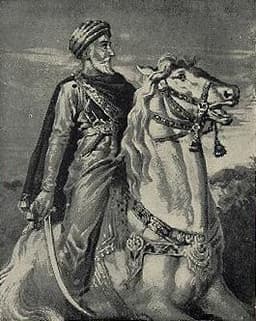
Hasan-i Sabbah
Emperor · Medieval
61.9Total
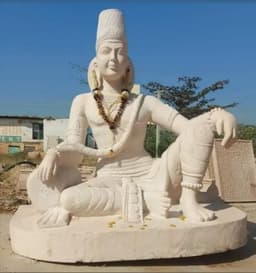
Pulakeshin II
Emperor · Medieval
62.2Total
Basic Information
Born
1050
610
Died
1124
642
Era
Medieval
Medieval
Nationality
Nizari Ismaili
India
Occupation
Emperor
Emperor
Civilization
Middle Eastern
Indian
Score Comparison
Military (10%)
50.0
76.0
Political (20%)
53.8
60.0
Influence (20%)
65.0
62.0
Legacy (20%)
65.0
56.0
Leadership (15%)
61.1
62.4
Strategy (15%)
72.0
67.2
TOTAL
61.9
62.2
Hasan-i Sabbah — Complete Timeline
1090 AD
Capture of Alamut FortressWar
Hasan-i Sabbah and his followers seized the Alamut fortress in the Alborz mountains of northern Iran. This became the headquarters of the Nizari Ismaili state and the base from which he led a decentralized resistance against the Seljuk Empire.
Nizari Ismaili StateFortress CaptureSeljuk Conflict
Impact: regional
Establishment of the Nizari Ismaili StatePolitical Action◆ Major
Following the capture of Alamut, Hasan-i Sabbah established a network of mountain fortresses in Persia and Syria, creating a Nizari Ismaili state. This state operated as a decentralized theocracy, using strategic assassinations to counter Seljuk power.
Nizari Ismaili StatePolitical FoundationSeljuk Conflict
Impact: regional
1092 AD
Assassination of Nizam al-MulkPolitical Action◆ Major
The Seljuk vizier Nizam al-Mulk was assassinated by a Nizari Ismaili agent near Nahavand. This event demonstrated the reach of Hasan-i Sabbah's network and destabilized the Seljuk administration, contributing to the decline of Seljuk central authority.
AssassinationSeljuk EmpireNizari Ismaili
Impact: regionaldestructive
1094 AD
Reform of Nizari Ismaili DoctrineCultural◆ Major
After the death of the Fatimid caliph al-Mustansir, Hasan-i Sabbah supported the succession of Nizar over al-Mustali, leading to a schism. He established the Nizari Ismaili doctrine, emphasizing the authority of the imam and the use of taqiyya (dissimulation) for survival.
Nizari IsmailiDoctrinal SchismFatimid Caliphate
Impact: regional
1124 AD
Death of Hasan-i SabbahOther◆ Major
Hasan-i Sabbah died at Alamut, having led the Nizari Ismaili state for 34 years. He was succeeded by Kiya Buzurg Ummid. His legacy includes the creation of a resilient state that survived for over a century and the development of the Assassin legend.
Nizari Ismaili StateDeathLegacy
Impact: regional
Pulakeshin II — Complete Timeline
625 AD
Received an Embassy from the Sassanid Persian KingPolitical Action
Pulakeshin II received a diplomatic mission from the Sassanid Persian king Khosrow II, as recorded in the Aihole inscription. This embassy indicates the Chalukya kingdom's international prestige and trade connections with the Persian Gulf.
DiplomacyInternational Relations
Impact: regional
630 AD
Defeated Emperor Harsha at the Battle of NarmadaWar
Pulakeshin II repelled an invasion by the northern emperor Harsha of Kannauj on the banks of the Narmada River. This victory established the Chalukya kingdom as the dominant power in the Deccan and prevented Harsha from expanding southward.
BattleChalukya-Harsha War
Impact: regional
634 AD
Issued the Aihole InscriptionCultural
Pulakeshin II commissioned the Aihole inscription, composed by the poet Ravikirti. The inscription details his military campaigns, including the defeat of Harsha, and provides a key historical source for the Chalukya dynasty.
InscriptionPropaganda
Impact: regional
642 AD
Conquered the Pallava Capital KanchipuramWar◆ Major
Pulakeshin II captured the Pallava capital of Kanchipuram, defeating the Pallava king Mahendravarman I. This conquest extended Chalukya control into Tamil country and marked the height of his empire's territorial extent.
ConquestPallava War
Impact: regional
Killed in Battle by the PallavasWar◆ Major
Pulakeshin II was killed in battle against the Pallava king Narasimhavarman I, who avenged the earlier capture of Kanchipuram. The Pallavas sacked the Chalukya capital Vatapi, and Pulakeshin's death led to a temporary decline of the Chalukya empire.
BattleDeath
Impact: regionaltragic
Expert Analysis
Origins
Hasan-i Sabbah was born around 1050 in Qom, Persia, into a Twelver Shia family. His father was a Kufan Arab who migrated to Qom. Hasan received a religious education in Rayy, where he encountered Ismaili teachings and converted to Ismailism around 1072. He studied under the Fatimid da'i Abd al-Malik ibn Attash and was appointed as a da'i in northern Persia. His early life was marked by intellectual rigor and strategic networking.
Pulakeshin II was born around 610 in Badami, India, into the Chalukya dynasty. His father was the Chalukya king Kirttivarman I. He was crowned after his uncle Mangalesha's death. His education included military training and statecraft. His background as a prince of a rising power shaped his ambitions.
Rise to Power
Hasan-i Sabbah rose by capturing the Alamut fortress in 1090. He used a combination of persuasion and infiltration. He converted the local population and the garrison commander, Mahdi, who allowed him to take control. Alamut became his headquarters. He then expanded his network of fortresses across the Alborz mountains. His rise was tied to the Seljuk decline and the Fatimid succession crisis after al-Mustansir's death in 1094. He supported Nizar over al-Mustali, leading to the Nizari Ismaili schism.
Pulakeshin II rose after defeating his uncle Mangalesha in a civil war. He consolidated power in the Vatapi region. His major turning point was the Battle of Narmada around 618, where he repelled Emperor Harsha's invasion. This victory established Chalukya dominance in the Deccan. He then expanded southward, conquering the Pallava capital Kanchipuram around 642.
Leadership & Governance
Hasan-i Sabbah's leadership was ideological and decentralized. He ruled from Alamut, using a network of da'is and fida'is (devoted agents). He implemented a strict interpretation of Ismaili doctrine, emphasizing the imamate of Nizar. His governance focused on self-sufficiency and defense. He did not claim the title of imam but acted as a huija (proof). His military score of 50.0 reflects his reliance on targeted assassinations rather than large armies.
Pulakeshin II's leadership was expansionist and centralized. He commanded large armies and personally led campaigns. His governance included issuing the Aihole inscription (634), which detailed his conquests and legitimized his rule. He maintained diplomatic relations, as seen with the Sassanid embassy. His military score of 76.0 reflects his success in open battle.
Triumph & Tragedy
Hasan-i Sabbah's greatest success was the establishment of the Nizari Ismaili state, which lasted over 150 years. His assassination network eliminated key enemies like Nizam al-Mulk in 1092. His greatest failure was the inability to convert the Seljuk masses. His state remained a mountain fortress network, never expanding into a large empire. He died in 1124 at Alamut, having achieved a unique form of power.
Pulakeshin II's greatest success was the defeat of Harsha and the conquest of Kanchipuram. His empire reached its zenith. His greatest failure was the loss of Kanchipuram and his own death in battle against the Pallava king Narasimhavarman I around 642. The Pallavas sacked his capital Vatapi. His tragedy was overextension.
Character & Destiny
Hasan-i Sabbah was patient, secretive, and disciplined. He lived ascetically in Alamut. His character shaped a movement based on calculated risk and ideological commitment. His destiny was to create a state that defied conventional military power. His strategy score of 72.0 reflects his innovative use of asymmetric warfare.
Pulakeshin II was ambitious and militaristic. His character drove expansion but also overreach. His destiny was to build an empire that collapsed after his death. His strategy score of 67.2 reflects his tactical skills but lack of sustainable defense.
Legacy
Hasan-i Sabbah's legacy is the Nizari Ismaili community, which survives today under the Aga Khan. His methods influenced later secret societies and the word 'assassin'. His political score of 53.8 and influence score of 65.0 reflect his enduring impact on Islamic history and popular culture.
Pulakeshin II's legacy is the Chalukya architectural and cultural achievements, including the rock-cut temples of Badami. His Aihole inscription is a key historical source. His legacy score of 56.0 is lower due to the empire's fragmentation.
Conclusion
Pulakeshin II had a higher total score (62.2 vs 61.9) and a clear military advantage (76.0 vs 50.0). His impact on Indian history was immediate and tangible. Hasan-i Sabbah's legacy is more ideological and long-term, but his direct political and military influence was limited. Pulakeshin II's defeat of Harsha and expansion of the Chalukya empire had greater contemporary significance. Therefore, Pulakeshin II had greater overall impact.
Rankings
🥇
Pulakeshin IILeader
Mil: 76.0Pol: 60.0Inf: 62.0
62.2
🥈
Hasan-i Sabbah
Mil: 50.0Pol: 53.8Inf: 65.0
61.9
+0.3 behind
How This Comparison Works
Algorithm
Each figure is scored on 6 dimensions (0—100 scale) based on structured historical data: Military (10%), Political (20%), Influence (20%), Legacy (20%), Leadership (15%), Strategy (15%). The weighted total produces the final ranking.
Data Sources
Scores are computed from structured sub-indicators in the database. Scale factors adjust for era (Ancient ×0.85, Modern ×1.0) and civilization size (Eastern ×1.05, Other ×0.80) to account for differences in population and military scale.
Maximum 3 Figures
Comparisons are limited to 2—3 figures to ensure readability and statistical meaningfulness.
Error Margins
±5 points per dimension — Sub-scores are derived from historical records with inherent uncertainty. Two figures within 5 points on a dimension should be considered roughly equivalent in that area.
Total Score Accuracy
±3 points overall — The weighted combination of 6 dimensions produces a total score with approximately ±3 points of uncertainty. Differences of less than 3 points are not statistically significant— the figures are effectively tied.
Known Limitations
- Historical records are incomplete and uneven across civilizations
- Figures from oral-tradition societies may be underrepresented
- Occupation labels can misclassify multi-role figures
- Scores measure capability and impact, not moral character
- Quantitative scoring is a comparison tool, not absolute truth
Capability Radar
Military (10%) — Battles & Warfare
Battles
15
75
Win Rate
20
80
Expansion
10
85
Political (20%) — Governance & Reform
Reform
70
65
Diplomacy
75
75
Economy
30
70
Influence (20%) — Cultural & Global Reach
Cultural
75
60
Global
70
50
Legacy (20%) — Historical Impact
Historical
80
65
Longevity
85
55
Leadership (15%) — Power & Stability
Tenure
40
70
Stability
25
68
Strategy (15%) — Tactics & Innovation
Strategy
80
82
Tactics
85
78
Reform
90
60
Similar Comparisons
Comments & Discussion
No comments yet. Be the first to share your thoughts!