Loading...
Hari Singh Nalwa vs Jean-Baptiste Bernadotte
Jean-Baptiste Bernadotte leads by 3.0 pts · 2 figures compared
…

Hari Singh Nalwa
General · Modern
58.0Total
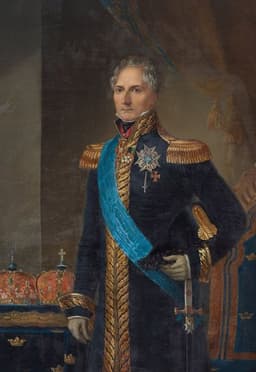
Jean-Baptiste Bernadotte
General · Modern
61.0Total
Basic Information
Born
1791
1763
Died
1837
1844
Era
Modern
Modern
Nationality
India
France
Occupation
General
General
Civilization
Indian
Western
Score Comparison
Military (10%)
72.0
67.5
Political (20%)
45.0
62.7
Influence (20%)
65.0
55.0
Legacy (20%)
55.0
52.0
Leadership (15%)
48.8
80.0
Strategy (15%)
67.2
61.2
TOTAL
58.0
61.0
Hari Singh Nalwa — Complete Timeline
1818 AD
Capture of MultanWar
Hari Singh Nalwa participated in the Sikh capture of Multan from the Afghans. The victory brought the wealthy city under Sikh control, expanding the empire's territory and resources.
Sikh-Afghan WarsConquestMultan
Impact: regional
1820 AD
Governorship of KashmirPolitical Action
Hari Singh Nalwa was appointed governor of Kashmir by Maharaja Ranjit Singh. He suppressed rebellions, reformed tax collection, and improved infrastructure, consolidating Sikh rule in the region.
GovernorshipKashmirSikh Empire
Impact: regionalconstructive
1834 AD
Conquest of PeshawarWar◆ Major
Hari Singh Nalwa led Sikh forces to capture Peshawar from the Afghan Barakzai dynasty. He secured the city and its fort, extending Sikh Empire control to the Khyber Pass, a key strategic victory in the Sikh-Afghan wars.
Sikh-Afghan WarsConquestPeshawar
Impact: regional
1837 AD
Battle of JamrudWar◆ Major
Hari Singh Nalwa defended the Jamrud Fort against a large Afghan army led by Dost Mohammad Khan. He was killed in the battle, but the Sikhs held the fort, preventing Afghan recapture of Peshawar and securing the frontier.
Sikh-Afghan WarsBattleDeath
Impact: regionaltragic
Jean-Baptiste Bernadotte — Complete Timeline
1805 AD
Battle of AusterlitzWar◆ Major
Bernadotte commanded the I Corps at Austerlitz. His corps held the Allied left flank and participated in the encirclement of the Russian and Austrian forces, contributing to the French victory.
Napoleonic WarsBattleCorps Command
Impact: global
1809 AD
Battle of WagramWar◆ Major
Bernadotte commanded the Saxon IX Corps at Wagram. His corps was routed by Austrian forces, and he was criticized by Napoleon for his performance, leading to his dismissal from the Grande Arm
Napoleonic WarsBattleDefeatDismissal
Impact: regional
1810 AD
Elected Crown Prince of SwedenPolitical Action
The Swedish Riksdag elected Bernadotte as Crown Prince, due to his popularity and perceived ability to secure Norway. He converted to Lutheranism and was adopted by King Charles XIII, becoming heir to the throne.
SwedenSuccessionNapoleonic Era
Impact: nationalconstructive
1813 AD
Battle of LeipzigWar◆ Major
Bernadotte, now Crown Prince of Sweden, commanded the Swedish contingent and the Army of the North in the Allied coalition. His forces fought against Napoleon at Leipzig, contributing to the French defeat.
Napoleonic WarsBattleAllied Coalition
Impact: global
1814 AD
Treaty of KielPolitical Action◆ Major
Bernadotte negotiated the Treaty of Kiel with Denmark, which ceded Norway to Sweden. This fulfilled a key Swedish war aim and established the union between Sweden and Norway.
TreatySwedenNorwayDiplomacy
Impact: regionalconstructive
1818 AD
Reign as King of Sweden and NorwayReform◆ Major
As king, Bernadotte pursued a policy of neutrality and internal development. He improved infrastructure, reformed the legal system, and maintained peace, but faced opposition from liberal factions.
ReignReformsNeutrality
Impact: nationalconstructive
Accession as King Charles XIV JohnPolitical Action
Bernadotte ascended the Swedish throne as King Charles XIV John upon the death of Charles XIII. He founded the House of Bernadotte, which continues to reign in Sweden.
MonarchySwedenBernadotte Dynasty
Impact: nationalconstructive
Expert Analysis
Origins
Hari Singh Nalwa was born in 1791 in Gujranwala, Punjab, into a Sikh family. His father, Gurdial Singh, died when he was young, and he was raised by his mother and uncle. He joined the Sikh Empire under Maharaja Ranjit Singh at age 14, receiving military training. Jean-Baptiste Bernadotte was born in 1763 in Pau, France, into a bourgeois family. His father, a lawyer, died early, and he enlisted in the French army at 17 as a private. He rose through the ranks during the French Revolution, becoming a general by 1794.
Rise to Power
Nalwa quickly distinguished himself in battle. At age 16, he fought at the Battle of Kasur (1807), and by 1818, he led the capture of Multan from the Afghans. His greatest conquest was Peshawar in 1834, where he defeated the Barakzai dynasty. He became governor of Kashmir in 1820, suppressing rebellions and reforming taxes. Bernadotte's rise was meteoric during the Revolutionary Wars. He commanded a division at the Battle of Fleurus (1794) and later served under Napoleon, becoming a Marshal in 1804. He fought at Austerlitz (1805) and Wagram (1809), but his political ambition led him to accept the Swedish crown in 1810, becoming Crown Prince and later King Charles XIV John.
Leadership & Governance
Nalwa governed with strict military discipline. As governor of Kashmir, he improved infrastructure, built roads, and regularized tax collection. He maintained order through force, executing rebels and bandits. His leadership was direct and hands-on; he often led from the front. Bernadotte, as Swedish king, pursued a policy of neutrality and internal development. He reformed the legal system, improved agriculture, and built canals. He maintained peace after the Napoleonic Wars, avoiding conflict with Russia and Britain. His leadership was diplomatic and strategic, focusing on stability and economic growth.
Triumph & Tragedy
Nalwa's greatest triumph was the conquest and defense of Peshawar. He held the city against Afghan counterattacks and expanded Sikh influence to the Khyber Pass. His tragedy came at the Battle of Jamrud (1837), where he was killed while defending the fort. His death was a blow to the Sikh Empire, but his forces held the fort. Bernadotte's triumph was securing Norway for Sweden through the Treaty of Kiel (1814), fulfilling a long-standing Swedish ambition. His tragedy was his strained relationship with Napoleon, which led to Sweden joining the anti-French coalition. He faced criticism for his authoritarian tendencies, but his dynasty endures.
Character & Destiny
Nalwa was known for his courage and ruthlessness. He earned the epithet 'Nalwa' (meaning 'strong') and was feared by Afghans. His decisiveness in battle often led to victory, but his aggressive tactics also created enemies. His character drove him to defend Jamrud to the death, cementing his legacy. Bernadotte was pragmatic and ambitious. He navigated the treacherous politics of revolutionary France and later Sweden. His ability to adapt—converting to Lutheranism, adopting Swedish interests—ensured his success. His character favored survival and legacy over personal glory.
Legacy
Nalwa is remembered as a Sikh national hero. His conquests expanded the Sikh Empire to its greatest extent. In modern Punjab, he is celebrated in folklore and monuments. His military tactics are studied in Sikh military history. Bernadotte's legacy is the House of Bernadotte, which still reigns in Sweden. His policies of neutrality set Sweden's path for centuries. He is regarded as a wise ruler who modernized Sweden. His total score of 61.0 reflects his broader political impact, while Nalwa's 58.0 highlights his military prowess.
Conclusion
While both were exceptional military leaders, Bernadotte's greater political impact—founding a dynasty and shaping Sweden's neutrality—gives him a higher total score of 61.0 compared to Nalwa's 58.0. Nalwa's military score of 72.0 surpasses Bernadotte's 67.5, but Bernadotte's leadership (80.0) and political skills (62.7) outweigh Nalwa's. Bernadotte's legacy endures through a reigning monarchy, while Nalwa's influence is regionally confined. Thus, Jean-Baptiste Bernadotte had a greater overall impact.
Rankings
🥇
Jean-Baptiste BernadotteLeader
Mil: 67.5Pol: 62.7Inf: 55.0
61.0
🥈
Hari Singh Nalwa
Mil: 72.0Pol: 45.0Inf: 65.0
58.0
+3.0 behind
How This Comparison Works
Algorithm
Each figure is scored on 6 dimensions (0—100 scale) based on structured historical data: Military (10%), Political (20%), Influence (20%), Legacy (20%), Leadership (15%), Strategy (15%). The weighted total produces the final ranking.
Data Sources
Scores are computed from structured sub-indicators in the database. Scale factors adjust for era (Ancient ×0.85, Modern ×1.0) and civilization size (Eastern ×1.05, Other ×0.80) to account for differences in population and military scale.
Maximum 3 Figures
Comparisons are limited to 2—3 figures to ensure readability and statistical meaningfulness.
Error Margins
±5 points per dimension — Sub-scores are derived from historical records with inherent uncertainty. Two figures within 5 points on a dimension should be considered roughly equivalent in that area.
Total Score Accuracy
±3 points overall — The weighted combination of 6 dimensions produces a total score with approximately ±3 points of uncertainty. Differences of less than 3 points are not statistically significant— the figures are effectively tied.
Known Limitations
- Historical records are incomplete and uneven across civilizations
- Figures from oral-tradition societies may be underrepresented
- Occupation labels can misclassify multi-role figures
- Scores measure capability and impact, not moral character
- Quantitative scoring is a comparison tool, not absolute truth
Capability Radar
Military (10%) — Battles & Warfare
Battles
75
65
Win Rate
80
60
Expansion
85
55
Political (20%) — Governance & Reform
Reform
50
70
Diplomacy
60
85
Economy
55
65
Influence (20%) — Cultural & Global Reach
Cultural
65
50
Global
55
55
Legacy (20%) — Historical Impact
Historical
70
65
Longevity
60
60
Leadership (15%) — Power & Stability
Tenure
55
80
Stability
50
75
Strategy (15%) — Tactics & Innovation
Strategy
82
75
Tactics
78
70
Reform
60
60
Similar Comparisons
Comments & Discussion
No comments yet. Be the first to share your thoughts!