Loading...
Mary II of England vs Napoleon Bonaparte
Napoleon Bonaparte leads by 20.0 pts · 2 figures compared
…
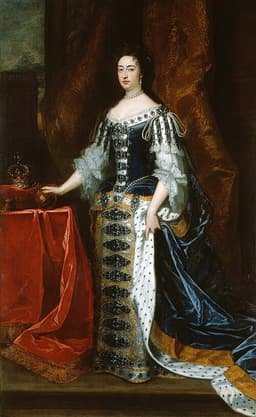
Mary II of England
Emperor · Modern
50.9Total

Napoleon Bonaparte
General · Modern
70.9Total
Basic Information
Born
1662
1769
Died
1694
1821
Era
Modern
Modern
Nationality
England
France
Occupation
Emperor
General
Civilization
Western
Western
Score Comparison
Military (10%)
13.0
94.0
Political (20%)
68.0
72.0
Influence (20%)
52.5
40.0
Legacy (20%)
43.3
80.0
Leadership (15%)
65.0
78.0
Strategy (15%)
57.4
90.0
TOTAL
50.9
70.9
Mary II of England — Complete Timeline
1688 AD
Glorious RevolutionPolitical Action
Mary II accepted the invitation from English parliamentarians to replace her father James II. She and her husband William of Orange invaded England with a Dutch fleet, forcing James II to flee. This bloodless transfer of power established parliamentary sovereignty over the monarchy.
Glorious RevolutionConstitutional ChangeDynastic Shift
Impact: nationalconstructive
1689 AD
Joint Coronation with William IIIPolitical Action◆ Major
Mary II was crowned joint sovereign with her husband William III at Westminster Abbey. She accepted the Bill of Rights, which limited royal powers and affirmed parliamentary authority. This coronation formalized the new constitutional arrangement.
CoronationConstitutional MonarchyBill of Rights
Impact: nationalconstructive
1690 AD
Regency During William's AbsencePolitical Action
Mary II served as regent while William III campaigned in Ireland against James II's forces. She effectively governed England, managing the Treasury and military logistics. Her regency demonstrated her administrative competence and maintained stability.
RegencyGovernanceStability
Impact: nationalconstructive
1694 AD
Death from SmallpoxOther◆ Major
Mary II died of smallpox at Kensington Palace at age 32. Her death deeply affected William III and the nation. She was buried in Westminster Abbey. Her early death ended her joint reign and left William as sole monarch.
DeathSmallpoxMonarchy
Impact: nationaltragic
Napoleon Bonaparte — Complete Timeline
1799 AD
Coup of 18 BrumaireOther◆ Major
Napoleon Bonaparte, with support from his brother Lucien and key political figures, overthrew the Directory in a bloodless coup. He established the Consulate with himself as First Consul, effectively becoming the ruler of France. This event ended the French Revolution's most unstable period.
French RevolutionCoupRise to Power
Impact: regional
1804 AD
Promulgation of the Napoleonic CodeOther◆ Major
Napoleon enacted the Civil Code of the French, known as the Napoleonic Code, a comprehensive set of laws that replaced the fragmented feudal legal systems. The code established legal equality, protected property rights, and secularized law. It became the basis for legal systems in many European and world countries.
Legal ReformNapoleonic CodeCivil Law
Impact: globalconstructive
1805 AD
Battle of AusterlitzWar◆ Major
Napoleon's Grande Arm
Napoleonic WarsBattleDecisive Victory
Impact: global
1812 AD
Invasion of RussiaWar◆ Major
Napoleon led the Grande Arm
Napoleonic WarsInvasionDisaster
Impact: globaldestructive
1815 AD
Battle of WaterlooWar◆ Major
Napoleon's French army was defeated by the combined forces of the Duke of Wellington's Anglo-Allied army and Gebhard Leberecht von Bl
Napoleonic WarsBattleFinal Defeat
Impact: globaldestructive
Expert Analysis
mary-ii-of-england-vs-napoleon-bonaparte
# The Emperor and the Queen: Two Paths to Power, Two Destinies
On a June morning in 1815, Napoleon Bonaparte stood on a muddy field near Waterloo, watching his Imperial Guard march into certain death. Half a continent away and a century earlier, Mary II knelt at Westminster Abbey, accepting a crown that would transform England forever. One man conquered Europe through the thunder of cannon; one woman inherited a kingdom through the quiet force of constitutional crisis. Both reshaped their nations. But their stories could not have diverged more sharply—and the reasons lie in the very marrow of their characters and the ages that shaped them.
Origins
Napoleon was born in 1769 on the rocky island of Corsica, a place that had only recently become French. His family was minor nobility, proud and poor. The young Napoleon spoke Italian-accented French and carried the chip of an outsider on his shoulder. This hunger for acceptance—and for revenge against those who looked down on him—would drive him across Europe. The French Revolution, erupting when he was twenty, shattered the old order and opened doors that would otherwise have remained locked. A boy from nowhere could become a general at twenty-four, an emperor at thirty-five.
Mary II, born in 1662 at St. James's Palace, was the daughter of James, Duke of York, the future King James II. Her mother Anne Hyde died when Mary was nine. Raised in the Anglican faith by her uncle King Charles II, she grew up in a world of courtly ritual and dynastic calculation. She was a Stuart—a family that believed in divine right and absolute power. Yet Mary would come to reject everything her father stood for. Her education was modest for a princess; she learned to dance, to play the harpsichord, and to obey. But beneath that obedient surface lay a steely pragmatism that would make her the linchpin of the Glorious Revolution.
Rise to Power
Napoleon’s ascent was a masterpiece of opportunism and genius. In 1793, at the Siege of Toulon, he spotted the weakness in the British defenses and drove them out of the port. He was promoted to brigadier general at twenty-four. By 1796, he commanded the Army of Italy, where he defeated the Austrians in a series of lightning campaigns. His political instincts were as sharp as his military ones: when the Directory faltered in 1799, he staged the coup of 18 Brumaire and made himself First Consul. By 1804, he crowned himself Emperor of the French in Notre Dame, taking the crown from the Pope’s hands and placing it on his own head.
Mary’s rise was quieter but no less dramatic. In 1688, her father King James II had alienated Parliament and the Anglican Church by promoting Catholicism and suspending laws. Seven English lords wrote secretly to William of Orange, Mary’s husband, inviting him to invade. Mary faced a terrible choice: her father or her faith, her blood or her country. She chose England. She told William she would rather be his wife in a Protestant nation than her father’s daughter in a Catholic one. When William landed at Torbay, James fled to France. Parliament declared the throne vacant and offered it jointly to William and Mary. She accepted, and on February 13, 1689, they were crowned together at Westminster Abbey.
Leadership & Governance
Napoleon governed as he fought—with relentless energy and total control. He centralized the French state, created the Bank of France, and reformed education. His greatest achievement, the Napoleonic Code of 1804, standardized French law around principles of equality before the law, property rights, and secular authority. It was a revolution in ink. But Napoleon’s genius was also his flaw: he could not stop. He conquered Prussia, Austria, Spain, and Russia. He installed his brothers on thrones. By 1812, his empire stretched from the Atlantic to the gates of Moscow. His military score of 94 reflects his brilliance on the battlefield—Austerlitz in 1805, Jena in 1806, Wagram in 1809. But his political score of 75 reveals the weakness: he was a conqueror, not a builder of lasting institutions.
Mary ruled differently. During William’s absences—especially in 1690 when he fought James II in Ireland—she served as regent, governing England with a steady hand. She had no military genius; her strategy score of 57.8 reflects her lack of battlefield experience. But her leadership score of 75.2 shows her quiet competence. She worked with Parliament, respected the Bill of Rights, and maintained stability. She understood that power in England was no longer absolute—it was shared. The Glorious Revolution of 1688 had established that no monarch could suspend laws or raise taxes without Parliament’s consent. Mary accepted this limitation. Napoleon would have found it intolerable.
Triumph & Tragedy
Napoleon’s greatest moment was Austerlitz in December 1805, where he crushed the combined armies of Russia and Austria in a single day. His greatest tragedy came seven years later in Russia: the Grande Armée of 600,000 men marched into the snow and only 100,000 came back. He never recovered. Exiled to Elba in 1814, he escaped in 1815, raised another army, and was finally defeated at Waterloo by the Duke of Wellington and Gebhard Leberecht von Blücher. He died in 1821 on the remote island of Saint Helena, a prisoner of the British.
Mary’s triumph was quieter. In 1690, while William fought in Ireland, she governed England through a crisis. The French fleet threatened invasion; Jacobites plotted in the shadows. She held firm, organized the navy, and kept the kingdom intact. Her tragedy came in 1694: she caught smallpox and died at Kensington Palace at just thirty-two. William was devastated. He never remarried. She was buried in Westminster Abbey, and the nation mourned a queen who had given up her father for her country.
Character & Destiny
Napoleon was driven by an insatiable ambition. “Impossible,” he once said, “is a word to be found only in the dictionary of fools.” He believed he could bend history to his will. This made him brilliant—and doomed. He could not compromise, could not share power, could not stop. His character shaped his destiny: the Corsican outsider who conquered Europe but could not hold it.
Mary was driven by duty. She was not brilliant, but she was steady. She understood that the monarchy’s survival depended on accepting limits. She wrote to William before the invasion: “I am resolved to live and die with you.” Her character shaped her destiny: the dutiful daughter who chose her husband over her father, her faith over her blood, and in doing so, helped create the constitutional monarchy that England still has today.
Legacy
Napoleon left a mixed legacy. His military campaigns cost millions of lives. But his Napoleonic Code influenced legal systems across Europe and Latin America. He spread nationalism, secularism, and meritocracy—even as he crushed them under his boot. His legacy score of 78 reflects this contradiction: a man who liberated and enslaved, reformed and destroyed.
Mary left a clearer legacy. The Bill of Rights of 1689, which she accepted at her coronation, became the foundation of English constitutional law. It limited royal power, guaranteed free elections, and protected freedom of speech in Parliament. Her reign helped establish the principle that the monarch reigns but does not rule. Her legacy score of 59.5 is modest, but her influence—her influence score of 72.6—is profound. She helped create the conditions for modern democracy.
Conclusion
Napoleon and Mary II lived in the same modern era, but they inhabited different worlds. Napoleon believed power came from the barrel of a gun; Mary believed it came from consent. One tried to conquer the world and failed; the other accepted limits and succeeded. Their scores tell the story: Napoleon’s total of 82.4 reflects his overwhelming military genius, while Mary’s 62.2 reflects her quieter, more institutional influence. But history judges not just by victories, but by what lasts. Napoleon’s empire crumbled; Mary’s constitutional settlement endures. In the end, the emperor who could not stop and the queen who knew when to yield both shaped the modern world—but in radically different ways. One built a monument to himself; the other built a foundation for others.
Rankings
🥇
Napoleon BonaparteLeader
Mil: 94.0Pol: 72.0Inf: 40.0
70.9
🥈
Mary II of England
Mil: 13.0Pol: 68.0Inf: 52.5
50.9
+20.0 behind
How This Comparison Works
Algorithm
Each figure is scored on 6 dimensions (0—100 scale) based on structured historical data: Military (10%), Political (20%), Influence (20%), Legacy (20%), Leadership (15%), Strategy (15%). The weighted total produces the final ranking.
Data Sources
Scores are computed from structured sub-indicators in the database. Scale factors adjust for era (Ancient ×0.85, Modern ×1.0) and civilization size (Eastern ×1.05, Other ×0.80) to account for differences in population and military scale.
Maximum 3 Figures
Comparisons are limited to 2—3 figures to ensure readability and statistical meaningfulness.
Error Margins
±5 points per dimension — Sub-scores are derived from historical records with inherent uncertainty. Two figures within 5 points on a dimension should be considered roughly equivalent in that area.
Total Score Accuracy
±3 points overall — The weighted combination of 6 dimensions produces a total score with approximately ±3 points of uncertainty. Differences of less than 3 points are not statistically significant— the figures are effectively tied.
Known Limitations
- Historical records are incomplete and uneven across civilizations
- Figures from oral-tradition societies may be underrepresented
- Occupation labels can misclassify multi-role figures
- Scores measure capability and impact, not moral character
- Quantitative scoring is a comparison tool, not absolute truth
Capability Radar
Military (10%) — Battles & Warfare
Battles
38
95
Win Rate
39
90
Expansion
42
95
Political (20%) — Governance & Reform
Reform
45
95
Diplomacy
40
80
Economy
35
85
Influence (20%) — Cultural & Global Reach
Cultural
30
85
Global
25
90
Legacy (20%) — Historical Impact
Historical
40
95
Longevity
30
90
Leadership (15%) — Power & Stability
Tenure
30
85
Stability
50
70
Strategy (15%) — Tactics & Innovation
Strategy
44
95
Tactics
50
98
Reform
51
92
Similar Comparisons
Comments & Discussion
Grenadier's Ghost6/17/2026
Napoleon was a tactical genius, but Waterloo proved his fatal flaw: overconfidence. Mary II never commanded an army, yet she outmaneuvered her own father in the Glorious Revolution without firing a shot. That’s a different kind of war—political and bloodless. Napoleon lost everything because he couldn’t delegate or retreat. Mary won without lifting a sword. Who’s the better leader? The one who never had to lose.
血染的百合6/17/2026
拿皇是战场的闪电,玛丽是历史的暗潮。拿破仑在奥斯特里茨赢了帝国,却在滑铁卢输了一切;玛丽二世从未杀过一人,却用一次危机让英国永远告别绝对君主制。剑与冠冕,哪个更持久?你选一天的光辉,我选三百年的稳定。
Data Wrangler6/17/2026
Statistically, Napoleon expanded France to 750,000 square miles; Mary II’s reign saw the Bill of Rights in 1689. But here’s the kicker: Napoleon’s wars killed over 3.5 million people, while Mary’s transitions caused virtually no military deaths. If we’re measuring legacy by lives saved vs. territory gained, the numbers are brutally clear. Power without bloodshed beats empire built on bones.
古典主义者6/17/2026
比较这两人就像比较火焰与花岗岩。拿破仑是罗马式的征服者——有《拿破仑法典》,有凯旋门;玛丽是典型的斯巴达式的稳定器——她让英格兰避免内斗,和平过渡权力。但别忘了,拿破仑自己说过:“政治就是命运。”他用命运把欧洲押在赌桌上,玛丽却把命运稳稳塞给议会。谁更聪明?不赌博的人。
Revisionist's Red Pen6/17/2026
Stop romanticizing Napoleon as a self-made man. He was a product of Revolutionary violence, and his “meritocracy” was a sham—he restored slavery in 1802 and crowned himself emperor. Mary II, for all her flaws, helped dismantle absolute monarchy without a reign of terror. Napoleon’s glory is built on corpses and propaganda. Mary’s quiet revolution is the one that actually lasted.