Loading...
This comparison has not been analyzed yet.
One-time AI generation (~1 minute). Scores and timeline are already available below.
Hamid Karzai vs Vilasrao Deshmukh
Vilasrao Deshmukh leads by 1.9 pts · 2 figures compared
…

Hamid Karzai
Politician · Modern
48.9Total
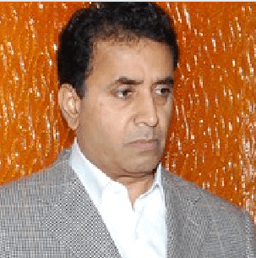
Vilasrao Deshmukh
Politician · Modern
50.8Total
Basic Information
Born
1957
1945
Died
—
—
Era
Modern
Modern
Nationality
Afghanistan
India
Occupation
Politician
Politician
Civilization
Middle Eastern
Indian
Score Comparison
Military (10%)
36.0
33.1
Political (20%)
42.3
54.7
Influence (20%)
54.9
49.4
Legacy (20%)
45.0
39.2
Leadership (15%)
67.0
74.0
Strategy (15%)
39.2
60.0
TOTAL
48.9
50.8
Hamid Karzai — Complete Timeline
2001 AD
Appointment as Chairman of the Interim AdministrationPolitical Action
Hamid Karzai was appointed Chairman of the Afghan Interim Administration at the Bonn Conference in December 2001, following the fall of the Taliban regime. He was chosen as a Pashtun leader acceptable to the international community and various Afghan factions.
AfghanistanPost-TalibanTransition
Impact: nationalconstructive
2004 AD
Election as President of AfghanistanPolitical Action◆ Major
Hamid Karzai won the first democratic presidential election in Afghanistan's history, securing 55.4% of the vote. The election was held under the new constitution and marked a milestone in the country's transition to democracy after decades of war.
AfghanistanElectionDemocracy
Impact: nationalconstructive
2009 AD
Re-election amid fraud allegationsPolitical Action◆ Major
Karzai was re-elected in a presidential election marred by widespread fraud. After a UN-backed investigation, his main opponent Abdullah Abdullah withdrew from the runoff, and Karzai was declared the winner. The election damaged his legitimacy and highlighted governance problems.
AfghanistanElectionCorruption
Impact: nationaldestructive
2012 AD
Signing of the US-Afghan Strategic Partnership AgreementPolitical Action
Karzai signed a strategic partnership agreement with the United States, outlining long-term cooperation in security, governance, and development. The agreement was intended to define the post-2014 relationship after the withdrawal of NATO combat forces.
AfghanistanUnited StatesDiplomacy
Impact: national
Vilasrao Deshmukh — Complete Timeline
2003 AD
First Term as Chief Minister of MaharashtraPolitical Action◆ Major
Deshmukh became Chief Minister of Maharashtra in January 2003, leading the Indian National Congress-NCP coalition government. He served until 2004, focusing on agricultural development and irrigation projects.
Chief MinisterCoalition GovernmentMaharashtra
Impact: regionalconstructive
2004 AD
Second Term as Chief Minister of MaharashtraPolitical Action◆ Major
Deshmukh was reappointed Chief Minister in November 2004 after the Congress-NCP alliance won the state elections. He served until 2008, overseeing infrastructure projects like the Mumbai Metro and the Maharashtra State Road Development Corporation.
Chief MinisterInfrastructureMaharashtra
Impact: regionalconstructive
2008 AD
Served as Union Minister of Science and TechnologyPolitical Action
Deshmukh was appointed Union Minister of Science and Technology and Earth Sciences in 2008 under Prime Minister Manmohan Singh. He held the position until 2009, promoting scientific research and space exploration initiatives.
Union MinisterScience PolicyIndia
Impact: nationalconstructive
2009 AD
Served as Union Minister of Heavy IndustriesPolitical Action
Deshmukh was appointed Union Minister of Heavy Industries and Public Enterprises in 2009. He oversaw the performance of public sector undertakings and industrial policy until his resignation in 2010.
Union MinisterIndustrial PolicyIndia
Impact: national
This comparison has not been analyzed yet.
One-time AI generation (~1 minute). Scores and timeline are already available below.
Rankings
🥇
Vilasrao DeshmukhLeader
Mil: 33.1Pol: 54.7Inf: 49.4
50.8
🥈
Hamid Karzai
Mil: 36.0Pol: 42.3Inf: 54.9
48.9
+1.9 behind
How This Comparison Works
Algorithm
Each figure is scored on 6 dimensions (0—100 scale) based on structured historical data: Military (10%), Political (20%), Influence (20%), Legacy (20%), Leadership (15%), Strategy (15%). The weighted total produces the final ranking.
Data Sources
Scores are computed from structured sub-indicators in the database. Scale factors adjust for era (Ancient ×0.85, Modern ×1.0) and civilization size (Eastern ×1.05, Other ×0.80) to account for differences in population and military scale.
Maximum 3 Figures
Comparisons are limited to 2—3 figures to ensure readability and statistical meaningfulness.
Error Margins
±5 points per dimension — Sub-scores are derived from historical records with inherent uncertainty. Two figures within 5 points on a dimension should be considered roughly equivalent in that area.
Total Score Accuracy
±3 points overall — The weighted combination of 6 dimensions produces a total score with approximately ±3 points of uncertainty. Differences of less than 3 points are not statistically significant— the figures are effectively tied.
Known Limitations
- Historical records are incomplete and uneven across civilizations
- Figures from oral-tradition societies may be underrepresented
- Occupation labels can misclassify multi-role figures
- Scores measure capability and impact, not moral character
- Quantitative scoring is a comparison tool, not absolute truth
Capability Radar
Military (10%) — Battles & Warfare
Battles
22
44
Win Rate
26
47
Expansion
25
51
Political (20%) — Governance & Reform
Reform
30
40
Diplomacy
50
45
Economy
20
40
Influence (20%) — Cultural & Global Reach
Cultural
25
20
Global
45
15
Legacy (20%) — Historical Impact
Historical
40
20
Longevity
30
15
Leadership (15%) — Power & Stability
Tenure
55
55
Stability
15
35
Strategy (15%) — Tactics & Innovation
Strategy
30
54
Tactics
35
54
Reform
39
60
Similar Comparisons
Comments & Discussion
No comments yet. Be the first to share your thoughts!