Loading...
This comparison has not been analyzed yet.
One-time AI generation (~1 minute). Scores and timeline are already available below.
Hamid Karzai vs Khaltmaagiin Battulga
Hamid Karzai leads by 5.6 pts · 2 figures compared
…

Hamid Karzai
Politician · Modern
48.9Total
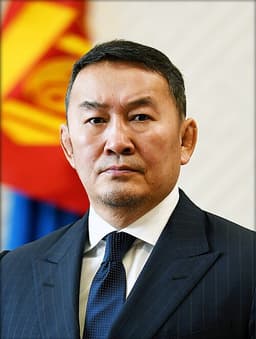
Khaltmaagiin Battulga
Politician · Modern
43.3Total
Basic Information
Born
1957
1963
Died
—
—
Era
Modern
Modern
Nationality
Afghanistan
Mongolia
Occupation
Politician
Politician
Civilization
Middle Eastern
Eastern
Score Comparison
Military (10%)
36.0
13.7
Political (20%)
42.3
40.8
Influence (20%)
54.9
49.4
Legacy (20%)
45.0
37.5
Leadership (15%)
67.0
74.0
Strategy (15%)
39.2
30.0
TOTAL
48.9
43.3
Hamid Karzai — Complete Timeline
2001 AD
Appointment as Chairman of the Interim AdministrationPolitical Action
Hamid Karzai was appointed Chairman of the Afghan Interim Administration at the Bonn Conference in December 2001, following the fall of the Taliban regime. He was chosen as a Pashtun leader acceptable to the international community and various Afghan factions.
AfghanistanPost-TalibanTransition
Impact: nationalconstructive
2004 AD
Election as President of AfghanistanPolitical Action◆ Major
Hamid Karzai won the first democratic presidential election in Afghanistan's history, securing 55.4% of the vote. The election was held under the new constitution and marked a milestone in the country's transition to democracy after decades of war.
AfghanistanElectionDemocracy
Impact: nationalconstructive
2009 AD
Re-election amid fraud allegationsPolitical Action◆ Major
Karzai was re-elected in a presidential election marred by widespread fraud. After a UN-backed investigation, his main opponent Abdullah Abdullah withdrew from the runoff, and Karzai was declared the winner. The election damaged his legitimacy and highlighted governance problems.
AfghanistanElectionCorruption
Impact: nationaldestructive
2012 AD
Signing of the US-Afghan Strategic Partnership AgreementPolitical Action
Karzai signed a strategic partnership agreement with the United States, outlining long-term cooperation in security, governance, and development. The agreement was intended to define the post-2014 relationship after the withdrawal of NATO combat forces.
AfghanistanUnited StatesDiplomacy
Impact: national
Khaltmaagiin Battulga — Complete Timeline
2008 AD
Won Gold Medal at 2008 Beijing Olympics in JudoCultural◆ Major
Battulga won the gold medal in men's 100 kg judo at the 2008 Summer Olympics in Beijing, defeating Askhat Zhitkeyev of Kazakhstan. This was Mongolia's first Olympic gold medal in judo.
OlympicsJudoGold Medal
Impact: nationalconstructive
2017 AD
Elected President of MongoliaPolitical Action◆ Major
Battulga won the 2017 presidential election as the Democratic Party candidate, defeating Miyeegombyn Enkhbold in a runoff. His campaign focused on economic nationalism and anti-corruption.
ElectionPresidency
Impact: nationalconstructive
Controversial Pardon of Former President EnkhbayarPolitical Action
Shortly after taking office, Battulga pardoned former President Nambaryn Enkhbayar, who had been convicted of corruption. The pardon was criticized as politically motivated and undermined anti-corruption efforts.
PardonCorruptionPolitics
Impact: nationaldestructive
2018 AD
Signed the 'Mongolia-China Free Trade Agreement'Political Action◆ Major
Battulga signed a free trade agreement with China during a state visit, aiming to boost bilateral trade and investment. The agreement faced criticism for potential economic dependency on China.
Trade AgreementChinaEconomic Policy
Impact: regionalconstructive
2020 AD
Declared a State of Emergency During COVID-19 PandemicPolitical Action◆ Major
Battulga declared a state of emergency in March 2020 in response to the COVID-19 pandemic, imposing strict lockdowns and border closures. The measures were credited with keeping Mongolia's infection rate low initially.
COVID-19Public HealthEmergency
Impact: national
This comparison has not been analyzed yet.
One-time AI generation (~1 minute). Scores and timeline are already available below.
Rankings
🥇
Hamid KarzaiLeader
Mil: 36.0Pol: 42.3Inf: 54.9
48.9
🥈
Khaltmaagiin Battulga
Mil: 13.7Pol: 40.8Inf: 49.4
43.3
+5.6 behind
How This Comparison Works
Algorithm
Each figure is scored on 6 dimensions (0—100 scale) based on structured historical data: Military (10%), Political (20%), Influence (20%), Legacy (20%), Leadership (15%), Strategy (15%). The weighted total produces the final ranking.
Data Sources
Scores are computed from structured sub-indicators in the database. Scale factors adjust for era (Ancient ×0.85, Modern ×1.0) and civilization size (Eastern ×1.05, Other ×0.80) to account for differences in population and military scale.
Maximum 3 Figures
Comparisons are limited to 2—3 figures to ensure readability and statistical meaningfulness.
Error Margins
±5 points per dimension — Sub-scores are derived from historical records with inherent uncertainty. Two figures within 5 points on a dimension should be considered roughly equivalent in that area.
Total Score Accuracy
±3 points overall — The weighted combination of 6 dimensions produces a total score with approximately ±3 points of uncertainty. Differences of less than 3 points are not statistically significant— the figures are effectively tied.
Known Limitations
- Historical records are incomplete and uneven across civilizations
- Figures from oral-tradition societies may be underrepresented
- Occupation labels can misclassify multi-role figures
- Scores measure capability and impact, not moral character
- Quantitative scoring is a comparison tool, not absolute truth
Capability Radar
Military (10%) — Battles & Warfare
Battles
22
15
Win Rate
26
16
Expansion
25
20
Political (20%) — Governance & Reform
Reform
30
30
Diplomacy
50
40
Economy
20
25
Influence (20%) — Cultural & Global Reach
Cultural
25
20
Global
45
15
Legacy (20%) — Historical Impact
Historical
40
15
Longevity
30
10
Leadership (15%) — Power & Stability
Tenure
55
55
Stability
15
35
Strategy (15%) — Tactics & Innovation
Strategy
30
23
Tactics
35
26
Reform
39
31
Similar Comparisons
Comments & Discussion
No comments yet. Be the first to share your thoughts!