Loading...
This comparison has not been analyzed yet.
One-time AI generation (~1 minute). Scores and timeline are already available below.
Habibullah Kalakani vs Peter III of Russia
Habibullah Kalakani leads by 1.5 pts · 2 figures compared
…
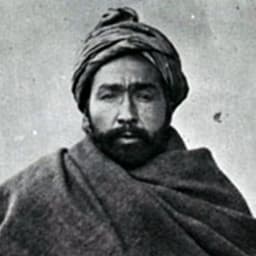
Habibullah Kalakani
Emperor · Modern
38.6Total
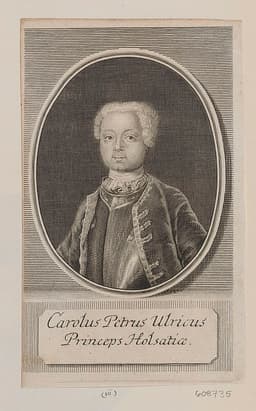
Peter III of Russia
Emperor · Modern
37.1Total
Basic Information
Born
1890
1728
Died
1929
1762
Era
Modern
Modern
Nationality
Afghanistan
Russia
Occupation
Emperor
Emperor
Civilization
Middle Eastern
Western
Score Comparison
Military (10%)
50.0
20.0
Political (20%)
32.1
30.8
Influence (20%)
45.5
45.5
Legacy (20%)
35.0
35.8
Leadership (15%)
31.2
31.2
Strategy (15%)
39.6
54.6
TOTAL
38.6
37.1
Habibullah Kalakani — Complete Timeline
1929 AD
Capture of KabulWar◆ Major
Habibullah Kalakani, a Tajik bandit, led a force of rebels to capture Kabul from the forces of King Amanullah Khan. The city fell after a brief siege, forcing Amanullah to abdicate and flee. Kalakani declared himself Emir of Afghanistan, beginning his nine-month rule.
AfghanistanCoupCivil War
Impact: nationaldestructive
Defeat and execution by Nadir ShahWar◆ Major
Mohammad Nadir Shah's forces defeated Habibullah Kalakani's army near Kabul. Kalakani fled but was captured and executed by firing squad on November 1, 1929. His brief rule ended, and the Musahiban dynasty was restored to power.
AfghanistanExecutionCivil War
Impact: nationaltragic
Reign as Emir of AfghanistanPolitical Action◆ Major
Habibullah Kalakani ruled Afghanistan from January to October 1929. His reign was marked by attempts to reverse Amanullah's reforms, including restoring conservative Islamic practices and abolishing modern education. He failed to gain broad support and faced multiple rebellions.
AfghanistanRuleReactionary
Impact: nationaldestructive
Peter III of Russia — Complete Timeline
1762 AD
Emancipation of the Nobility from State ServiceReform◆ Major
Peter III issued the 'Manifesto on the Freedom of the Nobility,' which freed nobles from compulsory state and military service. This reform granted nobles the right to choose their occupation, travel abroad, and own land without service. It strengthened the nobility's power but weakened state control.
NobilityReformManifesto
Impact: nationalconstructive
Accession as Emperor of RussiaPolitical Action◆ Major
Peter III ascended the throne after the death of Elizabeth of Russia. He was a grandson of Peter the Great and a devoted admirer of Frederick the Great of Prussia. His reign lasted only six months and was marked by unpopular policies that alienated the nobility and the military.
SuccessionShort ReignUnpopular
Impact: national
Withdrawal from the Seven Years' War (Treaty of Saint Petersburg)Political Action◆ Major
Peter III ended Russia's participation in the Seven Years' War by signing the Treaty of Saint Petersburg with Prussia. He returned all conquered territories to Prussia and formed an alliance with Frederick the Great. This decision reversed Elizabeth's policy and was seen as a betrayal of Russian sacrifices.
TreatySeven Years' WarPrussia
Impact: globaldestructive
Deposition and AssassinationPolitical Action◆ Major
Peter III was deposed in a coup led by his wife, Catherine, and her supporters, including the Orlov brothers. He was forced to abdicate and was imprisoned at Ropsha, where he was killed under unclear circumstances. His death cleared the way for Catherine the Great's reign.
CoupAssassinationCatherine the Great
Impact: nationaltragic
This comparison has not been analyzed yet.
One-time AI generation (~1 minute). Scores and timeline are already available below.
Rankings
🥇
Habibullah KalakaniLeader
Mil: 50.0Pol: 32.1Inf: 45.5
38.6
🥈
Peter III of Russia
Mil: 20.0Pol: 30.8Inf: 45.5
37.1
+1.5 behind
How This Comparison Works
Algorithm
Each figure is scored on 6 dimensions (0—100 scale) based on structured historical data: Military (10%), Political (20%), Influence (20%), Legacy (20%), Leadership (15%), Strategy (15%). The weighted total produces the final ranking.
Data Sources
Scores are computed from structured sub-indicators in the database. Scale factors adjust for era (Ancient ×0.85, Modern ×1.0) and civilization size (Eastern ×1.05, Other ×0.80) to account for differences in population and military scale.
Maximum 3 Figures
Comparisons are limited to 2—3 figures to ensure readability and statistical meaningfulness.
Error Margins
±5 points per dimension — Sub-scores are derived from historical records with inherent uncertainty. Two figures within 5 points on a dimension should be considered roughly equivalent in that area.
Total Score Accuracy
±3 points overall — The weighted combination of 6 dimensions produces a total score with approximately ±3 points of uncertainty. Differences of less than 3 points are not statistically significant— the figures are effectively tied.
Known Limitations
- Historical records are incomplete and uneven across civilizations
- Figures from oral-tradition societies may be underrepresented
- Occupation labels can misclassify multi-role figures
- Scores measure capability and impact, not moral character
- Quantitative scoring is a comparison tool, not absolute truth
Capability Radar
Military (10%) — Battles & Warfare
Battles
25
5
Win Rate
30
5
Expansion
10
5
Political (20%) — Governance & Reform
Reform
5
15
Diplomacy
5
20
Economy
5
10
Influence (20%) — Cultural & Global Reach
Cultural
5
5
Global
5
5
Legacy (20%) — Historical Impact
Historical
15
10
Longevity
5
5
Leadership (15%) — Power & Stability
Tenure
10
10
Stability
5
5
Strategy (15%) — Tactics & Innovation
Strategy
15
5
Tactics
20
5
Reform
5
10
Similar Comparisons
Comments & Discussion
No comments yet. Be the first to share your thoughts!