Loading...
Feodor III vs Peter III of Russia
Feodor III leads by 13.0 pts · 2 figures compared
…

Feodor III
Emperor · Modern
50.1Total
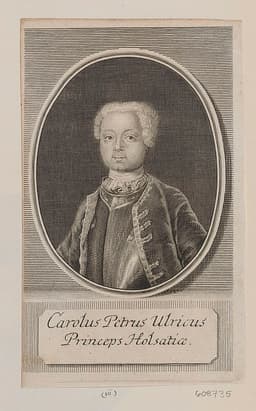
Peter III of Russia
Emperor · Modern
37.1Total
Basic Information
Born
1661
1728
Died
1682
1762
Era
Modern
Modern
Nationality
Russia
Russia
Occupation
Emperor
Emperor
Civilization
Western
Western
Score Comparison
Military (10%)
43.3
20.0
Political (20%)
68.0
30.8
Influence (20%)
51.8
45.5
Legacy (20%)
43.3
35.8
Leadership (15%)
62.2
31.2
Strategy (15%)
25.0
54.6
TOTAL
50.1
37.1
Feodor III — Complete Timeline
1676 AD
Russo-Turkish War (1676–1681)War◆ Major
Feodor III continued the war with the Ottoman Empire over control of Ukraine. The conflict ended with the Treaty of Bakhchisarai in 1681, which established the Dnieper River as the border between Russia and the Ottoman Empire, ceding left-bank Ukraine to Russia.
Russo-Turkish WarTreatyTerritorial Change
Impact: regional
1680 AD
Introduction of Western Dress and Customs at CourtCultural
Feodor III encouraged the adoption of Western European fashions, including shaving beards and wearing Polish-style clothing, at the Russian court. This was an early step in the Westernization of Russian elite culture, later expanded by Peter the Great.
WesternizationCourt CultureFashion
Impact: nationalconstructive
1682 AD
Abolition of MestnichestvoReform◆ Major
Feodor III abolished the system of mestnichestvo, which determined noble rank and appointments based on ancestry rather than merit. This reform aimed to modernize the Russian state and military by allowing promotion based on ability, reducing the power of the old boyar aristocracy.
Administrative ReformNobilityModernization
Impact: nationalconstructive
Establishment of the Slavic Greek Latin AcademyCultural◆ Major
Feodor III approved the founding of the Slavic Greek Latin Academy in Moscow, the first higher education institution in Russia. It was intended to train officials and clergy in Greek, Latin, and Slavic languages, promoting learning and reducing the influence of foreign scholars.
EducationAcademyCultural Reform
Impact: nationalconstructive
Peter III of Russia — Complete Timeline
1762 AD
Emancipation of the Nobility from State ServiceReform◆ Major
Peter III issued the 'Manifesto on the Freedom of the Nobility,' which freed nobles from compulsory state and military service. This reform granted nobles the right to choose their occupation, travel abroad, and own land without service. It strengthened the nobility's power but weakened state control.
NobilityReformManifesto
Impact: nationalconstructive
Accession as Emperor of RussiaPolitical Action◆ Major
Peter III ascended the throne after the death of Elizabeth of Russia. He was a grandson of Peter the Great and a devoted admirer of Frederick the Great of Prussia. His reign lasted only six months and was marked by unpopular policies that alienated the nobility and the military.
SuccessionShort ReignUnpopular
Impact: national
Withdrawal from the Seven Years' War (Treaty of Saint Petersburg)Political Action◆ Major
Peter III ended Russia's participation in the Seven Years' War by signing the Treaty of Saint Petersburg with Prussia. He returned all conquered territories to Prussia and formed an alliance with Frederick the Great. This decision reversed Elizabeth's policy and was seen as a betrayal of Russian sacrifices.
TreatySeven Years' WarPrussia
Impact: globaldestructive
Deposition and AssassinationPolitical Action◆ Major
Peter III was deposed in a coup led by his wife, Catherine, and her supporters, including the Orlov brothers. He was forced to abdicate and was imprisoned at Ropsha, where he was killed under unclear circumstances. His death cleared the way for Catherine the Great's reign.
CoupAssassinationCatherine the Great
Impact: nationaltragic
Expert Analysis
Origins
Feodor III Alekseyevich (born 1661) was the third son of Tsar Alexis and his first wife Maria Miloslavskaya. He grew up in the Kremlin, educated by Simeon Polotsky, a Belarusian scholar who exposed him to Western learning and Latin. Feodor was physically weak, suffering from scurvy and possibly rickets, which limited his mobility but not his intellectual curiosity. He ascended the throne in 1676 at age 15.
Peter III Fyodorovich (born 1728 in Kiel) was the son of Charles Frederick, Duke of Holstein-Gottorp, and Anna Petrovna, daughter of Peter the Great. Orphaned early, he was raised by a German tutor who instilled in him a deep admiration for Frederick the Great of Prussia. He spoke German better than Russian and felt more German than Russian. He arrived in Russia in 1742 after being chosen by his aunt Empress Elizabeth as heir. He married Sophie of Anhalt-Zerbst (future Catherine the Great) in 1745.
Rise to Power
Feodor III became tsar at 15 after his father's death in 1676. His reign was short (1676–1682), but he faced immediate challenges: a war with the Ottoman Empire over Ukraine (Russo-Turkish War, 1676–1681) and internal power struggles between the Miloslavsky and Naryshkin factions. He relied on capable advisors like Vasily Golitsyn and the boyar Artamon Matveyev. The war ended with the Treaty of Bakhchisarai in 1681, which established a 20-year truce and recognized Russian control of Left-Bank Ukraine.
Peter III ascended the throne in January 1762 after Empress Elizabeth's death. He was 34 and had spent 20 years as heir, but he was unprepared for rule. His first acts alienated the court and clergy: he made peace with Prussia (Treaty of Saint Petersburg, May 1762), returning all conquered territories including East Prussia, and he ordered the Russian army to ally with Frederick the Great against Austria. This reversal of Russian gains in the Seven Years' War (where Russia had scored military successes scoring 78.3 in military under Elizabeth) was seen as treasonous. He also introduced Prussian uniforms and drill to the army, further angering officers.
Leadership & Governance
Feodor III's leadership scored 62.2, reflecting his reformist but short tenure. His most significant reform was the abolition of mestnichestvo in 1682, a system that determined noble rank by ancestry rather than merit. This reform allowed the government to appoint officials based on ability, weakening the old boyar aristocracy. He also founded the Slavic Greek Latin Academy in Moscow, the first higher education institution in Russia, intended to train officials and clergy in Western learning. He encouraged Western dress and customs at court, foreshadowing Peter the Great's later reforms. His political score of 68.0 reflects his ability to push through major changes despite his youth and illness.
Peter III's leadership scored 31.2, reflecting his disastrous governance. His major reform was the 'Manifesto on the Freedom of the Nobility' (February 1762), which freed nobles from compulsory state and military service. This was popular with the nobility but undermined the state's ability to enforce service. He also ended the persecution of Old Believers and secularized church lands, but these were overshadowed by his pro-Prussian policies. His withdrawal from the Seven Years' War (scoring 54.6 in strategy) was strategically sound but politically suicidal because it wasted Russian sacrifices. He openly insulted the Russian Orthodox Church and planned to convert to Lutheranism, which alienated the clergy and populace.
Triumph & Tragedy
Feodor III's triumph was the abolition of mestnichestvo, which modernized the Russian state and reduced aristocratic power. His founding of the Slavic Greek Latin Academy was a milestone in Russian education. However, his tragedy was his early death at age 20 (in 1682), likely from scurvy or tuberculosis. His reforms were left incomplete, and his death triggered the Moscow Uprising of 1682, as factions fought for control. His legacy scored 43.3, reflecting his potential unfulfilled.
Peter III's triumph was the emancipation of the nobility from state service, which granted them personal freedom and property rights. This reform was later confirmed by Catherine the Great. His withdrawal from the Seven Years' War saved Russia from further bloodshed. However, his tragedy was his deposition and assassination in July 1762, just six months into his reign. He was overthrown by his wife Catherine, who became Catherine the Great, with support from the Orlov brothers and the Imperial Guard. His legacy scored 35.8, as he is remembered as a weak, pro-German ruler who squandered Russian victories.
Character & Destiny
Feodor III was intellectually curious, reform-minded, and cautious. Despite his physical frailty, he pushed for modernization, showing a political acumen that scored 68.0. His destiny was cut short by illness, but his reforms laid groundwork for Peter the Great. He was described by contemporaries as kind and pious, but his short reign limited his impact.
Peter III was impulsive, tactless, and openly pro-German. He admired Frederick the Great to the point of betraying Russian interests. His character—reckless, contemptuous of Russian traditions, and dismissive of his wife—sealed his fate. He scored 20.0 in military and 31.2 in leadership, reflecting his inability to command loyalty. His destiny was a swift coup and murder, orchestrated by Catherine, who scored 78.3 in political maneuvering.
Legacy
Feodor III's legacy is his abolition of mestnichestvo, which ended hereditary precedence in state service, and his founding of the Slavic Greek Latin Academy, which became a center of learning. These reforms influenced Peter the Great's westernization. His total score of 50.1 reflects a moderate impact cut short.
Peter III's legacy is mixed. His emancipation of the nobility freed the elite from service, but his pro-Prussian policies and deposition made him a cautionary tale. His reforms were adopted by Catherine, who built on the nobility's freedom while erasing his memory. He scored 37.1 total, lower than Feodor III, reflecting his brief and disastrous reign.
Conclusion
Feodor III had greater impact on Russia's development. Despite reigning only six years, his abolition of mestnichestvo and support for education were foundational reforms that strengthened the state and promoted meritocracy. Peter III's reforms, while significant, were overshadowed by his incompetence and the coup that ended his reign. Feodor III's total score of 50.1 surpasses Peter III's 37.1, and his political score of 68.0 versus Peter's 30.8 shows his superior governance. Feodor III's legacy, though cut short, was more durable and constructive.
Rankings
🥇
Feodor IIILeader
Mil: 43.3Pol: 68.0Inf: 51.8
50.1
🥈
Peter III of Russia
Mil: 20.0Pol: 30.8Inf: 45.5
37.1
+13.0 behind
How This Comparison Works
Algorithm
Each figure is scored on 6 dimensions (0—100 scale) based on structured historical data: Military (10%), Political (20%), Influence (20%), Legacy (20%), Leadership (15%), Strategy (15%). The weighted total produces the final ranking.
Data Sources
Scores are computed from structured sub-indicators in the database. Scale factors adjust for era (Ancient ×0.85, Modern ×1.0) and civilization size (Eastern ×1.05, Other ×0.80) to account for differences in population and military scale.
Maximum 3 Figures
Comparisons are limited to 2—3 figures to ensure readability and statistical meaningfulness.
Error Margins
±5 points per dimension — Sub-scores are derived from historical records with inherent uncertainty. Two figures within 5 points on a dimension should be considered roughly equivalent in that area.
Total Score Accuracy
±3 points overall — The weighted combination of 6 dimensions produces a total score with approximately ±3 points of uncertainty. Differences of less than 3 points are not statistically significant— the figures are effectively tied.
Known Limitations
- Historical records are incomplete and uneven across civilizations
- Figures from oral-tradition societies may be underrepresented
- Occupation labels can misclassify multi-role figures
- Scores measure capability and impact, not moral character
- Quantitative scoring is a comparison tool, not absolute truth
Capability Radar
Military (10%) — Battles & Warfare
Battles
5
5
Win Rate
5
5
Expansion
5
5
Political (20%) — Governance & Reform
Reform
70
15
Diplomacy
40
20
Economy
50
10
Influence (20%) — Cultural & Global Reach
Cultural
30
5
Global
20
5
Legacy (20%) — Historical Impact
Historical
40
10
Longevity
30
5
Leadership (15%) — Power & Stability
Tenure
20
10
Stability
40
5
Strategy (15%) — Tactics & Innovation
Strategy
10
5
Tactics
10
5
Reform
30
10
Similar Comparisons
Comments & Discussion
No comments yet. Be the first to share your thoughts!