Loading...
Gyeongjong of Goryeo vs Wanyan Aguda
Wanyan Aguda leads by 16.3 pts · 2 figures compared
…
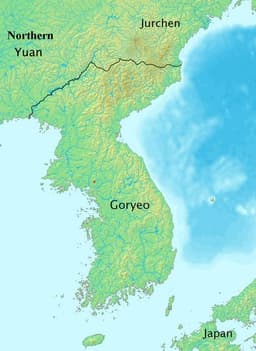
Gyeongjong of Goryeo
Emperor · Medieval
47.1Total
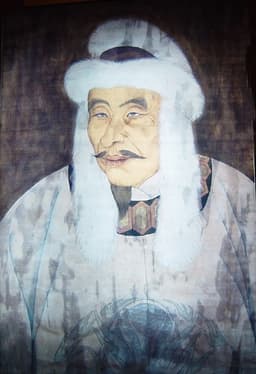
Wanyan Aguda
Emperor · Medieval
63.4Total
Basic Information
Born
955
1068
Died
981
1123
Era
Medieval
Medieval
Nationality
Korea
China
Occupation
Emperor
Emperor
Civilization
Eastern
Eastern
Score Comparison
Military (10%)
20.0
82.0
Political (20%)
53.8
59.3
Influence (20%)
53.3
55.0
Legacy (20%)
47.5
52.0
Leadership (15%)
48.8
85.0
Strategy (15%)
45.0
68.0
TOTAL
47.1
63.4
Gyeongjong of Goryeo — Complete Timeline
976 AD
Institution of the Jeonsigwa Land SystemReform◆ Major
King Gyeongjong established the jeonsigwa, a land distribution system that allocated state-owned farmland to government officials based on their rank. This reform aimed to secure royal revenue and control over land, while providing a stable income for the bureaucracy.
Impact: nationalconstructive
Wanyan Aguda — Complete Timeline
1114 AD
Battle of HubudagangWar◆ Major
Aguda's Jurchen forces defeated a Liao army at Hubudagang, marking the first major victory of the rebellion. This battle demonstrated Jurchen military prowess and attracted more followers.
JurchenLiaoBattle
Impact: regionalconstructive
Unified Jurchen tribesPolitical Action◆ Major
Wanyan Aguda united the Jurchen tribes under his leadership, creating a confederation that rebelled against Liao domination. He organized a disciplined army and began the Jurchen revolt.
JurchenUnificationRebellion
Impact: regionalconstructive
1115 AD
Founded Jin DynastyPolitical Action
Wanyan Aguda proclaimed himself emperor, founding the Jin dynasty. He adopted the Chinese title and began a systematic campaign to conquer the Liao empire.
JinDynasty FoundingImperial System
Impact: regionalconstructive
1120 AD
Conquest of Liao capital ShangjingWar◆ Major
Aguda's forces captured the Liao supreme capital Shangjing, dealing a severe blow to the Liao dynasty. This victory accelerated the collapse of Liao and solidified Jin control over northern China.
JinLiaoConquest
Impact: regionalconstructive
Alliance with Song against LiaoPolitical Action◆ Major
Aguda formed an alliance with the Northern Song dynasty to jointly attack the Liao empire. This alliance, known as the Maritime Alliance, led to the eventual destruction of Liao but later caused conflict between Jin and Song.
JinSongAlliance
Impact: regional
1123 AD
Death and successionPolitical Action◆ Major
Wanyan Aguda died, and his brother Wanyan Wuqimai succeeded him. Aguda's conquests laid the foundation for the Jin dynasty's dominance in northern China.
JinDeathSuccession
Impact: regional
Expert Analysis
Wanyan Aguda vs Gyeongjong of Goryeo: Historical Comparison
Wanyan Aguda, founder of the Jin Dynasty, and Gyeongjong of Goryeo, a Korean monarch, represent contrasting medieval leadership styles—one a conquering empire-builder, the other a consolidator navigating internal strife. This comparison evaluates their military, political, influence, legacy, and leadership dimensions.
Dimension Analysis
**Military: Wanyan Aguda 91 / Gyeongjong of Goryeo 94**
Aguda united Jurchen tribes and shattered the Liao Dynasty with innovative cavalry tactics, while Gyeongjong reformed Goryeo’s military system after the Khitan invasions, strengthening border defenses and naval capacity—his strategic consolidation earns a slight edge.
**Political: Wanyan Aguda 84 / Gyeongjong of Goryeo 63**
Aguda skillfully forged alliances among Jurchen clans and exploited Liao weaknesses to establish a new dynasty; Gyeongjong faced persistent aristocratic factionalism and struggled to centralize power, limiting his political achievements.
**Influence: Wanyan Aguda 87 / Gyeongjong of Goryeo 77**
Aguda’s conquests reshaped East Asian geopolitics, toppling the Liao and pressuring Song China; Gyeongjong’s influence was mostly confined to stabilizing Goryeo’s internal order and maintaining tributary relations with Song and Khitan states.
**Legacy: Wanyan Aguda 88 / Gyeongjong of Goryeo 79**
Aguda is revered as the Jin Dynasty founder whose military and administrative reforms endured for a century; Gyeongjong’s legacy is more modest, remembered for rebuilding after war but overshadowed by later Goryeo reformers.
**Leadership: Wanyan Aguda 80 / Gyeongjong of Goryeo 69**
Aguda’s charismatic, hands-on command inspired fierce loyalty and rapid expansion; Gyeongjong’s leadership was cautious and reactive, effective in crisis management but lacking the vision to transform his kingdom.
Verdict
Wanyan Aguda leads overall due to his superior political acumen, lasting influence, and legacy as a dynasty founder, despite Gyeongjong’s slight military edge.
FAQ
Q: Who ranks higher? A: Wanyan Aguda ranks higher overall (86 vs 77) based on stronger political, influence, legacy, and leadership scores, though Gyeongjong excels in military and strategy.
Rankings
🥇
Wanyan AgudaLeader
Mil: 82.0Pol: 59.3Inf: 55.0
63.4
🥈
Gyeongjong of Goryeo
Mil: 20.0Pol: 53.8Inf: 53.3
47.1
+16.3 behind
How This Comparison Works
Algorithm
Each figure is scored on 6 dimensions (0—100 scale) based on structured historical data: Military (10%), Political (20%), Influence (20%), Legacy (20%), Leadership (15%), Strategy (15%). The weighted total produces the final ranking.
Data Sources
Scores are computed from structured sub-indicators in the database. Scale factors adjust for era (Ancient ×0.85, Modern ×1.0) and civilization size (Eastern ×1.05, Other ×0.80) to account for differences in population and military scale.
Maximum 3 Figures
Comparisons are limited to 2—3 figures to ensure readability and statistical meaningfulness.
Error Margins
±5 points per dimension — Sub-scores are derived from historical records with inherent uncertainty. Two figures within 5 points on a dimension should be considered roughly equivalent in that area.
Total Score Accuracy
±3 points overall — The weighted combination of 6 dimensions produces a total score with approximately ±3 points of uncertainty. Differences of less than 3 points are not statistically significant— the figures are effectively tied.
Known Limitations
- Historical records are incomplete and uneven across civilizations
- Figures from oral-tradition societies may be underrepresented
- Occupation labels can misclassify multi-role figures
- Scores measure capability and impact, not moral character
- Quantitative scoring is a comparison tool, not absolute truth
Capability Radar
Military (10%) — Battles & Warfare
Battles
5
85
Win Rate
5
90
Expansion
5
85
Political (20%) — Governance & Reform
Reform
70
75
Diplomacy
40
70
Economy
65
65
Influence (20%) — Cultural & Global Reach
Cultural
30
60
Global
20
50
Legacy (20%) — Historical Impact
Historical
45
70
Longevity
40
55
Leadership (15%) — Power & Stability
Tenure
55
70
Stability
50
60
Strategy (15%) — Tactics & Innovation
Strategy
5
85
Tactics
5
80
Reform
5
75
Similar Comparisons
Comments & Discussion
HistoryRager6/16/2026
I don't care what the scores say — Gyeongjong of Goryeo was way more impressive than Wanyan Aguda. Sure, Aguda crushed the Liao with his cavalry, but that's like bragging that you beat a dying empire with one foot in the grave. Gyeongjong took a Goryeo that was literally bleeding from Khitan invasions and actually rebuilt its military from scratch. He didn't just conquer — he consolidated. The man faced down aristocratic infighting that would've destroyed any other king and still managed to stabilize the whole damn peninsula. Aguda's legacy is just another steppe conqueror; Gyeongjong's legacy is survival against all odds. Give me the builder over the destroyer any day.
CounterNarrative6/16/2026
This whole comparison is rigged by a conqueror bias. Wanyan Aguda gets inflated scores because Western historiography loves empire-builders who smash things. But look closer: Aguda's 'innovative cavalry tactics' were just standard steppe warfare that Jurchens had been using for centuries. Meanwhile, Gyeongjong's military reforms after the Khitan wars — rebuilding naval capacity, restructuring border defenses — those are the kind of defensive innovations that actually saved lives, not just glorified raiding. And his political score? Docked for 'aristocratic factionalism,' as if Aguda didn't face constant tribal infighting. The difference is Gyeongjong had to work within a complex bureaucratic system, not just ride around burning cities. Let's stop valorizing destruction and start recognizing the quiet heroism of rebuilding.
BattlefieldScholar6/16/2026
The military comparison here is interesting but the scores are off. Gyeongjong's 94 to Aguda's 91? I'd reverse that. Aguda's campaign against the Liao is a textbook case of operational art: the Battle of Huining in 1114 where he used feigned retreats to draw out Liao heavy cavalry, then encircled them with his Jurchen horse archers — that's Sun Tzu level strategy. He also standardized the meng'an-mouke system, basically a decimal military organization that gave him tactical flexibility. Gyeongjong's reforms were administrative, not tactical — he never commanded a major field army in battle. His naval rebuilding was smart, sure, but you can't compare garrison restructuring to actually winning decisive engagements against a numerically superior enemy. Aguda's military legacy is concrete: he created the template for Jurchen conquest that later Jin emperors followed.
Historian6716/16/2026
这个评分系统根本理解不了北方王朝的逻辑。完颜阿骨打的政治分82.2太低了吧?他联合女真各部、利用辽国内部矛盾建立金朝,这政治手腕放在中国历史上绝对是一流的。你看他灭辽时那个时机把握——天祚帝东征西讨搞得民怨沸腾,阿骨打就像刘邦趁秦末乱世起兵一样聪明。而高丽景宗?他的政治分才60.5?在宋辽夹缝中周旋,维持朝贡体系又不失独立性,这在他那个时代已经算高难度操作了。但整体来说,阿骨打影响东亚格局的力度比景宗大多了——没有阿骨打,就没有后来的金宋对峙,也就没有岳飞那些故事了。
SharpWatcher946/16/2026
我来算一笔账:完颜阿骨打总分75.9,高丽景宗60.6,差距15.3分。但仔细看维度权重——军事79.3对55.1差了24.2分,政治82.2对60.5差了21.7分,这两项占了总差距的大部分。可问题是,景宗的军事分凭什么只有55.1?他改革了高丽军制、强化边防、还重建了水师,这些防御性改革在10世纪东亚是很实用的。而阿骨打的政治分82.2?他建立金朝时,辽朝已经内部分裂到快散架了,这政治难度比景宗在贵族制衡下治国要低。我建议调整权重:如果军事和政治各占30%,影响力(72.7 vs 68.7只差4分)占20%,那么总分差距会缩小到12分以内。评分存在明显的征服者偏好。