Loading...
Gwanggaeto the Great vs Pepi I Meryre
Gwanggaeto the Great leads by 10.2 pts · 2 figures compared
…
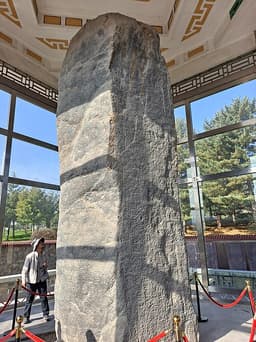
Gwanggaeto the Great
Emperor · Ancient
59.6Total

Pepi I Meryre
Emperor · Ancient
49.4Total
Basic Information
Born
374
-2320
Died
413
-2270
Era
Ancient
Ancient
Nationality
Korea
Old Kingdom Egypt
Occupation
Emperor
Emperor
Civilization
Eastern
Middle Eastern
Score Comparison
Military (10%)
75.0
50.0
Political (20%)
45.0
48.0
Influence (20%)
58.3
51.8
Legacy (20%)
52.0
44.2
Leadership (15%)
72.0
68.0
Strategy (15%)
70.0
30.3
TOTAL
59.6
49.4
Gwanggaeto the Great — Complete Timeline
313 AD
Conquest of the Lelang CommanderyWar◆ Major
Gwanggaeto the Great conquered the Lelang Commandery, a Chinese commandery located in the Korean peninsula. This victory eliminated Chinese influence in the region and brought the territory under Goguryeo control. It marked a significant expansion of Goguryeo's territory and power.
ConquestLelangGoguryeo Expansion
Impact: regional
395 AD
Campaigns against the Xianbei and KhitanWar◆ Major
Gwanggaeto the Great launched campaigns against the Xianbei and Khitan nomadic confederations in Manchuria. He defeated them, securing Goguryeo's northern borders and expanding its influence into Manchuria. These campaigns demonstrated Goguryeo's military strength and protected its territory from nomadic incursions.
CampaignNomadsManchuria
Impact: regional
396 AD
Subjugation of the Baekje KingdomWar◆ Major
Gwanggaeto the Great led a military campaign that subjugated the Baekje kingdom, forcing it to become a vassal state of Goguryeo. He captured the Baekje capital, Hansung, and took the Baekje king as a hostage. This victory made Goguryeo the dominant power on the Korean peninsula.
SubjugationBaekjeKorean Peninsula
Impact: regional
414 AD
Erection of the Gwanggaeto SteleCultural◆ Major
After Gwanggaeto's death, his son King Jangsu erected a large stele in his honor at the site of his tomb in Ji'an, China. The stele is inscribed with a detailed account of Gwanggaeto's conquests and achievements. It is a crucial historical source for understanding Goguryeo's history and territorial extent.
SteleInscriptionHistorical Record
Impact: regionalconstructive
Pepi I Meryre — Complete Timeline
2320 BC
Military campaigns in Nubia and the LevantWar◆ Major
Pepi I conducted military campaigns into Nubia to secure trade routes and into the Levant to counter growing influence from Byblos. These campaigns are recorded in the autobiographies of officials such as Weni the Elder, who led the army.
MilitaryNubiaLevant
Impact: regional
Long reign and extensive building programCultural◆ Major
Pepi I reigned for approximately 50 years, one of the longest in Egyptian history. He undertook extensive building projects across Egypt, including the construction of his pyramid at Saqqara and the expansion of temples at Dendera, Abydos, and Elephantine.
Long ReignBuilding ProgramOld Kingdom
Impact: nationalconstructive
Construction of the Pyramid of Pepi I at SaqqaraCultural◆ Major
Pepi I built his pyramid at Saqqara, originally about 52 meters high. The burial chamber contained extensive Pyramid Texts, which have been crucial for understanding Egyptian funerary literature. The complex included a mortuary temple and a causeway.
ArchitecturePyramidPyramid Texts
Impact: nationalconstructive
Marriage to the daughters of Khui and the rise of the nobilityPolitical Action
Pepi I married two daughters of a powerful noble named Khui, who became his queens. This marriage alliance strengthened the position of the provincial nobility and marked a shift in power away from the central court, a trend that continued throughout the Sixth Dynasty.
MarriageNobilityPower Shift
Impact: national
Expert Analysis
Origins
Gwanggaeto the Great was born in 374 AD as the son of King Gogukyang of Goguryeo, one of the Three Kingdoms of Korea. His early life was shaped by the constant threat of Chinese commanderies and nomadic confederations. He ascended the throne at age 17 in 391 AD. Pepi I Meryre was born around 2332 BC in the 6th Dynasty of Egypt's Old Kingdom. He was the son of Pharaoh Teti and Queen Iput I. His early years were marked by the growing power of provincial nobles and the decline of central authority. He became pharaoh after his father's assassination, likely as a child, and ruled for about 50 years.
Rise to Power
Gwanggaeto's rise was immediate upon his coronation. In 392 AD, he launched a campaign against the Baekje kingdom, capturing 10 fortresses. His major turning point came in 396 AD when he personally led a naval invasion of Baekje, forcing King Asin to submit. He also conquered the Lelang Commandery in 313 AD, eliminating Chinese influence in the Korean peninsula. Pepi I's rise was more gradual. He became pharaoh as a child, and early in his reign, he faced a harem conspiracy led by one of his wives, which he survived. He consolidated power by marrying two daughters of the powerful noble Khui, strengthening ties with the provincial elite. His rise was not through conquest but through political maneuvering and building alliances.
Leadership & Governance
Gwanggaeto ruled as a warrior-king, personally leading campaigns and expanding Goguryeo's territory to its greatest extent. He subjugated Baekje, Silla, and various nomadic tribes, creating a vast empire. His governance was focused on military expansion and centralizing control. He erected the Gwanggaeto Stele (414 AD) to proclaim his achievements. Pepi I governed through a decentralized system, relying on nomarchs (provincial governors) to administer Egypt. His building program included the Pyramid of Pepi I at Saqqara, which contained the Pyramid Texts, crucial for understanding Egyptian religion. He also conducted military campaigns to Nubia and the Levant, but these were limited compared to Gwanggaeto's conquests. Pepi's leadership style was more administrative, with a score of 68.0 in leadership versus Gwanggaeto's 72.0.
Triumph & Tragedy
Gwanggaeto's greatest triumphs were his conquests: he defeated the Xianbei and Khitan confederations, secured Manchuria, and forced Baekje into vassalage. He also rescued Silla from invasion in 400 AD, extending Goguryeo's influence. His tragedy is that his empire did not long outlast him; his son Jangsu maintained it, but later internal strife weakened Goguryeo. Pepi's triumph was his long reign and extensive building projects, including his pyramid, which stands as a testament to Old Kingdom craftsmanship. His tragedy is that his reign marked the beginning of the decline of the Old Kingdom. The power of the nobility grew, and after his death, the central government weakened, leading to the First Intermediate Period.
Character & Destiny
Gwanggaeto was aggressive, ambitious, and a hands-on military leader. His character drove him to constant expansion, and his destiny was to be remembered as the greatest king of Goguryeo. His stele inscription portrays him as a divine conqueror. Pepi I was pragmatic and diplomatic, using marriages to secure alliances. His character was suited to maintaining stability in a time of decentralization. His destiny was to oversee the twilight of the Old Kingdom, with his reign being a long but ultimately unsustainable period.
Legacy
Gwanggaeto's legacy is immense in Korean history. He is revered as a national hero who expanded Korean territory and culture. The Gwanggaeto Stele provides invaluable historical data. Scored 58.3 in influence and 52.0 in legacy, his impact is still celebrated in modern Korea. Pepi I's legacy is more archaeological: his pyramid and texts are key sources for understanding ancient Egypt. However, his political system contributed to the collapse of the Old Kingdom. Scored 51.8 in influence and 44.2 in legacy, his long-term impact is less than Gwanggaeto's.
Conclusion
Gwanggaeto the Great had a greater impact than Pepi I Meryre. His military score of 75.0 versus Pepi's 50.0, and his total score of 59.6 versus 49.4, reflect his superior achievements. While Pepi ruled longer and built pyramids, Gwanggaeto's conquests reshaped the Korean peninsula and left a lasting legacy. Pepi's reign was a holding action in a declining era; Gwanggaeto's was a peak of power. Therefore, Gwanggaeto is the more significant historical figure.
Rankings
🥇
Gwanggaeto the GreatLeader
Mil: 75.0Pol: 45.0Inf: 58.3
59.6
🥈
Pepi I Meryre
Mil: 50.0Pol: 48.0Inf: 51.8
49.4
+10.2 behind
How This Comparison Works
Algorithm
Each figure is scored on 6 dimensions (0—100 scale) based on structured historical data: Military (10%), Political (20%), Influence (20%), Legacy (20%), Leadership (15%), Strategy (15%). The weighted total produces the final ranking.
Data Sources
Scores are computed from structured sub-indicators in the database. Scale factors adjust for era (Ancient ×0.85, Modern ×1.0) and civilization size (Eastern ×1.05, Other ×0.80) to account for differences in population and military scale.
Maximum 3 Figures
Comparisons are limited to 2—3 figures to ensure readability and statistical meaningfulness.
Error Margins
±5 points per dimension — Sub-scores are derived from historical records with inherent uncertainty. Two figures within 5 points on a dimension should be considered roughly equivalent in that area.
Total Score Accuracy
±3 points overall — The weighted combination of 6 dimensions produces a total score with approximately ±3 points of uncertainty. Differences of less than 3 points are not statistically significant— the figures are effectively tied.
Known Limitations
- Historical records are incomplete and uneven across civilizations
- Figures from oral-tradition societies may be underrepresented
- Occupation labels can misclassify multi-role figures
- Scores measure capability and impact, not moral character
- Quantitative scoring is a comparison tool, not absolute truth
Capability Radar
Military (10%) — Battles & Warfare
Battles
85
20
Win Rate
90
20
Expansion
90
15
Political (20%) — Governance & Reform
Reform
65
40
Diplomacy
70
50
Economy
60
45
Influence (20%) — Cultural & Global Reach
Cultural
75
40
Global
65
30
Legacy (20%) — Historical Impact
Historical
80
45
Longevity
70
40
Leadership (15%) — Power & Stability
Tenure
75
70
Stability
70
55
Strategy (15%) — Tactics & Innovation
Strategy
85
15
Tactics
80
15
Reform
70
10
Similar Comparisons
Comments & Discussion
No comments yet. Be the first to share your thoughts!