Loading...
Attalus II of Pergamon vs Gwanggaeto the Great
Gwanggaeto the Great leads by 7.8 pts · 2 figures compared
…

Attalus II of Pergamon
Emperor · Ancient
51.8Total
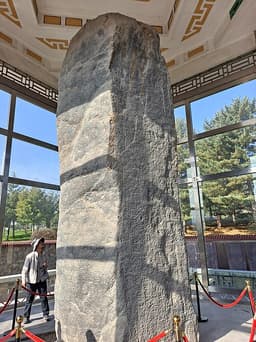
Gwanggaeto the Great
Emperor · Ancient
59.6Total
Basic Information
Born
-220
374
Died
-138
413
Era
Ancient
Ancient
Nationality
Pergamon
Korea
Occupation
Emperor
Emperor
Civilization
Western
Eastern
Score Comparison
Military (10%)
50.0
75.0
Political (20%)
68.0
45.0
Influence (20%)
52.5
58.3
Legacy (20%)
45.8
52.0
Leadership (15%)
40.0
72.0
Strategy (15%)
60.0
70.0
TOTAL
51.8
59.6
Attalus II of Pergamon — Complete Timeline
160 BC
Diplomatic mission to RomePolitical Action
Attalus II traveled to Rome to secure continued Roman support against threats from Bithynia and the Seleucids. His diplomacy reinforced the alliance and ensured Pergamon's autonomy under Roman hegemony.
DiplomacyRoman Alliance
Impact: regionalconstructive
156 BC
Defense of Pergamon against Prusias IIWar◆ Major
Attalus II successfully defended Pergamon against an invasion by Prusias II of Bithynia, with Roman support. He repelled the attack and later negotiated a peace, maintaining Pergamon's territorial integrity.
Bithynian WarDefenseRoman Alliance
Impact: regionalconstructive
150 BC
Foundation of AttaleiaCultural
Attalus II founded the city of Attaleia (modern Antalya) on the southern coast of Asia Minor. This colony served as a naval base and trade hub, strengthening Pergamon's influence in the region.
City FoundationColonizationTrade
constructive
Gwanggaeto the Great — Complete Timeline
313 AD
Conquest of the Lelang CommanderyWar◆ Major
Gwanggaeto the Great conquered the Lelang Commandery, a Chinese commandery located in the Korean peninsula. This victory eliminated Chinese influence in the region and brought the territory under Goguryeo control. It marked a significant expansion of Goguryeo's territory and power.
ConquestLelangGoguryeo Expansion
Impact: regional
395 AD
Campaigns against the Xianbei and KhitanWar◆ Major
Gwanggaeto the Great launched campaigns against the Xianbei and Khitan nomadic confederations in Manchuria. He defeated them, securing Goguryeo's northern borders and expanding its influence into Manchuria. These campaigns demonstrated Goguryeo's military strength and protected its territory from nomadic incursions.
CampaignNomadsManchuria
Impact: regional
396 AD
Subjugation of the Baekje KingdomWar◆ Major
Gwanggaeto the Great led a military campaign that subjugated the Baekje kingdom, forcing it to become a vassal state of Goguryeo. He captured the Baekje capital, Hansung, and took the Baekje king as a hostage. This victory made Goguryeo the dominant power on the Korean peninsula.
SubjugationBaekjeKorean Peninsula
Impact: regional
414 AD
Erection of the Gwanggaeto SteleCultural◆ Major
After Gwanggaeto's death, his son King Jangsu erected a large stele in his honor at the site of his tomb in Ji'an, China. The stele is inscribed with a detailed account of Gwanggaeto's conquests and achievements. It is a crucial historical source for understanding Goguryeo's history and territorial extent.
SteleInscriptionHistorical Record
Impact: regionalconstructive
Expert Analysis
Origins
Attalus II of Pergamon was born in 220 BCE into the Attalid dynasty, a Hellenistic ruling house that emerged from the chaos following Alexander the Great's empire's fragmentation. His father, Attalus I, had established Pergamon as a regional power, and Attalus II grew up in a court that valued Greek culture, diplomacy, and military prudence. His older brother, Eumenes II, was the reigning king, and Attalus served as a loyal general and diplomat. In contrast, Gwanggaeto the Great, born in 374 CE, was the son of King Gogukyang of Goguryeo, one of the Three Kingdoms of Korea. His upbringing was steeped in the martial traditions of a kingdom constantly at war with Chinese commanderies and rival Korean states. While Attalus learned the arts of negotiation and alliance-building, Gwanggaeto was trained for conquest and expansion.
Rise to Power
Attalus II's rise was not to the throne initially but to prominence as his brother's right hand. He commanded armies against the Seleucids and Bithynians, earning a reputation for reliability. After Eumenes II's death in 159 BCE, Attalus II became regent for his nephew, then took the throne himself. His power derived from his close relationship with Rome, which he cultivated through diplomatic missions. In 167 BCE, he visited Rome to secure support against the Galatians, solidifying the alliance. Gwanggaeto's rise was more direct: he became king in 391 CE at age 17 and immediately launched campaigns. By 392 CE, he had subjugated the Silla kingdom and turned Baekje into a vassal. His conquest of the Lelang Commandery in 313 CE (though earlier, his reign saw consolidation) eliminated Chinese influence on the Korean peninsula. His military scores of 75.0 reflect this aggressive ascent, while Attalus's political score of 68.0 underscores his diplomatic path.
Leadership & Governance
Attalus II governed Pergamon as a Roman ally, focusing on cultural patronage and urban development. He founded the city of Attaleia (modern Antalya) in 150 BCE, which became a naval base and trade hub, scoring 52.5 in influence. His leadership was cautious, preferring diplomacy over war. For instance, when Prusias II of Bithynia invaded in 156 BCE, Attalus relied on Roman intervention rather than a decisive military response. His leadership score of 40.0 reflects this passive style. Gwanggaeto, by contrast, led from the front. He personally commanded campaigns against the Xianbei and Khitan in Manchuria, securing Goguryeo's northern borders. His leadership score of 72.0 stems from his ability to inspire troops and expand territory. He implemented a system of military garrisons and fortified cities, ensuring control over conquered lands. His political score of 45.0 is lower because his governance relied on force rather than institutional building.
Triumph & Tragedy
Attalus II's greatest success was maintaining Pergamon's independence through diplomacy. He secured Roman support against Prusias II in 154 BCE, repelling the invasion without major loss. The foundation of Attaleia also enhanced trade and naval power. However, his greatest failure was the lack of long-term stability. After his death, his nephew Attalus III bequeathed the kingdom to Rome, ending the dynasty. His legacy score of 45.8 reflects this. Gwanggaeto's triumphs include the conquest of Baekje and the expansion of Goguryeo to its greatest extent, controlling much of Manchuria and Korea. The Gwanggaeto Stele, erected in 414 CE, records his achievements: subjugation of 64 fortresses and 1,400 villages. Yet his tragic flaw was overextension. His death in 413 CE at age 39 left a vast empire that his successors struggled to hold, leading to eventual decline. His legacy score of 52.0 is modest given his conquests.
Character & Destiny
Attalus II was a pragmatist, patient and deferential to Roman power. His character shaped a destiny of peaceful but dependent rule. He died naturally in 138 BCE, having avoided major conflicts. In contrast, Gwanggaeto was a warrior king, aggressive and ambitious. His destiny was one of rapid expansion but early death, possibly in battle. Historical assessments note that Attalus II's prudence preserved Pergamon for a generation, while Gwanggaeto's aggression built an empire that lasted centuries in memory but not in practice.
Legacy
Attalus II's legacy is tied to Pergamon's cultural contributions, such as the Library of Pergamon, and his city foundations. However, his kingdom's absorption by Rome limited his long-term impact. He scored 45.8 in legacy. Gwanggaeto's legacy is more enduring: he is revered as a national hero in Korea, with the Gwanggaeto Stele serving as a key historical source. His conquests established Goguryeo as a major power, influencing Korean identity. His legacy score of 52.0 is higher, but still moderate due to the empire's eventual fall.
Conclusion
Gwanggaeto the Great had greater impact than Attalus II. With a total score of 59.6 versus Attalus's 51.8, Gwanggaeto's military achievements (75.0 vs 50.0) and leadership (72.0 vs 40.0) created a lasting legacy in East Asia. While Attalus II's diplomacy was effective, it was ultimately a holding action. Gwanggaeto's conquests reshaped the Korean peninsula and Manchuria, and his stele remains a testament to his power. The 7.8-point gap reflects a clear difference in scale and enduring influence.
Rankings
🥇
Gwanggaeto the GreatLeader
Mil: 75.0Pol: 45.0Inf: 58.3
59.6
🥈
Attalus II of Pergamon
Mil: 50.0Pol: 68.0Inf: 52.5
51.8
+7.8 behind
How This Comparison Works
Algorithm
Each figure is scored on 6 dimensions (0—100 scale) based on structured historical data: Military (10%), Political (20%), Influence (20%), Legacy (20%), Leadership (15%), Strategy (15%). The weighted total produces the final ranking.
Data Sources
Scores are computed from structured sub-indicators in the database. Scale factors adjust for era (Ancient ×0.85, Modern ×1.0) and civilization size (Eastern ×1.05, Other ×0.80) to account for differences in population and military scale.
Maximum 3 Figures
Comparisons are limited to 2—3 figures to ensure readability and statistical meaningfulness.
Error Margins
±5 points per dimension — Sub-scores are derived from historical records with inherent uncertainty. Two figures within 5 points on a dimension should be considered roughly equivalent in that area.
Total Score Accuracy
±3 points overall — The weighted combination of 6 dimensions produces a total score with approximately ±3 points of uncertainty. Differences of less than 3 points are not statistically significant— the figures are effectively tied.
Known Limitations
- Historical records are incomplete and uneven across civilizations
- Figures from oral-tradition societies may be underrepresented
- Occupation labels can misclassify multi-role figures
- Scores measure capability and impact, not moral character
- Quantitative scoring is a comparison tool, not absolute truth
Capability Radar
Military (10%) — Battles & Warfare
Battles
45
85
Win Rate
50
90
Expansion
35
90
Political (20%) — Governance & Reform
Reform
40
65
Diplomacy
70
70
Economy
50
60
Influence (20%) — Cultural & Global Reach
Cultural
40
75
Global
35
65
Legacy (20%) — Historical Impact
Historical
45
80
Longevity
40
70
Leadership (15%) — Power & Stability
Tenure
55
75
Stability
60
70
Strategy (15%) — Tactics & Innovation
Strategy
45
85
Tactics
40
80
Reform
30
70
Similar Comparisons
Comments & Discussion
No comments yet. Be the first to share your thoughts!