Loading...
Gustavus III vs Yadavindra Singh
Gustavus III leads by 9.6 pts · 2 figures compared
…
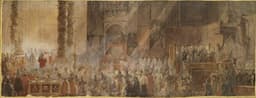
Gustavus III
Emperor · Modern
58.8Total

Yadavindra Singh
Emperor · Modern
49.2Total
Basic Information
Born
1746
1913
Died
1792
1974
Era
Modern
Modern
Nationality
Sweden
India
Occupation
Emperor
Emperor
Civilization
Western
Indian
Score Comparison
Military (10%)
40.0
20.0
Political (20%)
72.0
54.7
Influence (20%)
60.0
53.3
Legacy (20%)
47.5
41.7
Leadership (15%)
74.0
65.0
Strategy (15%)
60.0
54.6
TOTAL
58.8
49.2
Gustavus III — Complete Timeline
1772 AD
Coup d'état of 1772Political Action
Gustavus III staged a bloodless coup, using military force and popular support to abolish the parliamentary system dominated by the Caps and Hats parties. He imposed a new constitution that restored significant royal authority, ending the so-called Age of Liberty and establishing an enlightened absolutist regime.
SwedenCoupAbsolutismConstitution
Impact: national
1786 AD
Founding of the Swedish AcademyCultural◆ Major
Gustavus III founded the Swedish Academy, modeled on the French Academy, to promote the Swedish language and literature. The Academy became a central institution in Swedish cultural life, later responsible for awarding the Nobel Prize in Literature.
SwedenCultureAcademyLanguage
Impact: nationalconstructive
1788 AD
Russo-Swedish War of 1788–1790War◆ Major
Gustavus III launched a war against Russia, partly to rally national sentiment behind his monarchy. The war was indecisive, culminating in the naval Battle of Svensksund in 1790, a major Swedish victory. The Treaty of V
SwedenRussiaWarBattle of Svensksund
Impact: regional
1792 AD
Assassination at the masquerade ballPolitical Action
Gustavus III was shot in the back at a masquerade ball at the Royal Opera House in Stockholm by a disgruntled nobleman, Jacob Johan Anckarstr
SwedenAssassinationNobilityOpera
Impact: nationaltragic
Yadavindra Singh — Complete Timeline
1938 AD
Accession as Maharaja of PatialaPolitical Action◆ Major
Yadavindra Singh succeeded his father Bhupinder Singh as Maharaja of the princely state of Patiala. He inherited a wealthy and influential Sikh state in British India, with a strong military tradition.
SuccessionPrincely StatePatiala
Impact: regional
1947 AD
Signed Instrument of Accession to IndiaPolitical Action
Yadavindra Singh signed the Instrument of Accession, integrating Patiala into the Dominion of India. This decision, made during the partition of India, ensured Patiala became part of the Indian Union rather than Pakistan.
AccessionPartitionIndian Union
Impact: nationalconstructive
1948 AD
Formation of PEPSU (Patiala and East Punjab States Union)Political Action◆ Major
Yadavindra Singh played a key role in merging Patiala with other Sikh princely states to form the Patiala and East Punjab States Union (PEPSU). He served as its Rajpramukh (ceremonial head) until 1956.
MergerPEPSUSikh States
Impact: regionalconstructive
1965 AD
Appointment as Ambassador to ItalyPolitical Action
Yadavindra Singh was appointed India's ambassador to Italy, serving until 1966. This diplomatic role marked his transition from princely ruler to a representative of the Indian government abroad.
DiplomacyAmbassadorItaly
Impact: national
1971 AD
Appointment as Ambassador to the NetherlandsPolitical Action
Yadavindra Singh was appointed India's ambassador to the Netherlands, serving until 1974. This was his second diplomatic posting, continuing his service to the Indian government after the abolition of princely titles.
DiplomacyAmbassadorNetherlands
Impact: national
Expert Analysis
Origins
Gustavus III (1746–1792) was born into Sweden's royal House of Holstein-Gottorp. His father, King Adolf Frederick, was a figurehead under the parliamentary rule of the Caps and Hats parties. Gustavus was educated by leading Enlightenment thinkers, including the philosopher Carl Fredrik Scheffer. He developed a passion for French literature and theater, which shaped his later patronage of the arts. His mother, Queen Louisa Ulrika, was a sister of Frederick the Great, exposing him to Prussian militarism and enlightened despotism.
Yadavindra Singh (1913–1974) was born into the Sikh ruling family of Patiala, a wealthy princely state in British India. His father, Maharaja Bhupinder Singh, was a prominent ruler and cricket enthusiast. Yadavindra was educated at Aitchison College in Lahore and later at the University of Cambridge, where he studied at Christ's College. His upbringing blended traditional Sikh values with Western education, preparing him for a role in the British imperial system.
Rise to Power
Gustavus III rose to power through a bloodless coup d'état on August 19, 1772. Disillusioned by the corruption and inefficiency of the parliamentary regime, he used military support and popular backing to dissolve the Estates and promulgate a new constitution. The coup was swift and nearly bloodless, with the king arresting key senators and securing the loyalty of the army. He then established an enlightened absolutism, centralizing authority while promoting reforms.
Yadavindra Singh ascended the throne of Patiala on March 23, 1938, after his father's death. He inherited a state with a well-funded treasury and a modernizing infrastructure. His rise was not through conquest but through hereditary succession, and he quickly faced the challenges of World War II and the growing Indian independence movement. He navigated these by supporting the British war effort while maintaining ties with the Indian National Congress.
Leadership & Governance
Gustavus III ruled as an enlightened despot, implementing reforms such as freedom of the press (1774), religious tolerance, and the abolition of torture in judicial proceedings. He founded the Swedish Academy in 1786 to promote Swedish language and literature. However, his governance was autocratic; he manipulated the Estates and used patronage to silence opposition. His military leadership was less successful: his war against Russia (1788–1790) was indecisive, scoring 40.0 in military compared to Yadavindra's 20.0, but his political score of 72.0 reflects his ability to centralize power.
Yadavindra Singh governed a princely state with a hybrid system: he maintained autocratic powers but collaborated with British residents. He focused on modernizing Patiala's infrastructure, including irrigation and education. His political score of 54.7 reflects his role in navigating the transition to Indian independence. He was a pragmatic leader, signing the Instrument of Accession to India on August 15, 1947, which integrated Patiala into the Indian Union. He later served as the first Rajpramukh (governor) of the Patiala and East Punjab States Union (PEPSU) from 1948 to 1956.
Triumph & Tragedy
Gustavus III's greatest triumph was the bloodless coup of 1772, which restored royal authority and initiated a period of cultural flourishing. He also successfully mediated the Treaty of Värälä (1790) with Russia, ending the war without major territorial losses. His tragedy was his assassination at a masquerade ball on March 16, 1792, by a nobleman disgruntled by his authoritarian policies. The assassination plunged Sweden into a regency and undermined his reforms.
Yadavindra Singh's triumph was his smooth integration of Patiala into independent India, avoiding the violence seen in other princely states. His role in forming PEPSU preserved Sikh political identity. His tragedy was the loss of his princely status and the subsequent merger of PEPSU into Punjab in 1956, which diluted his legacy. His scores in influence (53.3) and legacy (41.7) reflect his moderate impact compared to Gustavus's influence (60.0) and legacy (47.5).
Character & Destiny
Gustavus III was a theatrical and ambitious ruler, obsessed with glory and culture. His decision to attack Russia in 1788 was partly to distract from domestic opposition, demonstrating a pattern of risk-taking. His assassination was a direct consequence of his alienation of the nobility. Historians like R. N. Bain describe him as a "gifted but rash" ruler whose character combined Enlightenment ideals with autocratic impulses.
Yadavindra Singh was pragmatic and diplomatic, prioritizing stability over personal power. His decision to sign the Instrument of Accession was influenced by his realistic assessment of the post-independence landscape. He transitioned from ruler to diplomat, serving as ambassador to Italy and the Netherlands. His character was defined by adaptability, but his destiny was to be the last Maharaja, a figure of a bygone era.
Legacy
Gustavus III's legacy is mixed: he is remembered as a patron of the arts and a reformer, but also as an autocrat whose assassination led to political instability. The Swedish Academy continues to award the Nobel Prize in Literature, a direct result of his cultural initiatives. His total score of 58.8 reflects his significant but flawed impact.
Yadavindra Singh's legacy is tied to the peaceful integration of princely states into India. He is honored in Patiala as a modernizer, but his role is often overshadowed by larger figures like Nehru and Patel. His total score of 49.2 shows a competent but less transformative impact than Gustavus.
Conclusion
Gustavus III had a greater impact than Yadavindra Singh, with a total score of 58.8 versus 49.2. His reforms and cultural patronage shaped Swedish identity, while his assassination had lasting political consequences. Yadavindra Singh's role was crucial but transitional; he managed a smooth integration but did not fundamentally alter India's trajectory. Gustavus's score advantage of 9.6 points reflects his broader influence on governance, culture, and history.
Rankings
🥇
Gustavus IIILeader
Mil: 40.0Pol: 72.0Inf: 60.0
58.8
🥈
Yadavindra Singh
Mil: 20.0Pol: 54.7Inf: 53.3
49.2
+9.6 behind
How This Comparison Works
Algorithm
Each figure is scored on 6 dimensions (0—100 scale) based on structured historical data: Military (10%), Political (20%), Influence (20%), Legacy (20%), Leadership (15%), Strategy (15%). The weighted total produces the final ranking.
Data Sources
Scores are computed from structured sub-indicators in the database. Scale factors adjust for era (Ancient ×0.85, Modern ×1.0) and civilization size (Eastern ×1.05, Other ×0.80) to account for differences in population and military scale.
Maximum 3 Figures
Comparisons are limited to 2—3 figures to ensure readability and statistical meaningfulness.
Error Margins
±5 points per dimension — Sub-scores are derived from historical records with inherent uncertainty. Two figures within 5 points on a dimension should be considered roughly equivalent in that area.
Total Score Accuracy
±3 points overall — The weighted combination of 6 dimensions produces a total score with approximately ±3 points of uncertainty. Differences of less than 3 points are not statistically significant— the figures are effectively tied.
Known Limitations
- Historical records are incomplete and uneven across civilizations
- Figures from oral-tradition societies may be underrepresented
- Occupation labels can misclassify multi-role figures
- Scores measure capability and impact, not moral character
- Quantitative scoring is a comparison tool, not absolute truth
Capability Radar
Military (10%) — Battles & Warfare
Battles
45
5
Win Rate
40
5
Expansion
25
5
Political (20%) — Governance & Reform
Reform
70
30
Diplomacy
55
50
Economy
50
30
Influence (20%) — Cultural & Global Reach
Cultural
65
30
Global
35
20
Legacy (20%) — Historical Impact
Historical
55
30
Longevity
40
20
Leadership (15%) — Power & Stability
Tenure
60
40
Stability
30
40
Strategy (15%) — Tactics & Innovation
Strategy
30
5
Tactics
35
5
Reform
50
10
Similar Comparisons
Comments & Discussion
No comments yet. Be the first to share your thoughts!