Loading...
Gustavus III vs Sikandar Jah
Gustavus III leads by 14.9 pts · 2 figures compared
…
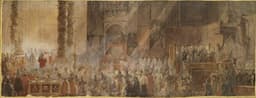
Gustavus III
Emperor · Modern
58.8Total

Sikandar Jah
Emperor · Modern
43.9Total
Basic Information
Born
1746
1768
Died
1792
1829
Era
Modern
Modern
Nationality
Sweden
India
Occupation
Emperor
Emperor
Civilization
Western
Indian
Score Comparison
Military (10%)
40.0
21.2
Political (20%)
72.0
43.7
Influence (20%)
60.0
49.4
Legacy (20%)
47.5
37.5
Leadership (15%)
74.0
53.2
Strategy (15%)
60.0
54.8
TOTAL
58.8
43.9
Gustavus III — Complete Timeline
1772 AD
Coup d'état of 1772Political Action
Gustavus III staged a bloodless coup, using military force and popular support to abolish the parliamentary system dominated by the Caps and Hats parties. He imposed a new constitution that restored significant royal authority, ending the so-called Age of Liberty and establishing an enlightened absolutist regime.
SwedenCoupAbsolutismConstitution
Impact: national
1786 AD
Founding of the Swedish AcademyCultural◆ Major
Gustavus III founded the Swedish Academy, modeled on the French Academy, to promote the Swedish language and literature. The Academy became a central institution in Swedish cultural life, later responsible for awarding the Nobel Prize in Literature.
SwedenCultureAcademyLanguage
Impact: nationalconstructive
1788 AD
Russo-Swedish War of 1788–1790War◆ Major
Gustavus III launched a war against Russia, partly to rally national sentiment behind his monarchy. The war was indecisive, culminating in the naval Battle of Svensksund in 1790, a major Swedish victory. The Treaty of V
SwedenRussiaWarBattle of Svensksund
Impact: regional
1792 AD
Assassination at the masquerade ballPolitical Action
Gustavus III was shot in the back at a masquerade ball at the Royal Opera House in Stockholm by a disgruntled nobleman, Jacob Johan Anckarstr
SwedenAssassinationNobilityOpera
Impact: nationaltragic
Sikandar Jah — Complete Timeline
1803 AD
Became Nizam of HyderabadPolitical Action◆ Major
Sikandar Jah ascended the throne of Hyderabad after the death of his father, Nizam Ali Khan. His reign was characterized by a close and subordinate alliance with the British East India Company.
SuccessionHyderabadNizam
Impact: regional
1804 AD
Signed the Treaty of Subsidiary Alliance with the BritishPolitical Action
Sikandar Jah signed a treaty of subsidiary alliance with the British East India Company, accepting a British resident in Hyderabad and a British-controlled military force. This effectively made Hyderabad a princely state under British paramountcy.
Subsidiary AllianceBritish East India CompanyPrincely State
Impact: regionaldestructive
1805 AD
Construction of the Chowmahalla Palace beganCultural
Sikandar Jah initiated the construction of the Chowmahalla Palace in Hyderabad, a grand complex of four palaces. The project was completed later and became a symbol of the Nizam's power and architectural patronage.
ArchitecturePalaceHyderabad
constructive
Expert Analysis
Origins
Gustavus III was born on January 24, 1746, in Stockholm, Sweden, to King Adolf Frederick and Queen Louisa Ulrika. He received a comprehensive education influenced by Enlightenment thinkers, particularly Voltaire and Montesquieu. His mother instilled in him a belief in absolute monarchy, while his father's weak reign exposed the limitations of the parliamentary system dominated by the Caps and Hats parties.
Sikandar Jah, born on November 11, 1768, in Hyderabad, India, was the third Nizam of Hyderabad. He was the son of Nizam Ali Khan and succeeded his father in 1803. His early life was spent in the opulent court of Hyderabad, where he was groomed for rule but under the shadow of British influence already present during his father's reign. He received a traditional Islamic education and was trained in administration but lacked military experience.
Rise to Power
Gustavus III staged a bloodless coup on August 19, 1772, using military force and popular support to abolish the parliamentary system. He arrested the Privy Council and forced the estates to accept a new constitution that granted him extensive powers. This move was a response to the corruption and inefficiency of the Caps and Hats parties. His rise was swift and decisive, backed by the army and the common people.
Sikandar Jah ascended the throne on August 6, 1803, upon the death of his father. Unlike Gustavus, his succession was smooth and uneventful, as he was the designated heir. However, his rise occurred in a context of increasing British control over Hyderabad. The Treaty of Subsidiary Alliance had already been signed by his father in 1798, and Sikandar Jah reinforced this subordination by signing a new treaty in 1804, accepting a British resident and a British-controlled army.
Leadership & Governance
Gustavus III governed as an enlightened despot, promoting arts, culture, and reform. He founded the Swedish Academy in 1786 to promote the Swedish language and literature, modeled on the French Academy. He also introduced religious tolerance, reformed the legal system, and reduced the power of the nobility. However, his rule was autocratic, and he faced opposition from the nobility who resented his centralization of power. His leadership score of 74.0 reflects his ability to dominate the political scene.
Sikandar Jah's governance was marked by subordination to the British. He signed the Treaty of Subsidiary Alliance, which placed Hyderabad under British protection and required the Nizam to pay for British troops stationed in his territory. This drained the state's finances and reduced his autonomy. He focused on cultural projects like the Chowmahalla Palace, but his political score of 43.7 indicates his limited control over his own domain. His reign saw the decline of Hyderabad's independence.
Triumph & Tragedy
Gustavus III's greatest success was his coup of 1772, which restored royal authority and allowed him to implement Enlightenment reforms. He also successfully maintained Swedish neutrality during the American Revolutionary War. However, his Russo-Swedish War of 1788–1790 ended indecisively, with the Battle of Svensksund in 1790 being a tactical victory but not a strategic one. His greatest failure was his assassination at a masquerade ball on March 16, 1792, by a disgruntled nobleman, Jacob Johan Anckarström. This event highlighted the deep resentment among the aristocracy.
Sikandar Jah's triumph was the construction of the Chowmahalla Palace, a symbol of Hyderabad's cultural richness. However, his reign was overshadowed by the loss of sovereignty. The subsidiary alliance forced him to cede territories to the British and accept a British resident who interfered in internal affairs. His failure to resist British encroachment led to the permanent subordination of Hyderabad, which lasted until independence. His military score of 21.2 reflects his inability to defend his realm.
Character & Destiny
Gustavus III was charismatic, cultured, and ambitious, but also autocratic and prone to taking risks. His decision to stage a coup and later to go to war with Russia demonstrated his boldness. However, his disregard for noble privileges led to his assassination. The historian Alf Åberg noted that Gustavus's character combined Enlightenment ideals with a belief in absolute power, which ultimately proved unsustainable. His destiny was sealed by the very nobility he sought to suppress.
Sikandar Jah was cautious and submissive, preferring cultural patronage to political confrontation. He accepted British dominance as inevitable, which preserved his throne but at the cost of independence. His character was shaped by the realities of British power in India. He lacked the drive for reform or resistance, leading to a stable but stagnant reign. The historian N. S. Ramaswami described him as a 'puppet ruler' who maintained the facade of power while real authority lay with the British resident.
Legacy
Gustavus III's legacy is mixed. He is remembered as a patron of the arts and a reformer, with the Swedish Academy continuing to award the Nobel Prize in Literature. However, his assassination led to a period of reaction under his son Gustavus IV Adolf, who lost Finland to Russia. His total score of 58.8 reflects a moderate impact, with influence and legacy scores of 60.0 and 47.5, respectively. He is often cited as an example of enlightened despotism in Sweden.
Sikandar Jah's legacy is primarily architectural, with the Chowmahalla Palace becoming a tourist attraction. However, his political legacy is one of subservience to the British. The subsidiary alliance system he accepted served as a model for British expansion in India. His total score of 43.9 is lower across all domains, with military and political scores particularly low. He is remembered as a weak ruler who failed to protect Hyderabad's independence.
Conclusion
Gustavus III had a greater impact than Sikandar Jah, as evidenced by his higher total score of 58.8 against 43.9. Gustavus actively shaped Swedish history through his coup, reforms, and cultural initiatives, even if his assassination cut his reign short. Sikandar Jah, in contrast, was a passive ruler who allowed Hyderabad to become a British dependency. While both faced constraints, Gustavus's actions had more significant and lasting effects on his nation's development. Therefore, Gustavus III is the more consequential figure in historical analysis.
Rankings
🥇
Gustavus IIILeader
Mil: 40.0Pol: 72.0Inf: 60.0
58.8
🥈
Sikandar Jah
Mil: 21.2Pol: 43.7Inf: 49.4
43.9
+14.9 behind
How This Comparison Works
Algorithm
Each figure is scored on 6 dimensions (0—100 scale) based on structured historical data: Military (10%), Political (20%), Influence (20%), Legacy (20%), Leadership (15%), Strategy (15%). The weighted total produces the final ranking.
Data Sources
Scores are computed from structured sub-indicators in the database. Scale factors adjust for era (Ancient ×0.85, Modern ×1.0) and civilization size (Eastern ×1.05, Other ×0.80) to account for differences in population and military scale.
Maximum 3 Figures
Comparisons are limited to 2—3 figures to ensure readability and statistical meaningfulness.
Error Margins
±5 points per dimension — Sub-scores are derived from historical records with inherent uncertainty. Two figures within 5 points on a dimension should be considered roughly equivalent in that area.
Total Score Accuracy
±3 points overall — The weighted combination of 6 dimensions produces a total score with approximately ±3 points of uncertainty. Differences of less than 3 points are not statistically significant— the figures are effectively tied.
Known Limitations
- Historical records are incomplete and uneven across civilizations
- Figures from oral-tradition societies may be underrepresented
- Occupation labels can misclassify multi-role figures
- Scores measure capability and impact, not moral character
- Quantitative scoring is a comparison tool, not absolute truth
Capability Radar
Military (10%) — Battles & Warfare
Battles
45
15
Win Rate
40
20
Expansion
25
5
Political (20%) — Governance & Reform
Reform
70
30
Diplomacy
55
40
Economy
50
35
Influence (20%) — Cultural & Global Reach
Cultural
65
25
Global
35
10
Legacy (20%) — Historical Impact
Historical
55
20
Longevity
40
15
Leadership (15%) — Power & Stability
Tenure
60
60
Stability
30
40
Strategy (15%) — Tactics & Innovation
Strategy
30
10
Tactics
35
10
Reform
50
5
Similar Comparisons
Comments & Discussion
No comments yet. Be the first to share your thoughts!