Loading...
This comparison has not been analyzed yet.
One-time AI generation (~1 minute). Scores and timeline are already available below.
Gustavus III vs Kamehameha I
Kamehameha I leads by 1.1 pts · 2 figures compared
…
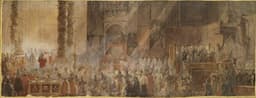
Gustavus III
Emperor · Modern
58.8Total
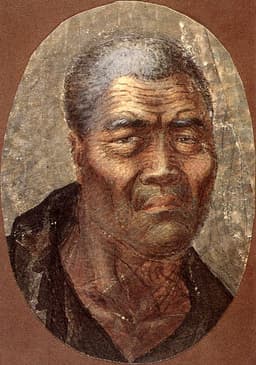
Kamehameha I
Emperor · Modern
59.9Total
Basic Information
Born
1746
1758
Died
1792
1819
Era
Modern
Modern
Nationality
Sweden
Hawaii
Occupation
Emperor
Emperor
Civilization
Western
Other
Score Comparison
Military (10%)
40.0
60.0
Political (20%)
72.0
59.3
Influence (20%)
60.0
60.0
Legacy (20%)
47.5
49.2
Leadership (15%)
74.0
85.0
Strategy (15%)
60.0
50.0
TOTAL
58.8
59.9
Gustavus III — Complete Timeline
1772 AD
Coup d'état of 1772Political Action
Gustavus III staged a bloodless coup, using military force and popular support to abolish the parliamentary system dominated by the Caps and Hats parties. He imposed a new constitution that restored significant royal authority, ending the so-called Age of Liberty and establishing an enlightened absolutist regime.
SwedenCoupAbsolutismConstitution
Impact: national
1786 AD
Founding of the Swedish AcademyCultural◆ Major
Gustavus III founded the Swedish Academy, modeled on the French Academy, to promote the Swedish language and literature. The Academy became a central institution in Swedish cultural life, later responsible for awarding the Nobel Prize in Literature.
SwedenCultureAcademyLanguage
Impact: nationalconstructive
1788 AD
Russo-Swedish War of 1788–1790War◆ Major
Gustavus III launched a war against Russia, partly to rally national sentiment behind his monarchy. The war was indecisive, culminating in the naval Battle of Svensksund in 1790, a major Swedish victory. The Treaty of V
SwedenRussiaWarBattle of Svensksund
Impact: regional
1792 AD
Assassination at the masquerade ballPolitical Action
Gustavus III was shot in the back at a masquerade ball at the Royal Opera House in Stockholm by a disgruntled nobleman, Jacob Johan Anckarstr
SwedenAssassinationNobilityOpera
Impact: nationaltragic
Kamehameha I — Complete Timeline
1778 AD
Opened Hawaii to foreign tradePolitical Action◆ Major
Following the arrival of Captain James Cook in 1778, Kamehameha I engaged with European explorers and traders. He acquired firearms and ships, which he used to conquer and unify the islands, while also establishing trade relations with the West.
HawaiiTradeEuropean Contact
Impact: regional
1797 AD
Implemented the Law of the Splintered PaddleReform◆ Major
After a near-fatal incident where he was struck by a paddle, Kamehameha I enacted a law protecting civilians during wartime. The law stated that women, children, and the elderly should not be harmed in conflicts, reflecting a humanitarian code.
HawaiiLawHuman Rights
Impact: regionalconstructive
1804 AD
Established the Kingdom of Hawaii's capital at HonoluluPolitical Action◆ Major
Kamehameha I moved his court to Honolulu on O'ahu, establishing it as the political and economic center of the unified Hawaiian Kingdom. This decision shaped Hawaii's development as a central port for trade.
HawaiiCapitalUrbanization
Impact: regionalconstructive
1810 AD
Unified the Hawaiian IslandsWar
Kamehameha I completed the unification of the Hawaiian Islands after a series of battles, including the Battle of Nu'uanu in 1795 and the peaceful cession of Kaua'i in 1810. He established the Kingdom of Hawaii as a single political entity.
HawaiiUnificationKingdom
Impact: regionalconstructive
This comparison has not been analyzed yet.
One-time AI generation (~1 minute). Scores and timeline are already available below.
Rankings
🥇
Kamehameha ILeader
Mil: 60.0Pol: 59.3Inf: 60.0
59.9
🥈
Gustavus III
Mil: 40.0Pol: 72.0Inf: 60.0
58.8
+1.1 behind
How This Comparison Works
Algorithm
Each figure is scored on 6 dimensions (0—100 scale) based on structured historical data: Military (10%), Political (20%), Influence (20%), Legacy (20%), Leadership (15%), Strategy (15%). The weighted total produces the final ranking.
Data Sources
Scores are computed from structured sub-indicators in the database. Scale factors adjust for era (Ancient ×0.85, Modern ×1.0) and civilization size (Eastern ×1.05, Other ×0.80) to account for differences in population and military scale.
Maximum 3 Figures
Comparisons are limited to 2—3 figures to ensure readability and statistical meaningfulness.
Error Margins
±5 points per dimension — Sub-scores are derived from historical records with inherent uncertainty. Two figures within 5 points on a dimension should be considered roughly equivalent in that area.
Total Score Accuracy
±3 points overall — The weighted combination of 6 dimensions produces a total score with approximately ±3 points of uncertainty. Differences of less than 3 points are not statistically significant— the figures are effectively tied.
Known Limitations
- Historical records are incomplete and uneven across civilizations
- Figures from oral-tradition societies may be underrepresented
- Occupation labels can misclassify multi-role figures
- Scores measure capability and impact, not moral character
- Quantitative scoring is a comparison tool, not absolute truth
Capability Radar
Military (10%) — Battles & Warfare
Battles
45
45
Win Rate
40
70
Expansion
25
55
Political (20%) — Governance & Reform
Reform
70
65
Diplomacy
55
60
Economy
50
55
Influence (20%) — Cultural & Global Reach
Cultural
65
55
Global
35
45
Legacy (20%) — Historical Impact
Historical
55
55
Longevity
40
50
Leadership (15%) — Power & Stability
Tenure
60
60
Stability
30
60
Strategy (15%) — Tactics & Innovation
Strategy
30
65
Tactics
35
60
Reform
50
55
Similar Comparisons
Comments & Discussion
No comments yet. Be the first to share your thoughts!