Loading...
Gustav Vasa vs Wladyslaw II Jagiello
Wladyslaw II Jagiello leads by 3.8 pts · 2 figures compared
…

Gustav Vasa
Emperor · Medieval
57.4Total
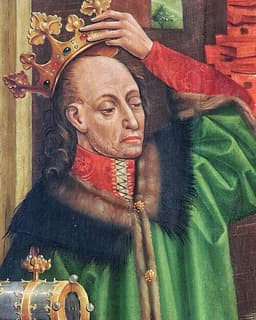
Wladyslaw II Jagiello
Emperor · Medieval
61.2Total
Basic Information
Born
1496
1362
Died
1560
1434
Era
Medieval
Medieval
Nationality
Sweden
Poland
Occupation
Emperor
Emperor
Civilization
Western
Western
Score Comparison
Military (10%)
52.5
63.3
Political (20%)
75.0
55.0
Influence (20%)
56.7
72.0
Legacy (20%)
40.0
40.0
Leadership (15%)
78.0
80.0
Strategy (15%)
50.0
66.3
TOTAL
57.4
61.2
Gustav Vasa — Complete Timeline
1523 AD
Liberation of StockholmWar◆ Major
Gustav Vasa's forces, with support from L
BattleIndependenceSiege
Impact: nationalconstructive
Elected King of SwedenPolitical Action
Gustav Vasa was elected King of Sweden by the Riksdag in Str
IndependenceMonarchyKalmar Union
Impact: nationalconstructive
1527 AD
Introduction of the Protestant Reformation in SwedenReform
Gustav Vasa introduced the Protestant Reformation at the Diet of V
ReformationReligionState Building
Impact: nationalconstructive
1544 AD
Creation of a hereditary monarchyReform◆ Major
Gustav Vasa established Sweden as a hereditary monarchy at the Diet of V
MonarchyConstitutionCentralization
Impact: nationalconstructive
Wladyslaw II Jagiello — Complete Timeline
1385 AD
Union of KrewoPolitical Action
Władysław II Jagiełło, as Grand Duke of Lithuania, signed the Union of Krewo with Poland, agreeing to convert Lithuania to Christianity and marry Queen Jadwiga of Poland. This personal union created the Polish-Lithuanian union and made Jagiełło King of Poland.
UnionChristianizationDynastic Marriage
Impact: regionalconstructive
1387 AD
Baptism of LithuaniaCultural◆ Major
Władysław II Jagiełło oversaw the official Christianization of Lithuania, the last pagan state in Europe. He established the Diocese of Vilnius and promoted the Latin rite, integrating Lithuania into Western Christendom.
ChristianizationReligionCultural Transformation
Impact: regionalprogressive
1410 AD
Battle of GrunwaldWar
Władysław II Jagiełło led the combined Polish-Lithuanian forces to a decisive victory over the Teutonic Order at Grunwald. The battle broke the Order's military power and marked the zenith of Polish-Lithuanian strength in the region.
Teutonic OrderMilitary VictoryMedieval Warfare
Impact: regionalconstructive
1411 AD
Peace of Thorn (1411)Political Action◆ Major
Władysław II Jagiełło signed the First Peace of Thorn with the Teutonic Order after Grunwald. The treaty granted Samogitia to Lithuania for Jagiełło's lifetime and required the Order to pay a large indemnity, but did not fully exploit the military victory.
TreatyTeutonic OrderDiplomacy
Impact: regional
1414 AD
Council of ConstancePolitical Action◆ Major
Władysław II Jagiełło sent a Polish delegation to the Council of Constance, where they defended the rights of pagan Lithuanians against Teutonic accusations. The Polish representative Paweł Włodkowic argued for religious tolerance, influencing European legal thought.
DiplomacyReligious ToleranceInternational Law
Impact: regionalprogressive
Expert Analysis
Origins
Gustav Vasa was born in 1496 into a noble Swedish family, the son of Erik Johansson Vasa, a member of the Riksdag. His early life was marked by the Kalmar Union, a personal union of Scandinavian kingdoms under Danish dominance. Gustav's father was executed in the Stockholm Bloodbath of 1520, an event that radicalized him against Danish rule. He fled to Lübeck, gaining support from the Hanseatic League.
Władysław II Jagiełło was born around 1362 as the Grand Duke of Lithuania, the last pagan state in Europe. His father, Algirdas, was a pagan ruler who expanded Lithuanian territory. Jagiełło was raised in a pagan environment, but his mother, Uliana of Tver, was Orthodox Christian. His formative years involved defending Lithuania from the Teutonic Order.
Rise to Power
Gustav Vasa rose by leading a rebellion against King Christian II of Denmark after the Stockholm Bloodbath. In 1521, he was elected regent by the Dalarna peasantry. With support from Lübeck, he captured Stockholm in 1523 and was elected King of Sweden by the Riksdag in Strängnäs, ending the Kalmar Union. His political score of 75.0 reflects his skill in consolidating power.
Władysław II Jagiełło rose through the Union of Krewo in 1385, where he agreed to convert Lithuania to Christianity and marry Polish Queen Jadwiga. This made him King of Poland, uniting the two realms. His leadership score of 80.0 contributed to his total of 61.2.
Leadership & Governance
Gustav Vasa centralized Swedish governance, breaking the power of the Catholic Church by introducing the Protestant Reformation at the Diet of Västerås in 1527. He seized church lands, creating a state treasury. He established a hereditary monarchy in 1544, ensuring his dynasty's succession. His military score of 52.5 indicates limited martial focus.
Władysław II Jagiełło governed through a personal union with Lithuania, maintaining separate administrations. He Christianized Lithuania by baptizing the nobility and establishing the Diocese of Vilnius. He relied on alliances with the Polish nobility, granting privileges like the Union of Horodło (1413) to integrate Lithuanian nobles.
Triumph & Tragedy
Gustav Vasa's greatest success was liberating Sweden and creating an independent state. His failure included harsh taxation and suppression of rebellions, such as the Dacke War (1542-1543). His legacy score of 40.0 reflects mixed long-term impact.
Władysław II Jagiełło's triumph was the victory at Grunwald in 1410, where Polish-Lithuanian forces crushed the Teutonic Order. His tragedy was the Peace of Thorn (1411), which failed to fully exploit the victory, only gaining Samogitia. His influence score of 72.0 highlights his role in Christianizing Lithuania.
Character & Destiny
Gustav Vasa was pragmatic and ruthless, using the Reformation to strengthen the crown. His character shaped Sweden's independence, but his authoritarian tendencies led to unrest. Historians note his skill in political maneuvering.
Władysław II Jagiełło was a cautious diplomat, prioritizing stability over conquest. His conversion was politically motivated, yet it Christianized the last pagan state. His destiny was tied to the Polish-Lithuanian union, which lasted centuries.
Legacy
Gustav Vasa is remembered as the father of modern Sweden, with the Vasa dynasty ruling until 1654. He established Sweden as a sovereign state and laid the foundation for its later empire. However, his legacy score of 40.0 indicates limited global impact.
Władysław II Jagiełło's legacy is the Polish-Lithuanian Commonwealth, a major European power. He is celebrated for Christianizing Lithuania and defeating the Teutonic Order. His influence score of 72.0 reflects his enduring impact on Eastern Europe.
Conclusion
While Gustav Vasa scored 57.4 and Władysław II Jagiełło 61.2, Jagiełło's influence on the Christianization of Lithuania and the formation of the Polish-Lithuanian union had a more profound and lasting impact on European history. Jagiełło's actions shaped the religious and political landscape of Eastern Europe for centuries, whereas Vasa's impact, though significant for Sweden, was more regional. Therefore, Władysław II Jagiełło was the greater historical figure.
Rankings
🥇
Wladyslaw II JagielloLeader
Mil: 63.3Pol: 55.0Inf: 72.0
61.2
🥈
Gustav Vasa
Mil: 52.5Pol: 75.0Inf: 56.7
57.4
+3.8 behind
How This Comparison Works
Algorithm
Each figure is scored on 6 dimensions (0—100 scale) based on structured historical data: Military (10%), Political (20%), Influence (20%), Legacy (20%), Leadership (15%), Strategy (15%). The weighted total produces the final ranking.
Data Sources
Scores are computed from structured sub-indicators in the database. Scale factors adjust for era (Ancient ×0.85, Modern ×1.0) and civilization size (Eastern ×1.05, Other ×0.80) to account for differences in population and military scale.
Maximum 3 Figures
Comparisons are limited to 2—3 figures to ensure readability and statistical meaningfulness.
Error Margins
±5 points per dimension — Sub-scores are derived from historical records with inherent uncertainty. Two figures within 5 points on a dimension should be considered roughly equivalent in that area.
Total Score Accuracy
±3 points overall — The weighted combination of 6 dimensions produces a total score with approximately ±3 points of uncertainty. Differences of less than 3 points are not statistically significant— the figures are effectively tied.
Known Limitations
- Historical records are incomplete and uneven across civilizations
- Figures from oral-tradition societies may be underrepresented
- Occupation labels can misclassify multi-role figures
- Scores measure capability and impact, not moral character
- Quantitative scoring is a comparison tool, not absolute truth
Capability Radar
Military (10%) — Battles & Warfare
Battles
45
65
Win Rate
55
60
Expansion
65
75
Political (20%) — Governance & Reform
Reform
90
70
Diplomacy
70
80
Economy
80
65
Influence (20%) — Cultural & Global Reach
Cultural
70
70
Global
55
65
Legacy (20%) — Historical Impact
Historical
80
75
Longevity
75
80
Leadership (15%) — Power & Stability
Tenure
85
85
Stability
75
70
Strategy (15%) — Tactics & Innovation
Strategy
60
70
Tactics
50
55
Reform
75
50
Similar Comparisons
Comments & Discussion
No comments yet. Be the first to share your thoughts!