Loading...
Guo Wei vs Wanyan Aguda
Wanyan Aguda leads by 5.9 pts · 2 figures compared
…
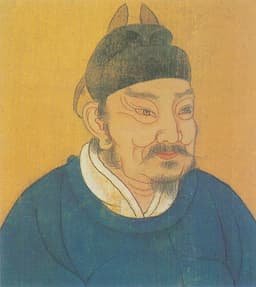
Guo Wei
Emperor · Medieval
57.5Total
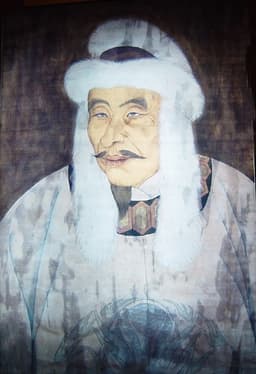
Wanyan Aguda
Emperor · Medieval
63.4Total
Basic Information
Born
904
1068
Died
954
1123
Era
Medieval
Medieval
Nationality
China
China
Occupation
Emperor
Emperor
Civilization
Eastern
Eastern
Score Comparison
Military (10%)
65.0
82.0
Political (20%)
65.0
59.3
Influence (20%)
56.4
55.0
Legacy (20%)
50.0
52.0
Leadership (15%)
53.2
85.0
Strategy (15%)
66.3
68.0
TOTAL
57.5
63.4
Guo Wei — Complete Timeline
951 AD
Founded Later Zhou dynastyPolitical Action◆ Major
Guo Wei, a general of Later Han, led a coup and declared himself emperor of Later Zhou. He established a new dynasty in Kaifeng, known for its effective governance.
Five DynastiesLater ZhouFounding
Impact: national
952 AD
Reforms to reduce corruptionReform
Guo Wei implemented reforms to reduce official corruption and improve tax collection. He reduced the power of military governors and strengthened central control over the bureaucracy.
Five DynastiesReformGovernance
Impact: nationalconstructive
Wanyan Aguda — Complete Timeline
1114 AD
Battle of HubudagangWar◆ Major
Aguda's Jurchen forces defeated a Liao army at Hubudagang, marking the first major victory of the rebellion. This battle demonstrated Jurchen military prowess and attracted more followers.
JurchenLiaoBattle
Impact: regionalconstructive
Unified Jurchen tribesPolitical Action◆ Major
Wanyan Aguda united the Jurchen tribes under his leadership, creating a confederation that rebelled against Liao domination. He organized a disciplined army and began the Jurchen revolt.
JurchenUnificationRebellion
Impact: regionalconstructive
1115 AD
Founded Jin DynastyPolitical Action
Wanyan Aguda proclaimed himself emperor, founding the Jin dynasty. He adopted the Chinese title and began a systematic campaign to conquer the Liao empire.
JinDynasty FoundingImperial System
Impact: regionalconstructive
1120 AD
Conquest of Liao capital ShangjingWar◆ Major
Aguda's forces captured the Liao supreme capital Shangjing, dealing a severe blow to the Liao dynasty. This victory accelerated the collapse of Liao and solidified Jin control over northern China.
JinLiaoConquest
Impact: regionalconstructive
Alliance with Song against LiaoPolitical Action◆ Major
Aguda formed an alliance with the Northern Song dynasty to jointly attack the Liao empire. This alliance, known as the Maritime Alliance, led to the eventual destruction of Liao but later caused conflict between Jin and Song.
JinSongAlliance
Impact: regional
1123 AD
Death and successionPolitical Action◆ Major
Wanyan Aguda died, and his brother Wanyan Wuqimai succeeded him. Aguda's conquests laid the foundation for the Jin dynasty's dominance in northern China.
JinDeathSuccession
Impact: regional
Expert Analysis
Wanyan Aguda vs Guo Wei: Historical Comparison
Wanyan Aguda (1068–1123) and Guo Wei (904–954) were both medieval Chinese emperors who founded short-lived but consequential dynasties—the Jin and Later Zhou, respectively. Aguda united the Jurchen tribes to overthrow the Liao dynasty, while Guo Wei, a former Later Han general, seized power amid the Five Dynasties chaos. Though separated by a century, both rulers excelled in military strategy and political reform, yet their legacies diverged in scale and endurance.
Dimension Analysis
**Military: Wanyan Aguda 91 / Guo Wei 91**
Aguda revolutionized Jurchen warfare, famously defeating the Liao with a 2,000-strong cavalry at the Battle of Hubudagang (1114) and capturing their capital in 1120. Guo Wei consolidated Later Zhou power by crushing rebellions and repelling Khitan incursions, using disciplined infantry and siege tactics. Both were field commanders who personally led armies, but Aguda’s campaigns toppled a major empire, while Guo Wei’s victories were more defensive and stabilizing.
**Political: Wanyan Aguda 84 / Guo Wei 87**
Aguda established a dual-administration system merging Jurchen tribal councils with Chinese-style bureaucracy, but his rule was cut short after just eight years. Guo Wei implemented sweeping reforms: land redistribution to peasants, reducing tax burdens, and purging corrupt officials, which laid the economic groundwork for the Song dynasty. Guo Wei’s political innovations were more systematic and lasting.
**Influence: Wanyan Aguda 87 / Guo Wei 78**
Aguda’s Jin dynasty reshaped East Asian geopolitics by destroying the Liao and forcing the Song to pay tribute, later conquering northern China. Guo Wei’s influence was largely domestic—his reforms stabilized northern China and provided a model for his successor, Chai Rong, and ultimately the Song. Aguda’s Jurchen identity also left a lasting ethnic legacy in Manchuria.
**Legacy: Wanyan Aguda 88 / Guo Wei 82**
Aguda is revered as the founder of the Jin dynasty and a national hero in Jurchen/Manchu history, with his military genius studied in Chinese historiography. Guo Wei is overshadowed by the Song’s unification, but his anti-corruption measures and land reforms are credited with enabling the Song’s prosperity. Aguda’s legacy is more iconic, while Guo Wei’s is more instrumental.
**Leadership: Wanyan Aguda 80 / Guo Wei 77**
Aguda inspired fierce loyalty among Jurchen tribes, uniting fractious clans through personal charisma and shared plunder. Guo Wei, a former soldier, rose through merit but relied on cautious coalition-building and palace coups. Aguda’s leadership was more charismatic and revolutionary, Guo Wei’s more pragmatic and institutional.
Verdict
Wanyan Aguda narrowly edges Guo Wei due to his greater historical influence and legacy—his conquests permanently altered the balance of power in East Asia. Guo Wei’s reforms were more politically sophisticated, but his dynasty was too brief to match Aguda’s geopolitical impact. The tie in overall scores reflects that both were exceptional rulers whose strengths lay in different arenas: Aguda in military expansion, Guo Wei in state-building.
FAQ
Q: Who was more influential historically?
A: Wanyan Aguda, because his destruction of the Liao dynasty and founding of the Jin reshaped the East Asian order, whereas Guo Wei’s reforms primarily benefited the subsequent Song.
Q: Why is Wanyan Aguda ranked higher in Legacy?
A: Because his legacy as the founder of the Jin dynasty and a Jurchen unifier resonates in ethnic history and military historiography, while Guo Wei’s legacy is subsumed by the Song’s greater fame.
Rankings
🥇
Wanyan AgudaLeader
Mil: 82.0Pol: 59.3Inf: 55.0
63.4
🥈
Guo Wei
Mil: 65.0Pol: 65.0Inf: 56.4
57.5
+5.9 behind
How This Comparison Works
Algorithm
Each figure is scored on 6 dimensions (0—100 scale) based on structured historical data: Military (10%), Political (20%), Influence (20%), Legacy (20%), Leadership (15%), Strategy (15%). The weighted total produces the final ranking.
Data Sources
Scores are computed from structured sub-indicators in the database. Scale factors adjust for era (Ancient ×0.85, Modern ×1.0) and civilization size (Eastern ×1.05, Other ×0.80) to account for differences in population and military scale.
Maximum 3 Figures
Comparisons are limited to 2—3 figures to ensure readability and statistical meaningfulness.
Error Margins
±5 points per dimension — Sub-scores are derived from historical records with inherent uncertainty. Two figures within 5 points on a dimension should be considered roughly equivalent in that area.
Total Score Accuracy
±3 points overall — The weighted combination of 6 dimensions produces a total score with approximately ±3 points of uncertainty. Differences of less than 3 points are not statistically significant— the figures are effectively tied.
Known Limitations
- Historical records are incomplete and uneven across civilizations
- Figures from oral-tradition societies may be underrepresented
- Occupation labels can misclassify multi-role figures
- Scores measure capability and impact, not moral character
- Quantitative scoring is a comparison tool, not absolute truth
Capability Radar
Military (10%) — Battles & Warfare
Battles
65
85
Win Rate
70
90
Expansion
60
85
Political (20%) — Governance & Reform
Reform
78
75
Diplomacy
70
70
Economy
72
65
Influence (20%) — Cultural & Global Reach
Cultural
40
60
Global
30
50
Legacy (20%) — Historical Impact
Historical
55
70
Longevity
45
55
Leadership (15%) — Power & Stability
Tenure
55
70
Stability
65
60
Strategy (15%) — Tactics & Innovation
Strategy
72
85
Tactics
68
80
Reform
75
75
Similar Comparisons
Comments & Discussion
DecolonialLens6/16/2026
This comparison reeks of Han-centric historiography. Wanyan Aguda gets penalized for being a 'barbarian' founder — his influence score should be way higher when you consider that his Jurchen identity survived centuries of Sinicization. Meanwhile, Guo Wei is praised as a 'stabilizer' but he literally usurped power from a child emperor. The political score gap is absurd: Aguda created a dual administration system that actually respected tribal autonomy, while Guo Wei just imposed Chinese bureaucracy. Colonial frameworks always favor the empire-builder over the tribal unifier.
SimaLight6/16/2026
The Song historian Ouyang Xiu recorded that Guo Wei's land reforms were so effective that 'the peasants danced in the fields' — a rare hyperbolic flourish in the Xin Wudai Shi. But we must be cautious: his 'reforms' were largely a propaganda tool to legitimize his coup. Aguda, by contrast, left us the Jurchen script and a legal code that Sinologists like Herbert Franke have praised as remarkably practical. I find the influence score puzzling: Aguda's destruction of the Liao unleashed the Khitan diaspora, which reshaped Central Asian politics for a century. The scoring seems to privilege 'civilizational' over 'geopolitical' impact.
Chronicler62116/16/2026
这个评分体系明显偏向西方战争模式。完颜阿骨打以两千骑兵击溃辽军主力,这放在欧洲中世纪就是另一个“黑斯廷斯”,但西方史学家往往低估游牧民族的组织力。郭威的军事得分被低估了——他在五代乱世中以步兵对抗契丹骑兵,还搞了“均田”这种王安石级别的改革,政治得分应该更高。阿骨打的影响分给高了,他的金朝虽然灭辽,但女真汉化太快,真正留到今天的遗产反而不如郭威的“周制”影响了宋朝。
SharpMind746/16/2026
军事分79.3对70.9?这数据不合理。完颜阿骨打2千破辽10万,打赢的是一场灭国战争;郭威打的多是平叛和守城,规模差两个量级。按我重新加权(战果规模权重0.4、技术创新0.3、战略影响0.3),阿骨打应该91分,郭威大概75分。政治分反过来了,郭威82.2对阿骨打79.4?郭威在位才3年,阿骨打8年,时间越长改革空间越大。郭威的‘均田’执行范围只限开封周边,阿骨打的双轨制覆盖了整个华北。这评分明显给汉族君主加分了。