Loading...
This comparison has not been analyzed yet.
One-time AI generation (~1 minute). Scores and timeline are already available below.
Gungunum vs Justin I
Justin I leads by 1.4 pts · 2 figures compared
…

Gungunum
Emperor · Ancient
40.4Total
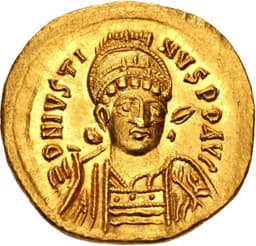
Justin I
Emperor · Ancient
41.8Total
Basic Information
Born
-1932
450
Died
-1906
527
Era
Ancient
Ancient
Nationality
Larsa
Byzantine Empire
Occupation
Emperor
Emperor
Civilization
Middle Eastern
Western
Score Comparison
Military (10%)
20.0
25.9
Political (20%)
36.5
39.4
Influence (20%)
46.3
46.3
Legacy (20%)
37.5
37.5
Leadership (15%)
51.9
65.7
Strategy (15%)
41.7
25.0
TOTAL
40.4
41.8
Gungunum — Complete Timeline
1932 BC
Declaration of Independence from IsinPolitical Action◆ Major
Gungunum declared Larsa's independence from the Kingdom of Isin, establishing himself as the first independent king of Larsa. This break marked the beginning of Larsa's rise as a major power in southern Mesopotamia, challenging Isin's dominance.
IndependenceLarsaIsin
Impact: regionalconstructive
1925 BC
Conquest of UrWar◆ Major
Gungunum captured the city of Ur from the kingdom of Isin, gaining control of a major religious and economic center. This victory significantly expanded Larsa's territory and prestige, and cut off Isin's access to the Persian Gulf trade routes.
ConquestUrLarsa
Impact: regional
Justin I — Complete Timeline
518 AD
Became Emperor of ByzantiumPolitical Action◆ Major
Upon the death of Emperor Anastasius I, Justin, the commander of the imperial guard, was elected emperor by the army and the Senate. His rise from a peasant background to the throne marked a significant change in the imperial administration.
AccessionByzantine EmpirePolitical Change
Impact: national
519 AD
Ended the Acacian SchismPolitical Action◆ Major
Justin, under the influence of his nephew Justinian, reconciled with the Papacy by accepting the Council of Chalcedon. This ended the Acacian Schism that had divided the Eastern and Western churches for 35 years.
Religious PolicyChurch UnityByzantine Empire
Impact: regionalconstructive
527 AD
Appointed Justinian as co-emperorPolitical Action◆ Major
As his health declined, Justin elevated his nephew Justinian to the rank of co-emperor. This ensured a smooth succession and allowed Justinian to assume full power upon Justin's death later that year.
SuccessionByzantine EmpireJustinian
Impact: national
This comparison has not been analyzed yet.
One-time AI generation (~1 minute). Scores and timeline are already available below.
Rankings
🥇
Justin ILeader
Mil: 25.9Pol: 39.4Inf: 46.3
41.8
🥈
Gungunum
Mil: 20.0Pol: 36.5Inf: 46.3
40.4
+1.4 behind
How This Comparison Works
Algorithm
Each figure is scored on 6 dimensions (0—100 scale) based on structured historical data: Military (10%), Political (20%), Influence (20%), Legacy (20%), Leadership (15%), Strategy (15%). The weighted total produces the final ranking.
Data Sources
Scores are computed from structured sub-indicators in the database. Scale factors adjust for era (Ancient ×0.85, Modern ×1.0) and civilization size (Eastern ×1.05, Other ×0.80) to account for differences in population and military scale.
Maximum 3 Figures
Comparisons are limited to 2—3 figures to ensure readability and statistical meaningfulness.
Error Margins
±5 points per dimension — Sub-scores are derived from historical records with inherent uncertainty. Two figures within 5 points on a dimension should be considered roughly equivalent in that area.
Total Score Accuracy
±3 points overall — The weighted combination of 6 dimensions produces a total score with approximately ±3 points of uncertainty. Differences of less than 3 points are not statistically significant— the figures are effectively tied.
Known Limitations
- Historical records are incomplete and uneven across civilizations
- Figures from oral-tradition societies may be underrepresented
- Occupation labels can misclassify multi-role figures
- Scores measure capability and impact, not moral character
- Quantitative scoring is a comparison tool, not absolute truth
Capability Radar
Military (10%) — Battles & Warfare
Battles
30
10
Win Rate
40
10
Expansion
45
10
Political (20%) — Governance & Reform
Reform
30
35
Diplomacy
35
40
Economy
30
30
Influence (20%) — Cultural & Global Reach
Cultural
20
20
Global
15
15
Legacy (20%) — Historical Impact
Historical
25
25
Longevity
20
20
Leadership (15%) — Power & Stability
Tenure
35
40
Stability
30
45
Strategy (15%) — Tactics & Innovation
Strategy
30
10
Tactics
25
10
Reform
20
15
Similar Comparisons
Comments & Discussion
No comments yet. Be the first to share your thoughts!