Loading...
Justin I vs Menelaus of Sparta
Menelaus of Sparta leads by 3.9 pts · 2 figures compared
…
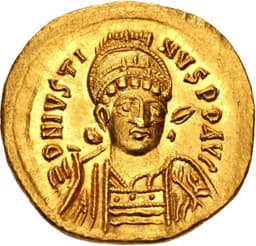
Justin I
Emperor · Ancient
41.8Total

Menelaus of Sparta
Emperor · Ancient
45.7Total
Basic Information
Born
450
-1210
Died
527
-1170
Era
Ancient
Ancient
Nationality
Byzantine Empire
Sparta
Occupation
Emperor
Emperor
Civilization
Western
Western
Score Comparison
Military (10%)
25.9
38.3
Political (20%)
39.4
26.4
Influence (20%)
46.3
57.2
Legacy (20%)
37.5
50.0
Leadership (15%)
65.7
48.4
Strategy (15%)
25.0
38.3
TOTAL
41.8
45.7
Justin I — Complete Timeline
518 AD
Became Emperor of ByzantiumPolitical Action◆ Major
Upon the death of Emperor Anastasius I, Justin, the commander of the imperial guard, was elected emperor by the army and the Senate. His rise from a peasant background to the throne marked a significant change in the imperial administration.
AccessionByzantine EmpirePolitical Change
Impact: national
519 AD
Ended the Acacian SchismPolitical Action◆ Major
Justin, under the influence of his nephew Justinian, reconciled with the Papacy by accepting the Council of Chalcedon. This ended the Acacian Schism that had divided the Eastern and Western churches for 35 years.
Religious PolicyChurch UnityByzantine Empire
Impact: regionalconstructive
527 AD
Appointed Justinian as co-emperorPolitical Action◆ Major
As his health declined, Justin elevated his nephew Justinian to the rank of co-emperor. This ensured a smooth succession and allowed Justinian to assume full power upon Justin's death later that year.
SuccessionByzantine EmpireJustinian
Impact: national
Menelaus of Sparta — Complete Timeline
1210 BC
Became King of SpartaPolitical Action◆ Major
Menelaus inherited the throne of Sparta through his marriage to Helen, daughter of Tyndareus. His rule established Sparta as a major Greek power.
SuccessionSparta
Impact: regionalconstructive
1190 BC
Fought in the Trojan WarWar◆ Major
Menelaus served as a key Greek commander at Troy, leading Spartan forces. He fought in many battles, including a single combat with Paris that nearly ended the war.
Trojan WarCombatSparta
Impact: regional
Helen Abducted by ParisPolitical Action
The Trojan prince Paris abducted Helen, wife of Menelaus, from Sparta. This event triggered the Trojan War as Menelaus called upon all Greek kings who had sworn to defend Helen's marriage.
AbductionTrojan WarHelen
Impact: globaldestructive
1180 BC
Recovered Helen and Returned to SpartaWar◆ Major
After the fall of Troy, Menelaus recovered Helen and brought her back to Sparta. Their return journey was prolonged by storms, but they eventually resumed their reign.
ReturnReconciliationSparta
Impact: regionalconstructive
Expert Analysis
Origins
Justin I was born around 450 AD in the village of Bederiana in the province of Dardania (modern-day North Macedonia). He was of Thraco-Roman origin, from a peasant family. Unable to read or write, Justin fled to Constantinople as a young man to escape poverty, joining the imperial guard. His physical strength and loyalty allowed him to rise through the ranks.
Menelaus of Sparta was born around 1200 BC, a member of the Atreid dynasty. He was the son of King Atreus of Mycenae and brother of Agamemnon. Through marriage to Helen, daughter of Tyndareus, he became king of Sparta. His upbringing was aristocratic, steeped in the warrior culture of Mycenaean Greece.
Rise to Power
Justin's rise was a military career. He served in the Excubitors, the palace guard, under Emperor Anastasius I. In 518 AD, after Anastasius died without an heir, a succession crisis erupted. Justin, as commander of the guard, was elected emperor by the army and Senate, largely due to his military support. He was crowned at age 65, a peasant becoming emperor.
Menelaus rose through marriage. After Helen's father Tyndareus died, Menelaus claimed the throne of Sparta, becoming one of the most powerful kings in Greece. His brother Agamemnon ruled Mycenae. When Paris of Troy abducted Helen around 1190 BC, Menelaus invoked the Oath of Tyndareus, gathering Greek kings for the Trojan War, thus cementing his role as a central figure in Greek mythology.
Leadership & Governance
Justin I's leadership was pragmatic and cautious. He relied heavily on his nephew Justinian, who was educated and ambitious. Justin's major act was ending the Acacian Schism (484-519 AD) by accepting the Council of Chalcedon, restoring relations with the Papacy. This was a political move, not a military one. Justin also initiated legal reforms and strengthened the empire's borders. However, his governance was limited by his illiteracy and age; he scored 65.7 in leadership but only 25.0 in strategy.
Menelaus ruled Sparta as a warrior-king. His leadership was tested in the Trojan War, where he led Spartan forces. He showed personal bravery, fighting Paris in single combat. However, his strategic role was secondary to Agamemnon. After the war, he returned to Sparta with Helen, ruling for a long period. His political score of 26.4 reflects a lack of institutional reforms; his influence (57.2) came from myth, not administration.
Triumph & Tragedy
Justin's greatest triumph was his unexpected rise and the peaceful end of the Acacian Schism, which united the Eastern and Western churches. His appointment of Justinian as co-emperor in 527 AD ensured a smooth transition and a golden age for Byzantium. His tragedy: he could not read or write, limiting his effectiveness. He also faced a war with the Sassanid Empire, though he managed to avoid major defeat.
Menelaus triumphed in the Trojan War, recovering Helen and sacking Troy. His single combat with Paris nearly killed the Trojan prince, though Aphrodite saved Paris. His tragedy: the war cost many Greek lives, and his prolonged return journey (seven years) was marked by storms and wanderings, as described in the Odyssey. He ultimately settled in Sparta, but his legacy is tied to a war sparked by his wife's abduction.
Character & Destiny
Justin was a soldier who knew his limits. He trusted Justinian, showing wisdom in delegation. His destiny was shaped by luck and timing—being in the right place when the throne fell vacant. He scored 65.7 in leadership, indicating steady but unremarkable command.
Menelaus was a warrior driven by honor and revenge. His character was defined by the abduction of Helen; he was determined to bring her back, even after years of war. His destiny was intertwined with myth; he is portrayed as a brave but sometimes indecisive king in Homer's Iliad. His leadership score of 48.4 reflects a mix of courage and reliance on others.
Legacy
Justin I's legacy is overshadowed by Justinian, but his reign was crucial. By ending the Acacian Schism, he laid the groundwork for Justinian's religious unity. He also stabilized the empire after Anastasius. His legacy score is 37.5, reflecting his role as a transitional figure.
Menelaus's legacy is immense in myth and literature. He is a key figure in the Trojan War cycle, representing Spartan kingship. His story influenced Greek culture and later Western literature. His legacy score is 50.0, higher than Justin's, due to his enduring presence in storytelling.
Conclusion
Menelaus of Sparta had a greater impact on culture and mythology, scoring 45.7 overall versus Justin's 41.8. However, Justin's practical influence on the Byzantine Empire was more concrete. In terms of historical impact on governance, religion, and statecraft, Justin I surpasses Menelaus. Justin's decision to appoint Justinian led to the codification of Roman law and the construction of Hagia Sophia. Menelaus's war was destructive and left no institutional legacy. Thus, Justin I is the more significant historical figure, despite lower scores in influence and legacy, because his actions shaped the medieval world directly.
Rankings
🥇
Menelaus of SpartaLeader
Mil: 38.3Pol: 26.4Inf: 57.2
45.7
🥈
Justin I
Mil: 25.9Pol: 39.4Inf: 46.3
41.8
+3.9 behind
How This Comparison Works
Algorithm
Each figure is scored on 6 dimensions (0—100 scale) based on structured historical data: Military (10%), Political (20%), Influence (20%), Legacy (20%), Leadership (15%), Strategy (15%). The weighted total produces the final ranking.
Data Sources
Scores are computed from structured sub-indicators in the database. Scale factors adjust for era (Ancient ×0.85, Modern ×1.0) and civilization size (Eastern ×1.05, Other ×0.80) to account for differences in population and military scale.
Maximum 3 Figures
Comparisons are limited to 2—3 figures to ensure readability and statistical meaningfulness.
Error Margins
±5 points per dimension — Sub-scores are derived from historical records with inherent uncertainty. Two figures within 5 points on a dimension should be considered roughly equivalent in that area.
Total Score Accuracy
±3 points overall — The weighted combination of 6 dimensions produces a total score with approximately ±3 points of uncertainty. Differences of less than 3 points are not statistically significant— the figures are effectively tied.
Known Limitations
- Historical records are incomplete and uneven across civilizations
- Figures from oral-tradition societies may be underrepresented
- Occupation labels can misclassify multi-role figures
- Scores measure capability and impact, not moral character
- Quantitative scoring is a comparison tool, not absolute truth
Capability Radar
Military (10%) — Battles & Warfare
Battles
10
30
Win Rate
10
40
Expansion
10
20
Political (20%) — Governance & Reform
Reform
35
10
Diplomacy
40
30
Economy
30
20
Influence (20%) — Cultural & Global Reach
Cultural
20
55
Global
15
50
Legacy (20%) — Historical Impact
Historical
25
60
Longevity
20
65
Leadership (15%) — Power & Stability
Tenure
40
35
Stability
45
25
Strategy (15%) — Tactics & Innovation
Strategy
10
30
Tactics
10
25
Reform
15
10
Similar Comparisons
Comments & Discussion
No comments yet. Be the first to share your thoughts!