Loading...
Gu Yong vs Jia Yi
Gu Yong leads by 1.0 pts · 2 figures compared
…

Gu Yong
Politician · Ancient
51.8Total
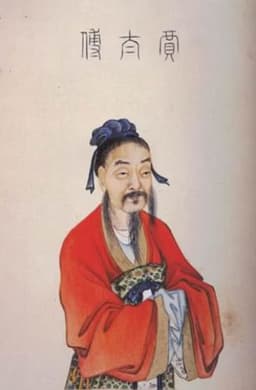
Jia Yi
Politician · Ancient
50.8Total
Basic Information
Born
168
-200
Died
243
-169
Era
Ancient
Ancient
Nationality
China
China
Occupation
Politician
Politician
Civilization
Eastern
Eastern
Score Comparison
Military (10%)
12.2
38.5
Political (20%)
68.0
39.4
Influence (20%)
51.8
57.2
Legacy (20%)
45.0
54.0
Leadership (15%)
80.0
48.4
Strategy (15%)
42.0
60.0
TOTAL
51.8
50.8
Gu Yong — Complete Timeline
225 AD
Appointed Chancellor of WuPolitical Action◆ Major
Gu Yong was appointed Chancellor (Chengxiang) of Eastern Wu by Sun Quan. He served in this role for 19 years, overseeing the civil administration and maintaining stability during a period of consolidation for the Wu kingdom.
AppointmentWu DynastyGovernment
Impact: nationalconstructive
230 AD
Promoted Agricultural PoliciesReform
Gu Yong implemented policies to boost agricultural production in Wu, including tax relief and land reclamation projects. These measures helped stabilize the economy and support the military campaigns of Sun Quan.
AgricultureEconomic PolicyWu Dynasty
Impact: nationalconstructive
241 AD
Advised on Succession DisputePolitical Action
Gu Yong advised Sun Quan during the succession dispute between Sun He and Sun Ba. He supported Sun He, the crown prince, and opposed the faction backing Sun Ba. His stance contributed to the eventual resolution of the conflict, though it led to political turmoil.
SuccessionWu DynastyPolitics
Impact: national
Jia Yi — Complete Timeline
176 BC
Exile to ChangshaPolitical Action
Jia Yi was exiled to serve as tutor to the Prince of Changsha after offending powerful officials at court. During his exile, he wrote the famous poem 'The Owl' (Funiao Fu), expressing his philosophical reflections on fate and mortality.
ExileChangshaPoetry
Impact: nationaltragic
174 BC
Memorial on Over-CentralizationPolitical Action◆ Major
Jia Yi submitted a memorial to Emperor Wen of Han warning against the dangers of over-centralization and the concentration of power in the hands of the emperor. He advocated for a balance between central authority and local autonomy, but his advice was not fully heeded.
Political MemorialHan DynastyCentralization
Impact: nationalconstructive
170 BC
Composition of the XinshuCultural◆ Major
Jia Yi wrote the Xinshu (New Writings), a collection of essays on political philosophy, statecraft, and history. The work criticized the Qin dynasty's harsh Legalism and advocated for a Confucian-inspired governance based on virtue and ritual.
Political PhilosophyConfucianismHan Dynasty
Impact: nationalconstructive
169 BC
Death from GriefOther
Jia Yi died at the age of 33, reportedly from grief and disappointment after his advice was ignored and his career stalled. His early death cut short a promising career, but his writings continued to influence Han political thought.
DeathGriefHan Dynasty
Impact: nationaltragic
Expert Analysis
Origins
Gu Yong (168–243) was born into a prominent family of Wu commandery. His father, Gu Yong's father, served as a minor official. Gu Yong received a classical education and gained reputation for administrative competence. He entered service under Sun Quan early in his reign, rising through the ranks due to his diligence. Jia Yi (200–168 BCE) was born in Luoyang, the capital of the early Han dynasty. He showed exceptional literary talent as a youth, memorizing texts and composing essays. He studied under the Confucian scholar Zhang Cang and gained recognition for his erudition. At age 18, he was appointed to the court of Emperor Wen as a scholar-official, but his rapid rise provoked jealousy.
Rise to Power
Gu Yong's rise was steady and bureaucratic. He served as a county magistrate and then as an imperial clerk, demonstrating skill in tax collection and legal matters. In 225, Sun Quan appointed him as Chancellor (Chengxiang) of Eastern Wu, a position he held for 19 years. His rise was based on administrative reliability rather than military exploits. Jia Yi's rise was meteoric. At 22, he submitted a series of memorials to Emperor Wen, including the famous "Memorial on Over-Centralization," which warned against the concentration of power in the hands of feudal kings. The emperor was impressed and promoted Jia Yi to Grand Master of the Palace. However, his rapid advancement and outspokenness created enemies among older officials, leading to his exile in 176 BCE.
Leadership & Governance
Gu Yong's leadership was cautious and conservative. He focused on maintaining stability through sound fiscal policies. He promoted agricultural reforms, including tax relief for farmers and land reclamation projects, which helped stabilize Wu's economy during the Three Kingdoms period. He also managed the succession dispute between Sun He and Sun Ba, supporting the crown prince. His governance score is 80.0, reflecting his long tenure and administrative effectiveness. Jia Yi's leadership was intellectual and reformist. He advocated for centralizing power in the emperor and reducing the influence of feudal lords. His proposals, such as dividing large kingdoms and rotating officials, were ahead of their time. However, he lacked the political skill to implement them, and his political score of 39.4 reflects his limited practical impact.
Triumph & Tragedy
Gu Yong's greatest success was his 19-year tenure as Chancellor, during which Wu remained stable and prosperous. He successfully navigated the succession crisis, though his candidate Sun He ultimately lost. His greatest failure was his inability to prevent the eventual decline of Wu, which fell in 280. Jia Yi's greatest success was his intellectual legacy: his writings, especially the Xinshu, influenced later Han and Chinese political thought. His warning about feudal kingdoms proved prescient when the Rebellion of the Seven States erupted in 154 BCE. His greatest failure was his exile and early death at 33, cutting short his career. His influence score of 57.2 reflects his lasting ideas rather than his political achievements.
Character & Destiny
Gu Yong was diligent, cautious, and loyal. He avoided factional conflicts and focused on administration. His character suited the role of a steady bureaucrat in a turbulent era. He died naturally at 75. Jia Yi was brilliant, ambitious, and impetuous. His sharp tongue and radical ideas alienated the court. His exile and early death from grief illustrate how his character—intellectual pride and emotional vulnerability—shaped his tragic fate. Historians note that Jia Yi's influence grew after his death, as his ideas were later adopted.
Legacy
Gu Yong's legacy is limited to his administrative contributions to Wu. He is remembered as an effective chancellor but not a transformative figure. His legacy score is 45.0. Jia Yi's legacy is intellectual. His essays on statecraft became classics studied by later reformers. His warning about over-centralization influenced the Han dynasty's eventual policies to weaken feudal kingdoms. His legacy score of 54.0 reflects this enduring impact.
Conclusion
While Gu Yong scored higher overall (51.8 vs 50.8), the gap is narrow. Gu Yong's political and leadership scores (68.0 and 80.0) exceed Jia Yi's (39.4 and 48.4). However, Jia Yi's influence and legacy (57.2 and 54.0) surpass Gu Yong's (51.8 and 45.0). In terms of historical impact, Jia Yi's ideas shaped Chinese political thought for centuries, while Gu Yong's achievements were confined to a specific state. Therefore, Jia Yi had greater long-term impact despite his lower total score.
Rankings
🥇
Gu YongLeader
Mil: 12.2Pol: 68.0Inf: 51.8
51.8
🥈
Jia Yi
Mil: 38.5Pol: 39.4Inf: 57.2
50.8
+1.0 behind
How This Comparison Works
Algorithm
Each figure is scored on 6 dimensions (0—100 scale) based on structured historical data: Military (10%), Political (20%), Influence (20%), Legacy (20%), Leadership (15%), Strategy (15%). The weighted total produces the final ranking.
Data Sources
Scores are computed from structured sub-indicators in the database. Scale factors adjust for era (Ancient ×0.85, Modern ×1.0) and civilization size (Eastern ×1.05, Other ×0.80) to account for differences in population and military scale.
Maximum 3 Figures
Comparisons are limited to 2—3 figures to ensure readability and statistical meaningfulness.
Error Margins
±5 points per dimension — Sub-scores are derived from historical records with inherent uncertainty. Two figures within 5 points on a dimension should be considered roughly equivalent in that area.
Total Score Accuracy
±3 points overall — The weighted combination of 6 dimensions produces a total score with approximately ±3 points of uncertainty. Differences of less than 3 points are not statistically significant— the figures are effectively tied.
Known Limitations
- Historical records are incomplete and uneven across civilizations
- Figures from oral-tradition societies may be underrepresented
- Occupation labels can misclassify multi-role figures
- Scores measure capability and impact, not moral character
- Quantitative scoring is a comparison tool, not absolute truth
Capability Radar
Military (10%) — Battles & Warfare
Battles
20
43
Win Rate
22
41
Expansion
25
46
Political (20%) — Governance & Reform
Reform
40
30
Diplomacy
60
25
Economy
55
35
Influence (20%) — Cultural & Global Reach
Cultural
30
45
Global
10
30
Legacy (20%) — Historical Impact
Historical
40
50
Longevity
30
55
Leadership (15%) — Power & Stability
Tenure
70
20
Stability
65
20
Strategy (15%) — Tactics & Innovation
Strategy
33
51
Tactics
34
50
Reform
39
56
Similar Comparisons
Comments & Discussion
No comments yet. Be the first to share your thoughts!