Loading...
Aspathines vs Jia Yi
Jia Yi leads by 9.4 pts · 2 figures compared
…

Aspathines
Politician · Ancient
41.4Total
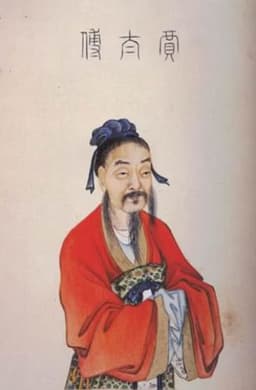
Jia Yi
Politician · Ancient
50.8Total
Basic Information
Born
-520
-200
Died
-460
-169
Era
Ancient
Ancient
Nationality
Achaemenid Empire
China
Occupation
Politician
Politician
Civilization
Middle Eastern
Eastern
Score Comparison
Military (10%)
50.0
38.5
Political (20%)
26.4
39.4
Influence (20%)
47.9
57.2
Legacy (20%)
37.5
54.0
Leadership (15%)
45.0
48.4
Strategy (15%)
43.7
60.0
TOTAL
41.4
50.8
Aspathines — Complete Timeline
500 BC
Appointment as Bow-Bearer to Darius IPolitical Action◆ Major
Aspathines was appointed as the bow-bearer (a high court official) to King Darius I. This position gave him close access to the king and significant influence in the Achaemenid court.
Achaemenid EmpireDarius ICourt Official
Impact: nationalconstructive
490 BC
Depiction at PersepolisCultural
Aspathines was depicted in the reliefs of the Treasury at Persepolis, standing behind Darius I. This artistic representation confirms his high status and role as a loyal courtier in the Achaemenid administration.
Achaemenid EmpirePersepolisArt
Impact: national
Jia Yi — Complete Timeline
176 BC
Exile to ChangshaPolitical Action
Jia Yi was exiled to serve as tutor to the Prince of Changsha after offending powerful officials at court. During his exile, he wrote the famous poem 'The Owl' (Funiao Fu), expressing his philosophical reflections on fate and mortality.
ExileChangshaPoetry
Impact: nationaltragic
174 BC
Memorial on Over-CentralizationPolitical Action◆ Major
Jia Yi submitted a memorial to Emperor Wen of Han warning against the dangers of over-centralization and the concentration of power in the hands of the emperor. He advocated for a balance between central authority and local autonomy, but his advice was not fully heeded.
Political MemorialHan DynastyCentralization
Impact: nationalconstructive
170 BC
Composition of the XinshuCultural◆ Major
Jia Yi wrote the Xinshu (New Writings), a collection of essays on political philosophy, statecraft, and history. The work criticized the Qin dynasty's harsh Legalism and advocated for a Confucian-inspired governance based on virtue and ritual.
Political PhilosophyConfucianismHan Dynasty
Impact: nationalconstructive
169 BC
Death from GriefOther
Jia Yi died at the age of 33, reportedly from grief and disappointment after his advice was ignored and his career stalled. His early death cut short a promising career, but his writings continued to influence Han political thought.
DeathGriefHan Dynasty
Impact: nationaltragic
Expert Analysis
Origins
Aspathines (fl. late 6th–early 5th century BCE) was a Persian nobleman of the Achaemenid Empire. Little is known of his early life, but his appointment as bow-bearer to Darius I indicates he came from a high-ranking family. The bow-bearer (sometimes translated as 'quiver-bearer') was a trusted court official who carried the king's bow, symbolizing close personal service and access to the monarch. Aspathines is immortalized in the reliefs of the Treasury at Persepolis, standing behind Darius I on the famous 'Treasury Relief', which confirms his elevated status.
Jia Yi (200–169 BCE) was born in Luoyang, China, during the early Han dynasty. He came from a scholarly family and displayed exceptional intellect from a young age. By his early twenties, he was already renowned for his knowledge of classical texts and political philosophy. He was recommended to Emperor Wen of Han and appointed as a court scholar, quickly rising due to his eloquence and insights.
Rise to Power
Aspathines rose to prominence through his role as bow-bearer to Darius I, a position that combined ceremonial duty with political influence. The bow-bearer was among the highest court officials, often serving as a confidant and advisor. Aspathines' depiction at Persepolis is the primary evidence of his status; he appears in a scene where Darius I receives tribute, symbolizing the king's authority. His proximity to the king gave him considerable informal power, though his specific political actions are not recorded.
Jia Yi's rise was swift but controversial. He impressed Emperor Wen with his memorials on governance, advocating for a more centralized legal system and warning against the fragmentation of power among feudal princes. His most famous work, the 'Xinshu' (New Writings), compiled essays on statecraft, criticizing the Qin dynasty's harshness and proposing reforms. However, his rapid advancement provoked jealousy among older officials, leading to his exile to Changsha as tutor to the Prince of Changsha after offending powerful figures. Despite his fall from favor, his writings continued to influence policy debates.
Leadership & Governance
Aspathines' leadership was exercised indirectly through his advisory role. As bow-bearer, he was part of Darius I's inner circle, likely participating in discussions on administration and military campaigns. The Achaemenid court under Darius I was highly structured, with officials like Aspathines helping to manage the vast empire. His score of 26.4 in political ability reflects the limited direct evidence of his governance, though his position implies significant behind-the-scenes influence. In contrast, his leadership score of 45.0 suggests a moderate capacity for command, perhaps in ceremonial or military contexts.
Jia Yi, with a political score of 39.4, was a proactive reformer despite his lack of high office. He advocated for legal standardization, reduction of feudal power, and promotion of Confucian values. His memorials, such as the one on over-centralization, argued that the Han should avoid Qin's concentration of power while still maintaining strong central control. His approach was intellectual and advisory rather than executive. His leadership score of 48.4 reflects his ability to articulate ideas that later influenced policy, even if he never held a top administrative post.
Triumph & Tragedy
Aspathines' greatest triumph was securing a place in history through his depiction at Persepolis, which confirms his high status and proximity to one of history's greatest rulers. His tragedy lies in obscurity: aside from the relief, no records of his deeds survive, and his political influence cannot be measured. He scored 47.9 in influence, largely due to his symbolic representation of Achaemenid court hierarchy.
Jia Yi's triumph was his intellectual legacy. His 'Xinshu' and other writings became foundational texts for Han political thought, influencing later debates on centralization and governance. His warning about over-centralization proved prescient, as later Han emperors struggled with the concentration of power. His tragedy was his early death at age 33, reportedly from grief after his advice was ignored and his career stalled. He died believing he had failed, yet his ideas endured. His influence score of 57.2 and legacy of 54.0 reflect this paradox.
Character & Destiny
Aspathines' character is inferred from his role: loyalty, discretion, and service. His destiny was tied to Darius I's success; he benefited from the stability of the Achaemenid Empire. His scores—military 50.0, strategy 43.7—suggest a balanced but unexceptional profile, fitting a courtier rather than a commander.
Jia Yi was passionate, intellectual, and idealistic, but also politically naive. His outspokenness led to exile, and his sensitivity to failure contributed to his early death. His strategy score of 60.0 reflects his analytical mind, while his military score of 38.5 indicates little martial interest. His character shaped his destiny: a brilliant thinker whose influence grew posthumously.
Legacy
Aspathines' legacy is primarily iconographic. He is one of the few named officials from Persepolis, representing the Achaemenid court's structure. His legacy score of 37.5 reflects this limited but enduring impact. He is remembered as a symbol of loyalty and royal service.
Jia Yi's legacy is substantial. His critiques of Qin and advocacy for balanced centralization shaped Han governance. The 'Xinshu' influenced later Confucian statecraft, and his warnings about over-centralization resonated in later dynasties. He is remembered as a tragic scholar-official whose ideas outlived him. His legacy score of 54.0 and total score of 50.8 surpass Aspathines' 41.4.
Conclusion
Jia Yi had greater impact than Aspathines. Despite his short life and political failures, his ideas influenced Chinese political thought for centuries. Aspathines, while symbolically important, left no known political or intellectual contributions beyond his depiction. Jia Yi's total score of 50.8 versus Aspathines' 41.4 reflects this gap. In the contest between a courtier and a thinker, the thinker's legacy endures more powerfully.
Rankings
🥇
Jia YiLeader
Mil: 38.5Pol: 39.4Inf: 57.2
50.8
🥈
Aspathines
Mil: 50.0Pol: 26.4Inf: 47.9
41.4
+9.4 behind
How This Comparison Works
Algorithm
Each figure is scored on 6 dimensions (0—100 scale) based on structured historical data: Military (10%), Political (20%), Influence (20%), Legacy (20%), Leadership (15%), Strategy (15%). The weighted total produces the final ranking.
Data Sources
Scores are computed from structured sub-indicators in the database. Scale factors adjust for era (Ancient ×0.85, Modern ×1.0) and civilization size (Eastern ×1.05, Other ×0.80) to account for differences in population and military scale.
Maximum 3 Figures
Comparisons are limited to 2—3 figures to ensure readability and statistical meaningfulness.
Error Margins
±5 points per dimension — Sub-scores are derived from historical records with inherent uncertainty. Two figures within 5 points on a dimension should be considered roughly equivalent in that area.
Total Score Accuracy
±3 points overall — The weighted combination of 6 dimensions produces a total score with approximately ±3 points of uncertainty. Differences of less than 3 points are not statistically significant— the figures are effectively tied.
Known Limitations
- Historical records are incomplete and uneven across civilizations
- Figures from oral-tradition societies may be underrepresented
- Occupation labels can misclassify multi-role figures
- Scores measure capability and impact, not moral character
- Quantitative scoring is a comparison tool, not absolute truth
Capability Radar
Military (10%) — Battles & Warfare
Battles
26
43
Win Rate
30
41
Expansion
33
46
Political (20%) — Governance & Reform
Reform
10
30
Diplomacy
15
25
Economy
10
35
Influence (20%) — Cultural & Global Reach
Cultural
10
45
Global
5
30
Legacy (20%) — Historical Impact
Historical
15
50
Longevity
10
55
Leadership (15%) — Power & Stability
Tenure
20
20
Stability
15
20
Strategy (15%) — Tactics & Innovation
Strategy
33
51
Tactics
39
50
Reform
39
56
Similar Comparisons
Comments & Discussion
No comments yet. Be the first to share your thoughts!