Loading...
Goran Persson vs Juan Peron
Juan Peron leads by 9.3 pts · 2 figures compared
…
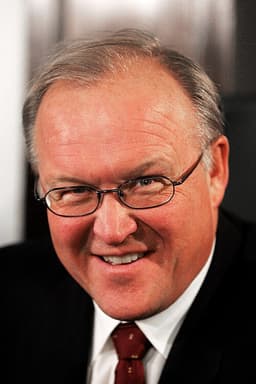
Goran Persson
Politician · Modern
51.7Total

Juan Peron
Politician · Modern
61.0Total
Basic Information
Born
1949
1895
Died
—
1974
Era
Modern
Modern
Nationality
Sweden
Argentina
Occupation
Politician
Politician
Civilization
Western
Western
Score Comparison
Military (10%)
47.5
36.6
Political (20%)
62.7
72.0
Influence (20%)
50.2
72.0
Legacy (20%)
40.0
52.0
Leadership (15%)
72.0
68.0
Strategy (15%)
42.0
53.0
TOTAL
51.7
61.0
Goran Persson — Complete Timeline
1996 AD
Appointment as Prime Minister of SwedenPolitical Action◆ Major
Goran Persson succeeded Ingvar Carlsson as Prime Minister of Sweden, leading a Social Democratic government. He served for a decade, overseeing a period of economic recovery and welfare state reforms.
Swedish PoliticsSocial Democratic Party
Impact: nationalconstructive
2001 AD
Swedish EU PresidencyPolitical Action◆ Major
Sweden held the rotating presidency of the Council of the European Union under Persson's leadership. The presidency focused on EU enlargement, environmental policy, and the Lisbon Strategy for economic reform.
European UnionSwedish Presidency
Impact: regionalconstructive
2006 AD
Defeat in the 2006 Swedish General ElectionPolitical Action◆ Major
Persson's Social Democratic Party lost the general election to the centre-right Alliance for Sweden coalition led by Fredrik Reinfeldt. This ended 12 years of Social Democratic rule and Persson's tenure as Prime Minister.
Swedish PoliticsElection Defeat
Impact: national
Juan Peron — Complete Timeline
1943 AD
1943 Argentine coup d'étatPolitical Action◆ Major
Perón, as a colonel, participated in the military coup that overthrew President Ramón Castillo. He was appointed Secretary of Labor and Social Welfare, where he began building his political base among workers.
CoupMilitaryLabor
Impact: national
1946 AD
Election as President of ArgentinaPolitical Action
Perón won the presidential election with 56% of the vote, running on a platform of social justice, economic independence, and political sovereignty. His victory marked the beginning of Peronism as a dominant political force.
ElectionPeronismDemocracy
Impact: nationalconstructive
1947 AD
Nationalization of foreign-owned industriesReform◆ Major
Perón nationalized the British-owned railways and other key industries, including telephones and utilities. This was part of his Five-Year Plan to achieve economic independence and strengthen state control over the economy.
NationalizationEconomic PolicyIndustrialization
Impact: nationalconstructive
1955 AD
Overthrow and exilePolitical Action◆ Major
A military coup named the Revoluci
CoupExileAuthoritarianism
Impact: nationaldestructive
1973 AD
Return to Argentina and third presidencyPolitical Action◆ Major
Perón returned to Argentina after 18 years in exile and was elected president for a third term with 62% of the vote. His return was marked by political violence and factionalism within the Peronist movement.
ReturnElectionPeronism
Impact: national
Expert Analysis
Origins
Goran Persson was born in 1949 in Vinölta, Sweden, into a working-class family. His father was a construction worker and his mother a cleaner. Persson studied at the University of Stockholm, where he earned a degree in political science. He joined the Social Democratic Youth League and later became a municipal councilor in Katrineholm. His early career was marked by local government roles, focusing on education and social welfare.
Juan Peron was born in 1895 in Lobos, Argentina, to a middle-class family of Spanish and Italian descent. His father was a farmer and his mother a homemaker. Peron entered the military academy at age 16, graduating as a second lieutenant. He later attended the Army War School and served as a military attaché in Italy, where he was influenced by fascist economic policies. His early career combined military service with political maneuvering, including participation in the 1943 coup.
Rise to Power
Persson rose through the ranks of the Swedish Social Democratic Party. He served as Minister for Schools (1989-1991) and Minister for Finance (1994-1996) under Prime Minister Ingvar Carlsson. When Carlsson retired in 1996, Persson succeeded him as Prime Minister. His rise was steady and based on party loyalty and administrative competence. He led a minority government that relied on support from the Left Party and Greens.
Peron's rise was more dramatic. After the 1943 coup, he became Secretary of Labor and Social Welfare, where he built a base among workers by enacting pro-labor reforms. He was arrested in 1945 but freed after massive protests led by his wife Eva Peron. He won the presidency in 1946 with 56% of the vote. His political movement, Peronism, combined nationalism, labor rights, and anti-imperialism.
Leadership & Governance
Persson led Sweden through a period of economic reform. He implemented fiscal austerity to reduce the budget deficit, cutting welfare spending while maintaining the Nordic model. His government prioritized EU integration, joining the Schengen Area and leading the 2001 EU Presidency. Persson's leadership style was consensus-oriented, often working with opposition parties. He scored 72.0 in leadership, reflecting his ability to manage coalition politics.
Peron governed with a more authoritarian style. He centralized power, suppressed opposition, and controlled the media. His economic policies included nationalizing industries (railways, telephones) and implementing Five-Year Plans. He also expanded social welfare and workers' rights. Peron's political score of 72.0 matches Persson's, but his leadership score of 68.0 is slightly lower, as his methods were divisive. Peron's strategy score of 53.0 is higher than Persson's 42.0, indicating more calculated maneuvering.
Triumph & Tragedy
Persson's triumphs include maintaining Sweden's economic stability during the 1990s crisis and successfully steering the EU enlargement process. His tragedy came in 2006 when his party lost the election after 12 years in power, partly due to public dissatisfaction with school and healthcare reforms. His legacy score of 40.0 reflects limited lasting impact outside Sweden.
Peron's triumphs were transformative: he built a mass political movement that outlasted him, improved workers' rights, and achieved economic independence through nationalization. His tragedies include economic instability, inflation, and his overthrow in 1955 after alienating the military and the church. His return in 1973 was brief and marred by political violence. Peron's legacy score of 52.0 is higher, reflecting his enduring influence on Argentine politics.
Character & Destiny
Persson was pragmatic and detail-oriented, but lacked charisma. His fate was tied to the Social Democratic tradition; he maintained power through competence but could not inspire a lasting personal following. His influence score of 50.2 is moderate.
Peron was charismatic and authoritarian, with a populist appeal that polarized Argentina. His destiny was tumultuous: exile, return, and a movement that remains dominant. His influence score of 72.0 is significantly higher, reflecting his role as the founder of Peronism, which has shaped Argentine politics for decades.
Legacy
Persson's legacy is limited to Sweden. He is remembered as a capable manager who preserved the welfare state during austerity. His EU presidency contributed to enlargement, but his domestic reforms were often reversed by successors. Total score: 51.7.
Peron's legacy is vast. Peronism remains a major political force in Argentina, with leaders from both left and right claiming his mantle. His policies of social justice and economic nationalism continue to resonate. Total score: 61.0, with a 9.3-point gap over Persson.
Conclusion
Juan Peron had a greater impact. While Persson was an effective administrator in a stable democracy, Peron founded a political movement that transformed Argentina and persists today. Peron's scores in influence (72.0 vs 50.2), political ability (72.0 vs 62.7), and legacy (52.0 vs 40.0) all surpass Persson's. The 9.3-point total score gap reflects the broader scope of Peron's achievements and enduring influence.
Rankings
🥇
Juan PeronLeader
Mil: 36.6Pol: 72.0Inf: 72.0
61.0
🥈
Goran Persson
Mil: 47.5Pol: 62.7Inf: 50.2
51.7
+9.3 behind
How This Comparison Works
Algorithm
Each figure is scored on 6 dimensions (0—100 scale) based on structured historical data: Military (10%), Political (20%), Influence (20%), Legacy (20%), Leadership (15%), Strategy (15%). The weighted total produces the final ranking.
Data Sources
Scores are computed from structured sub-indicators in the database. Scale factors adjust for era (Ancient ×0.85, Modern ×1.0) and civilization size (Eastern ×1.05, Other ×0.80) to account for differences in population and military scale.
Maximum 3 Figures
Comparisons are limited to 2—3 figures to ensure readability and statistical meaningfulness.
Error Margins
±5 points per dimension — Sub-scores are derived from historical records with inherent uncertainty. Two figures within 5 points on a dimension should be considered roughly equivalent in that area.
Total Score Accuracy
±3 points overall — The weighted combination of 6 dimensions produces a total score with approximately ±3 points of uncertainty. Differences of less than 3 points are not statistically significant— the figures are effectively tied.
Known Limitations
- Historical records are incomplete and uneven across civilizations
- Figures from oral-tradition societies may be underrepresented
- Occupation labels can misclassify multi-role figures
- Scores measure capability and impact, not moral character
- Quantitative scoring is a comparison tool, not absolute truth
Capability Radar
Military (10%) — Battles & Warfare
Battles
29
5
Win Rate
34
5
Expansion
38
5
Political (20%) — Governance & Reform
Reform
55
70
Diplomacy
60
60
Economy
55
55
Influence (20%) — Cultural & Global Reach
Cultural
20
65
Global
20
60
Legacy (20%) — Historical Impact
Historical
25
70
Longevity
15
65
Leadership (15%) — Power & Stability
Tenure
65
65
Stability
60
40
Strategy (15%) — Tactics & Innovation
Strategy
37
5
Tactics
40
5
Reform
45
10
Similar Comparisons
Comments & Discussion
No comments yet. Be the first to share your thoughts!