Loading...
Goran Persson vs John Tyler
Goran Persson leads by 8.1 pts · 2 figures compared
…
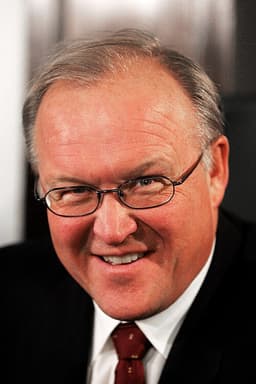
Goran Persson
Politician · Modern
51.7Total

John Tyler
Politician · Modern
43.6Total
Basic Information
Born
1949
1790
Died
—
1862
Era
Modern
Modern
Nationality
Sweden
United States
Occupation
Politician
Politician
Civilization
Western
Western
Score Comparison
Military (10%)
47.5
49.7
Political (20%)
62.7
30.8
Influence (20%)
50.2
48.6
Legacy (20%)
40.0
41.7
Leadership (15%)
72.0
48.4
Strategy (15%)
42.0
41.6
TOTAL
51.7
43.6
Goran Persson — Complete Timeline
1996 AD
Appointment as Prime Minister of SwedenPolitical Action◆ Major
Goran Persson succeeded Ingvar Carlsson as Prime Minister of Sweden, leading a Social Democratic government. He served for a decade, overseeing a period of economic recovery and welfare state reforms.
Swedish PoliticsSocial Democratic Party
Impact: nationalconstructive
2001 AD
Swedish EU PresidencyPolitical Action◆ Major
Sweden held the rotating presidency of the Council of the European Union under Persson's leadership. The presidency focused on EU enlargement, environmental policy, and the Lisbon Strategy for economic reform.
European UnionSwedish Presidency
Impact: regionalconstructive
2006 AD
Defeat in the 2006 Swedish General ElectionPolitical Action◆ Major
Persson's Social Democratic Party lost the general election to the centre-right Alliance for Sweden coalition led by Fredrik Reinfeldt. This ended 12 years of Social Democratic rule and Persson's tenure as Prime Minister.
Swedish PoliticsElection Defeat
Impact: national
John Tyler — Complete Timeline
1841 AD
Succeeded to the PresidencyPolitical Action◆ Major
Upon William Henry Harrison's death, Tyler became the first vice president to assume the presidency. He insisted on being president, not acting president, setting the precedent for presidential succession.
Presidential SuccessionConstitutional Precedent
Impact: national
Vetoed Whig Banking BillsPolitical Action◆ Major
Tyler vetoed two bills to reestablish a national bank, breaking with the Whig Party. His actions led to his expulsion from the Whig Party and the resignation of his entire cabinet except Secretary of State Daniel Webster.
VetoWhig PartyBanking
Impact: national
1842 AD
Signed the Webster-Ashburton TreatyPolitical Action◆ Major
Tyler approved the treaty negotiated by Secretary of State Daniel Webster with Britain, settling the northeastern boundary of the United States (Maine-New Brunswick). The treaty averted potential conflict with Britain.
TreatyDiplomacyBoundary
Impact: regionalconstructive
1845 AD
Annexation of TexasPolitical Action◆ Major
Tyler signed a joint resolution for the annexation of Texas just before leaving office. The annexation added a large slaveholding territory to the U.S., leading to the Mexican-American War.
Territorial ExpansionSlaveryTexas
Impact: national
1861 AD
Joined the ConfederacyPolitical Action◆ Major
Tyler served as a delegate to the Virginia Secession Convention and voted for secession. He was elected to the Confederate House of Representatives but died before taking his seat.
SecessionConfederacyCivil War
Impact: nationaldestructive
Expert Analysis
Origins
Göran Persson was born on January 20, 1949, in Vingåker, Sweden, into a working-class family. His father was a construction worker, and his mother a cleaner. He studied at the University College of Örebro, where he earned a degree in political science and sociology. His early involvement in the Social Democratic Youth League shaped his political orientation.
John Tyler was born on March 29, 1790, in Charles City County, Virginia, into a prominent planter family. His father, John Tyler Sr., was a governor of Virginia. He studied at the College of William & Mary, graduating at age 17. He studied law under his father and began practicing early. His upbringing in the slaveholding elite deeply influenced his political views.
Rise to Power
Persson rose through Swedish local politics, becoming municipal commissioner in Katrineholm in 1979. He entered the Riksdag in 1979 and served as Minister for Schools from 1989 to 1991. After the Social Democrats' electoral defeat in 1991, he became party secretary. In 1994, he was appointed Minister for Finance, where he implemented austerity measures to reduce the budget deficit. On March 22, 1996, he succeeded Ingvar Carlsson as Prime Minister, leading a minority government.
Tyler entered politics early, serving in the Virginia House of Delegates at 21. He was elected to the U.S. House of Representatives in 1816, then as Governor of Virginia in 1825. He served in the U.S. Senate from 1827 to 1836, initially a Democrat but later aligning with the Whigs. In 1840, the Whigs nominated him as vice president under William Henry Harrison. Harrison died of pneumonia on April 4, 1841, after only one month in office, making Tyler the first vice president to succeed to the presidency.
Leadership & Governance
Persson governed as a pragmatic Social Democrat, focusing on fiscal responsibility and welfare state preservation. He cut taxes and reduced public debt while maintaining social programs. His government oversaw Sweden's entry into the European Union in 1995 and held the EU presidency in 2001. Persson's leadership style was consensus-oriented but firm; he managed coalition governments with the Left Party and Greens. His political score of 62.7 reflects his ability to navigate minority rule.
Tyler's leadership was marked by conflict. As president, he vetoed two Whig-sponsored bills to reestablish a national bank, leading to his expulsion from the Whig Party. His entire cabinet resigned except Secretary of State Daniel Webster. Tyler's political score of 30.8 indicates his inability to build stable coalitions. He governed with a rump cabinet and faced constant opposition. His major achievement was the Webster-Ashburton Treaty (1842) settling the Maine boundary, and the annexation of Texas in 1845, though the latter was completed by his successor.
Triumph & Tragedy
Persson's triumph was steering Sweden through economic recovery in the 1990s. He reduced the national debt from 80% of GDP to 50% and achieved budget surpluses. Sweden's unemployment fell from 12% to 6% during his tenure. His tragedy was the 2006 election loss after 12 years in power; his party scored 34.6% of the vote, its worst since 1914. He failed to modernize the party's message in the face of a center-right coalition.
Tyler's triumph was establishing the precedent that a vice president succeeding to the presidency becomes president fully, not acting. This was codified later in the 25th Amendment. His tragedy was his post-presidential treason: he served as a delegate to the Virginia Secession Convention in 1861 and voted for secession. He was elected to the Confederate House of Representatives but died before taking office. His betrayal of the Union tarnished his legacy.
Character & Destiny
Persson was known as a pragmatic, disciplined leader. He was nicknamed "the budget commissioner" for his fiscal rigor. His character was decisive but cautious, avoiding risky reforms. This served him well during economic stabilization but made him appear unimaginative by 2006. His leadership score of 72.0 reflects his steady hand.
Tyler was stubborn and principled to a fault. He insisted on his constitutional interpretation that the presidency was not a vice-presidential regency. His inflexibility led to political isolation. After leaving office, his commitment to states' rights and slavery led him to support secession. Tyler's total score of 43.6 reflects his mixed impact.
Legacy
Persson's legacy is mixed. He stabilized Sweden's economy but failed to address long-term challenges like immigration integration. The Social Democrats lost power for eight years after him. His influence score of 50.2 reflects moderate impact within Sweden, with little global resonance.
Tyler's legacy is defined by his precedent for presidential succession and his role in Texas annexation. However, his support for the Confederacy makes him a controversial figure. He is consistently ranked among the worst U.S. presidents. His legacy score of 41.7 acknowledges his constitutional impact but also his disloyalty.
Conclusion
Göran Persson had a more effective and impactful tenure than John Tyler. Persson's leadership score of 72.0 versus Tyler's 48.4, and his political score of 62.7 versus 30.8, demonstrate his superior governance. While Tyler set a constitutional precedent, his presidency was largely paralyzed, and his post-presidential actions undermined his legacy. Persson's decade of stable, fiscally responsible leadership positively shaped Sweden, whereas Tyler's impact was largely negative or undone by his successor. Therefore, Persson is the greater figure.
Rankings
🥇
Goran PerssonLeader
Mil: 47.5Pol: 62.7Inf: 50.2
51.7
🥈
John Tyler
Mil: 49.7Pol: 30.8Inf: 48.6
43.6
+8.1 behind
How This Comparison Works
Algorithm
Each figure is scored on 6 dimensions (0—100 scale) based on structured historical data: Military (10%), Political (20%), Influence (20%), Legacy (20%), Leadership (15%), Strategy (15%). The weighted total produces the final ranking.
Data Sources
Scores are computed from structured sub-indicators in the database. Scale factors adjust for era (Ancient ×0.85, Modern ×1.0) and civilization size (Eastern ×1.05, Other ×0.80) to account for differences in population and military scale.
Maximum 3 Figures
Comparisons are limited to 2—3 figures to ensure readability and statistical meaningfulness.
Error Margins
±5 points per dimension — Sub-scores are derived from historical records with inherent uncertainty. Two figures within 5 points on a dimension should be considered roughly equivalent in that area.
Total Score Accuracy
±3 points overall — The weighted combination of 6 dimensions produces a total score with approximately ±3 points of uncertainty. Differences of less than 3 points are not statistically significant— the figures are effectively tied.
Known Limitations
- Historical records are incomplete and uneven across civilizations
- Figures from oral-tradition societies may be underrepresented
- Occupation labels can misclassify multi-role figures
- Scores measure capability and impact, not moral character
- Quantitative scoring is a comparison tool, not absolute truth
Capability Radar
Military (10%) — Battles & Warfare
Battles
29
30
Win Rate
34
30
Expansion
38
35
Political (20%) — Governance & Reform
Reform
55
20
Diplomacy
60
25
Economy
55
15
Influence (20%) — Cultural & Global Reach
Cultural
20
15
Global
20
15
Legacy (20%) — Historical Impact
Historical
25
30
Longevity
15
20
Leadership (15%) — Power & Stability
Tenure
65
30
Stability
60
10
Strategy (15%) — Tactics & Innovation
Strategy
37
36
Tactics
40
43
Reform
45
41
Similar Comparisons
Comments & Discussion
No comments yet. Be the first to share your thoughts!