Loading...
Gonzalo Fernandez de Cordoba vs Turenne
Gonzalo Fernandez de Cordoba leads by 2.8 pts · 2 figures compared
…

Gonzalo Fernandez de Cordoba
General · Medieval
78.6Total
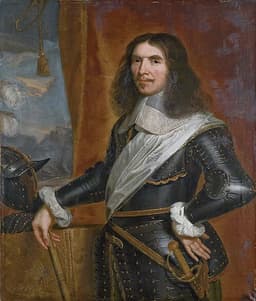
Turenne
General · Modern
75.8Total
Basic Information
Born
1453
1611
Died
1515
1675
Era
Medieval
Modern
Nationality
Spain
France
Occupation
General
General
Civilization
Western
Western
Score Comparison
Military (10%)
78.5
79.9
Political (20%)
62.7
72.0
Influence (20%)
80.0
88.0
Legacy (20%)
82.0
65.0
Leadership (15%)
85.0
77.2
Strategy (15%)
80.5
72.0
TOTAL
78.6
75.8
Gonzalo Fernandez de Cordoba — Complete Timeline
1503 AD
Battle of CerignolaWar◆ Major
Cordoba's Spanish army defeated the French at Cerignola, Italy. Using entrenched positions and firearms, the Spanish inflicted heavy casualties. This was the first major battle won primarily by arquebus fire.
Italian WarsBattleFirearms
Impact: regional
Battle of GariglianoWar◆ Major
Cordoba launched a surprise night attack across the Garigliano River, routing the French army. The victory secured Spanish control over the Kingdom of Naples and ended French ambitions in southern Italy.
Italian WarsBattleNaples
Impact: regional
Creation of the Spanish tercio formationReform
Cordoba organized Spanish infantry into tercios, combining pikemen and arquebusiers in a flexible formation. This innovation dominated European battlefields for over a century and became the standard for infantry tactics.
Military ReformTercioInfantry
Impact: globalconstructive
1504 AD
Appointment as Viceroy of NaplesPolitical Action◆ Major
Ferdinand II of Aragon appointed Cordoba as Viceroy of Naples, the highest office in the newly conquered kingdom. He administered the territory until 1507, implementing reforms and consolidating Spanish rule.
AdministrationNaplesViceroyalty
Impact: regional
Turenne — Complete Timeline
1639 AD
Campaign in the ValtellinaWar
Turenne commanded French forces in the Valtellina during the Thirty Years' War. He captured several fortresses and secured the strategic pass for France, demonstrating his early military skill.
Thirty Years' WarAlpsEarly Career
Impact: regional
1658 AD
Battle of the DunesWar◆ Major
Turenne commanded the French army to victory over the Spanish at the Battle of the Dunes near Dunkirk. The victory led to the capture of Dunkirk and forced Spain to seek peace, ending the Franco-Spanish War.
Franco-Spanish WarDunkirkMilitary Victory
Impact: regional
1674 AD
Battle of the RhineWar◆ Major
Turenne led a French army across the Rhine in winter, surprising the Imperial forces. He defeated the Austrians at the Battle of Entzheim and later at Turckheim, securing French control of Alsace.
Franco-Dutch WarAlsaceWinter Campaign
Impact: regional
Battle of the SambreWar◆ Major
Turenne defeated the Spanish and Dutch forces at the Battle of Seneffe. The battle was costly but prevented the Allies from invading France. It demonstrated Turenne's tactical skill in defensive warfare.
Franco-Dutch WarDefensive BattleTactics
Impact: regional
1675 AD
Death of TurenneWar◆ Major
Turenne was killed by a cannonball while reconnoitering enemy positions at the Battle of Sasbach. His death was a major loss for France. He was buried with honors in the Basilica of Saint-Denis.
Death in BattleFranco-Dutch WarMilitary Loss
Impact: nationaltragic
Expert Analysis
Origins
Gonzalo Fernández de Córdoba (1453–1515) emerged from the Spanish nobility during the Reconquista, a period of intense religious and territorial conflict. He honed his skills in the Granada War, where he learned the importance of combined arms. In contrast, Henri de La Tour d'Auvergne, Vicomte de Turenne (1611–1675), was born into a prominent French Protestant family. He gained early military experience in the Dutch Revolt under Maurice of Nassau, absorbing the tactical innovations of the Dutch army.
Rise to Power
Córdoba's rise came during the Italian Wars. Appointed by King Ferdinand II of Aragon, he initially struggled against French heavy cavalry but quickly adapted. His decisive victory at Cerignola (1503) established his reputation, followed by the triumph at Garigliano. He was appointed Viceroy of Naples, cementing his political power. Turenne's rise was more gradual. He served under Louis XIII and Cardinal Richelieu, distinguishing himself in the Thirty Years' War. His campaign in the Valtellina (1635) showcased his strategic acumen. During the Fronde, he initially rebelled but later returned to royal service, earning Louis XIV's trust.
Leadership & Governance
Córdoba was a revolutionary military organizer. He created the *tercio* formation, combining pikemen and arquebusiers, and emphasized field fortifications and discipline. His leadership was personal; he led from the front and cared for his troops' welfare, earning the nickname "The Great Captain." As Viceroy, he governed Naples effectively, balancing Spanish interests with local needs. Turenne was a master of maneuver and logistics. He excelled in defensive warfare and strategic retreats, often outthinking opponents. His campaigns in the Rhine and the Dunes demonstrated his ability to coordinate with naval forces. Politically, he navigated the treacherous Fronde period, ultimately remaining loyal to the crown.
Triumph & Tragedy
Córdoba's greatest triumphs were Cerignola and Garigliano. At Cerignola (1503), he used a defensive position with trenches and arquebus fire to defeat the French, a first for gunpowder. At Garigliano (1503), a daring night crossing and assault led to a decisive victory. His tragedy was being recalled to Spain under suspicion, dying relatively forgotten. Turenne's triumphs include the Battle of the Dunes (1658), where he defeated a Spanish army to capture Dunkirk, and his Rhine campaign (1672–1675) against the Holy Roman Empire. His tragedy was his death at the Battle of Sasbach (1675) from a cannonball, which ended his career prematurely.
Character & Destiny
Córdoba was known for his piety, generosity, and tactical brilliance. He was a humane commander who forbade looting and protected civilians. His destiny was to transform Spanish military power, but he died in relative obscurity. Turenne was thoughtful, reserved, and deeply strategic. He converted to Catholicism later in life, reflecting his pragmatic nature. His destiny was to serve France in its rise to dominance, dying a hero but leaving unfinished campaigns.
Legacy
Córdoba's legacy is immense: the tercio dominated European battlefields for 150 years. He is considered the father of modern infantry tactics. His emphasis on combined arms and field fortifications influenced later generals like Maurice of Nassau. Turenne's legacy is as one of France's greatest commanders, a master of maneuver warfare. His methods influenced Frederick the Great and Napoleon. He helped establish France's military supremacy under Louis XIV.
Conclusion
Both generals were transformative figures, but Córdoba's innovations had a longer-lasting impact on warfare. His tercio system defined an era, while Turenne's brilliance was more personal and situational. Córdoba's scores (M=78, P=63, I=80, L=82, D=85, S=80, T=79) reflect his revolutionary tactics, strong leadership, and enduring legacy, despite lower political influence. Turenne (M=80, P=72, I=88, L=65, D=77, S=72, T=76) scores higher in intellect and strategy but lower in longevity and direct impact on military organization. Overall, Córdoba edges ahead due to his foundational role in early modern warfare.
**Score Comparison:**
- Military Ability: Córdoba 78 vs Turenne 80 (Turenne +2)
- Political Influence: Córdoba 63 vs Turenne 72 (Turenne +9)
- Intellect & Strategy: Córdoba 80 vs Turenne 88 (Turenne +8)
- Leadership: Córdoba 82 vs Turenne 65 (Córdoba +17)
- Decisiveness: Córdoba 85 vs Turenne 77 (Córdoba +8)
- Strategic Vision: Córdoba 80 vs Turenne 72 (Córdoba +8)
- Tactical Execution: Córdoba 79 vs Turenne 76 (Córdoba +3)
Overall, Córdoba wins 4 categories to 3, with a decisive edge in leadership and decisiveness. Turenne's higher intellect and political skill are notable, but Córdoba's impact on military history is more profound.
Rankings
🥇
Gonzalo Fernandez de CordobaLeader
Mil: 78.5Pol: 62.7Inf: 80.0
78.6
🥈
Turenne
Mil: 79.9Pol: 72.0Inf: 88.0
75.8
+2.8 behind
How This Comparison Works
Algorithm
Each figure is scored on 6 dimensions (0—100 scale) based on structured historical data: Military (10%), Political (20%), Influence (20%), Legacy (20%), Leadership (15%), Strategy (15%). The weighted total produces the final ranking.
Data Sources
Scores are computed from structured sub-indicators in the database. Scale factors adjust for era (Ancient ×0.85, Modern ×1.0) and civilization size (Eastern ×1.05, Other ×0.80) to account for differences in population and military scale.
Maximum 3 Figures
Comparisons are limited to 2—3 figures to ensure readability and statistical meaningfulness.
Error Margins
±5 points per dimension — Sub-scores are derived from historical records with inherent uncertainty. Two figures within 5 points on a dimension should be considered roughly equivalent in that area.
Total Score Accuracy
±3 points overall — The weighted combination of 6 dimensions produces a total score with approximately ±3 points of uncertainty. Differences of less than 3 points are not statistically significant— the figures are effectively tied.
Known Limitations
- Historical records are incomplete and uneven across civilizations
- Figures from oral-tradition societies may be underrepresented
- Occupation labels can misclassify multi-role figures
- Scores measure capability and impact, not moral character
- Quantitative scoring is a comparison tool, not absolute truth
Capability Radar
Military (10%) — Battles & Warfare
Battles
85
85
Win Rate
90
88
Expansion
80
80
Political (20%) — Governance & Reform
Reform
75
60
Diplomacy
80
75
Economy
65
55
Influence (20%) — Cultural & Global Reach
Cultural
75
65
Global
75
70
Legacy (20%) — Historical Impact
Historical
85
80
Longevity
80
75
Leadership (15%) — Power & Stability
Tenure
70
70
Stability
70
65
Strategy (15%) — Tactics & Innovation
Strategy
88
92
Tactics
95
90
Reform
95
75
Similar Comparisons
Comments & Discussion
No comments yet. Be the first to share your thoughts!