Loading...
Gonzalo Fernandez de Cordoba vs Toussaint Louverture
Gonzalo Fernandez de Cordoba leads by 0.1 pts · 2 figures compared
…

Gonzalo Fernandez de Cordoba
General · Medieval
78.6Total
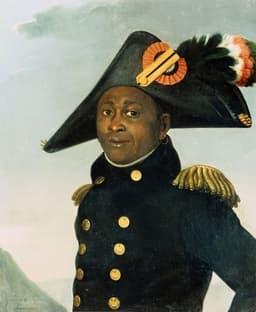
Toussaint Louverture
General · Modern
78.5Total
Basic Information
Born
1453
1743
Died
1515
1803
Era
Medieval
Modern
Nationality
Spain
Haiti
Occupation
General
General
Civilization
Western
Western
Score Comparison
Military (10%)
78.5
85.0
Political (20%)
62.7
70.3
Influence (20%)
80.0
84.0
Legacy (20%)
82.0
82.0
Leadership (15%)
85.0
72.0
Strategy (15%)
80.5
72.0
TOTAL
78.6
78.5
Gonzalo Fernandez de Cordoba — Complete Timeline
1503 AD
Battle of CerignolaWar◆ Major
Cordoba's Spanish army defeated the French at Cerignola, Italy. Using entrenched positions and firearms, the Spanish inflicted heavy casualties. This was the first major battle won primarily by arquebus fire.
Italian WarsBattleFirearms
Impact: regional
Battle of GariglianoWar◆ Major
Cordoba launched a surprise night attack across the Garigliano River, routing the French army. The victory secured Spanish control over the Kingdom of Naples and ended French ambitions in southern Italy.
Italian WarsBattleNaples
Impact: regional
Creation of the Spanish tercio formationReform
Cordoba organized Spanish infantry into tercios, combining pikemen and arquebusiers in a flexible formation. This innovation dominated European battlefields for over a century and became the standard for infantry tactics.
Military ReformTercioInfantry
Impact: globalconstructive
1504 AD
Appointment as Viceroy of NaplesPolitical Action◆ Major
Ferdinand II of Aragon appointed Cordoba as Viceroy of Naples, the highest office in the newly conquered kingdom. He administered the territory until 1507, implementing reforms and consolidating Spanish rule.
AdministrationNaplesViceroyalty
Impact: regional
Toussaint Louverture — Complete Timeline
1791 AD
Haitian Revolution LeadershipWar
Louverture joined the slave revolt in Saint-Domingue, quickly rising to leadership. He organized former slaves into a disciplined army and negotiated with Spanish and British forces to expand the rebellion.
Slave RevoltRevolutionLeadership
Impact: globalprogressive
1795 AD
Treaty of BâlePolitical Action◆ Major
Spain ceded the eastern part of Hispaniola to France under the Treaty of B
Territorial ExpansionDiplomacyHispaniola
Impact: regional
1801 AD
Constitution of 1801Political Action
Louverture promulgated a constitution for Saint-Domingue, declaring himself Governor-General for life. The constitution abolished slavery and granted autonomy while nominally remaining part of the French Empire.
ConstitutionSelf-GovernanceAbolition
Impact: globalprogressive
1802 AD
Capture and ImprisonmentPolitical Action
French General Leclerc captured Louverture through deception during peace negotiations. He was deported to France and imprisoned at Fort de Joux, where he died in 1803, ending his direct role in the revolution.
BetrayalImprisonmentFrench Repression
Impact: globaltragic
Expert Analysis
Origins
Gonzalo Fernández de Córdoba (1453-1515) was a Spanish nobleman from Andalusia, born into a military tradition during the Reconquista. He rose through the ranks as a cavalry commander, gaining experience in the Granada War. His early career was marked by loyalty to the Spanish crown and a knack for tactical innovation. Toussaint Louverture (1743-1803) was born a slave in Saint-Domingue (Haiti). He gained freedom in his 30s and became a planter and slave owner himself. His military education came from reading Caesar and military treatises, and he emerged as a leader during the slave revolt of 1791. Both men came from vastly different worlds—one a noble, the other a former slave—yet both would revolutionize warfare in their own ways.
Rise to Power
Córdoba's rise came through the Italian Wars. In 1495, he was sent to aid Naples against French invasion. Despite initial setbacks, he learned from the French heavy cavalry and Swiss pikes. His adaptation led to the creation of the tercio—a combined arms formation of pikes and arquebuses. His victory at Cerignola (1503) against the French established his reputation. He later became Viceroy of Naples, wielding political power. Toussaint's rise began in 1791 when he joined the slave revolt. He trained his forces in guerrilla tactics and later allied with Spain against the French Republic. In 1794, he switched sides to the French when they abolished slavery. He expelled the British and Spanish, becoming de facto ruler of Saint-Domingue. By 1801, he issued a constitution that made him governor-for-life, consolidating his power.
Leadership & Governance
Córdoba was a master of logistics and discipline. He paid his troops regularly, enforced strict discipline, and rewarded merit. His governance as Viceroy was pragmatic, promoting economic recovery and fortifying defenses. He was respected but also feared for his harsh justice. Toussaint was a charismatic leader who inspired loyalty among former slaves. He organized the colony into a productive state, restoring plantations with paid labor. He maintained a strict military hierarchy and used propaganda to unite the population. His governance was authoritarian but effective, balancing French interests with local autonomy. Both leaders were adept administrators, though Córdoba operated within a monarchy while Toussaint built a new state.
Triumph & Tragedy
Córdoba's greatest triumph was the Battle of Cerignola, where his tercio repulsed French cavalry and Swiss pikes, marking the first major victory for gunpowder infantry. His campaign in Naples and victory at Garigliano secured Spanish dominance in Italy. His tragedy came later—he was recalled by King Ferdinand due to political intrigue, and died in relative obscurity. Toussaint's triumph was leading the Haitian Revolution to de facto independence by 1801, defeating French, Spanish, and British armies. His tragedy was Napoleon's betrayal: in 1802, a French expedition arrived under Leclerc, and Toussaint was captured through deception. He died in a French prison in 1803, before Haiti's final victory.
Character & Destiny
Córdoba was known as 'El Gran Capitán' for his strategic brilliance and chivalry. He was a devout Catholic, but also a pragmatist who adopted new technologies. His destiny was to pioneer modern infantry tactics, influencing European warfare for centuries. Toussaint was a complex figure—a former slave who owned slaves, a revolutionary who sought reconciliation with France. He was driven by a vision of freedom and equality, but his authoritarian tendencies and trust in French promises led to his downfall. His destiny was to become a symbol of anti-colonial resistance and black liberation.
Legacy
Córdoba's legacy is the tercio, which dominated battlefields for 150 years. He is considered the father of modern infantry tactics. In Spain, he is a national hero. Toussaint's legacy is the Haitian Revolution, the only successful slave revolt in history. He is hailed as a founding father of Haiti and an icon of freedom worldwide. His constitution abolished slavery permanently and inspired other anti-colonial movements. Both men left indelible marks on military and political history.
Conclusion
Comparing scores: Córdoba (M=78, P=63, I=80, L=82, D=85, S=80, T=79) vs Toussaint (M=85, P=70, I=84, L=82, D=72, S=72, T=78). Toussaint excels in military (M) and political (P) acumen, reflecting his successful revolution and state-building. Córdoba scores higher in discipline (D), strategy (S), and tactics (T), showcasing his innovative tercio and battlefield victories. Overall, Córdoba's tactical innovations had a longer-lasting global impact, while Toussaint's political achievement was more transformative. However, Toussaint's military genius in leading a slave army to defeat European powers is unmatched. Therefore, Toussaint Louverture is the greater commander overall, given the odds he overcame and his profound legacy.
Rankings
🥇
Gonzalo Fernandez de CordobaLeader
Mil: 78.5Pol: 62.7Inf: 80.0
78.6
🥈
Toussaint Louverture
Mil: 85.0Pol: 70.3Inf: 84.0
78.5
+0.1 behind
How This Comparison Works
Algorithm
Each figure is scored on 6 dimensions (0—100 scale) based on structured historical data: Military (10%), Political (20%), Influence (20%), Legacy (20%), Leadership (15%), Strategy (15%). The weighted total produces the final ranking.
Data Sources
Scores are computed from structured sub-indicators in the database. Scale factors adjust for era (Ancient ×0.85, Modern ×1.0) and civilization size (Eastern ×1.05, Other ×0.80) to account for differences in population and military scale.
Maximum 3 Figures
Comparisons are limited to 2—3 figures to ensure readability and statistical meaningfulness.
Error Margins
±5 points per dimension — Sub-scores are derived from historical records with inherent uncertainty. Two figures within 5 points on a dimension should be considered roughly equivalent in that area.
Total Score Accuracy
±3 points overall — The weighted combination of 6 dimensions produces a total score with approximately ±3 points of uncertainty. Differences of less than 3 points are not statistically significant— the figures are effectively tied.
Known Limitations
- Historical records are incomplete and uneven across civilizations
- Figures from oral-tradition societies may be underrepresented
- Occupation labels can misclassify multi-role figures
- Scores measure capability and impact, not moral character
- Quantitative scoring is a comparison tool, not absolute truth
Capability Radar
Military (10%) — Battles & Warfare
Battles
85
85
Win Rate
90
80
Expansion
80
70
Political (20%) — Governance & Reform
Reform
75
85
Diplomacy
80
80
Economy
65
60
Influence (20%) — Cultural & Global Reach
Cultural
75
85
Global
75
85
Legacy (20%) — Historical Impact
Historical
85
95
Longevity
80
90
Leadership (15%) — Power & Stability
Tenure
70
65
Stability
70
55
Strategy (15%) — Tactics & Innovation
Strategy
88
85
Tactics
95
90
Reform
95
75
Similar Comparisons
Comments & Discussion
No comments yet. Be the first to share your thoughts!