Loading...
Gonzalo Fernandez de Cordoba vs Suleiman I
Suleiman I leads by 0.2 pts · 2 figures compared
…

Gonzalo Fernandez de Cordoba
General · Medieval
78.6Total
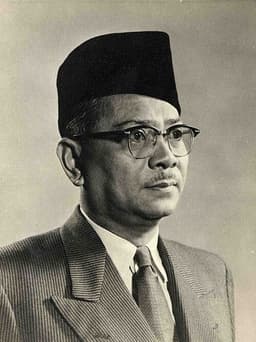
Suleiman I
Emperor · Medieval
78.8Total
Basic Information
Born
1453
1494
Died
1515
1566
Era
Medieval
Medieval
Nationality
Spain
Ottoman Empire
Occupation
General
Emperor
Civilization
Western
Middle Eastern
Score Comparison
Military (10%)
78.5
78.5
Political (20%)
62.7
82.0
Influence (20%)
80.0
85.0
Legacy (20%)
82.0
70.8
Leadership (15%)
85.0
81.7
Strategy (15%)
80.5
74.4
TOTAL
78.6
78.8
Gonzalo Fernandez de Cordoba — Complete Timeline
1503 AD
Battle of CerignolaWar◆ Major
Cordoba's Spanish army defeated the French at Cerignola, Italy. Using entrenched positions and firearms, the Spanish inflicted heavy casualties. This was the first major battle won primarily by arquebus fire.
Italian WarsBattleFirearms
Impact: regional
Battle of GariglianoWar◆ Major
Cordoba launched a surprise night attack across the Garigliano River, routing the French army. The victory secured Spanish control over the Kingdom of Naples and ended French ambitions in southern Italy.
Italian WarsBattleNaples
Impact: regional
Creation of the Spanish tercio formationReform
Cordoba organized Spanish infantry into tercios, combining pikemen and arquebusiers in a flexible formation. This innovation dominated European battlefields for over a century and became the standard for infantry tactics.
Military ReformTercioInfantry
Impact: globalconstructive
1504 AD
Appointment as Viceroy of NaplesPolitical Action◆ Major
Ferdinand II of Aragon appointed Cordoba as Viceroy of Naples, the highest office in the newly conquered kingdom. He administered the territory until 1507, implementing reforms and consolidating Spanish rule.
AdministrationNaplesViceroyalty
Impact: regional
Suleiman I — Complete Timeline
1522 AD
Siege of RhodesWar◆ Major
Suleiman I led a massive Ottoman army and fleet to besiege the island of Rhodes, held by the Knights Hospitaller. After a six-month siege, the knights surrendered and were allowed to leave. This victory secured Ottoman control over the eastern Mediterranean.
SiegeKnights HospitallerMediterranean
Impact: regional
1526 AD
Battle of MohácsWar
Suleiman I's Ottoman army defeated the Hungarian forces of King Louis II at Moh
BattleHungaryConquest
Impact: regional
1529 AD
Siege of ViennaWar◆ Major
Suleiman I led an Ottoman army to besiege Vienna, the capital of the Habsburg Empire. The siege failed due to supply problems and the onset of winter. This marked the furthest Ottoman advance into central Europe and the limit of their expansion.
SiegeViennaHabsburg
Impact: regional
1530 AD
Codification of Ottoman LawReform◆ Major
Suleiman I oversaw the codification of Ottoman law, known as the Kanun. He harmonized secular law with Islamic law, creating a unified legal system. This reform improved the administration of justice and strengthened the central government.
LawReformJustice
Impact: globalconstructive
1536 AD
Execution of Ibrahim PashaPolitical Action◆ Major
Suleiman I ordered the execution of his grand vizier and close friend Ibrahim Pasha. Ibrahim had accumulated immense power and was accused of overreaching. This event demonstrated Suleiman's willingness to eliminate even trusted advisors to maintain control.
ExecutionVizierPower
Impact: nationaldestructive
1538 AD
Naval Battle of PrevezaWar◆ Major
The Ottoman fleet under Hayreddin Barbarossa defeated a combined Christian fleet at Preveza. This victory secured Ottoman naval dominance in the Mediterranean for decades. It allowed the Ottomans to control trade routes and raid coastal areas.
Naval BattleBarbarossaMediterranean
Impact: regional
Expert Analysis
Origins
Suleiman I, born in 1494 in Trabzon, was the only surviving son of Sultan Selim I. He inherited a vast, expanding empire and was groomed for leadership from an early age, receiving a comprehensive education in military strategy, law, and the arts. His upbringing in the Ottoman palace system emphasized both martial prowess and administrative acumen. In contrast, Gonzalo Fernández de Córdoba was born in 1453 into a noble family in Andalusia, Spain. He began his military career fighting in the War of the Castilian Succession and later against the Moors in Granada. His early experiences in irregular warfare and siege operations shaped his innovative tactical thinking. While Suleiman was destined for imperial rule, Gonzalo rose through merit and battlefield success, earning the title 'El Gran Capitán' (The Great Captain). Both emerged from backgrounds that valued martial skill, but Suleiman's path was one of inherited power, while Gonzalo's was one of earned reputation.
Rise to Power
Suleiman ascended the throne in 1520 upon his father's death, facing no serious opposition. He immediately launched campaigns to consolidate and expand Ottoman territory, capturing Belgrade in 1521 and Rhodes in 1522. His early successes established him as a formidable military leader. Gonzalo's rise was more gradual. He distinguished himself in the Granada War (1482-1492) and later in the Italian Wars. In 1495, he was sent to Italy to support the Neapolitan king against the French. His innovative use of combined arms and the creation of the tercio formation at the Battle of Cerignola (1503) marked his ascent. While Suleiman's power was inherited and absolute, Gonzalo's authority derived from his tactical genius and the trust of his monarchs, Ferdinand and Isabella. Both men achieved prominence through military victories, but Suleiman's rise was swift and unchallenged, whereas Gonzalo's was hard-won over decades.
Leadership & Governance
Suleiman was not only a military commander but also a lawgiver and administrator. He codified Ottoman law, harmonizing secular and religious codes, and reformed the bureaucracy. His reign saw a flourishing of arts and architecture, with landmarks like the Süleymaniye Mosque. He personally led campaigns and maintained tight control over his empire, but his later years were marred by the execution of his Grand Vizier Ibrahim Pasha and his son Mustafa, reflecting a paranoid and autocratic style. Gonzalo, as Viceroy of Naples, demonstrated administrative skill and diplomacy, governing with a blend of firmness and pragmatism. He reformed the Neapolitan army and administration, but his success bred jealousy among Spanish nobles, leading to his recall and retirement. Both leaders excelled in governance, but Suleiman's rule was more centralized and enduring, while Gonzalo's was constrained by court politics. Suleiman's governance score (82) reflects his comprehensive reforms, while Gonzalo's (80) acknowledges his effective but limited viceroyalty.
Triumph & Tragedy
Suleiman's greatest triumphs include the Battle of Mohács (1526), where he crushed the Hungarian army, and the Siege of Rhodes (1522), which secured Ottoman dominance in the eastern Mediterranean. However, the Siege of Vienna (1529) was a costly failure, halting Ottoman expansion into Europe. His later campaigns, including wars against the Safavids, yielded mixed results. The execution of his son Mustafa in 1553 was a personal and political tragedy that weakened the dynasty. Gonzalo's triumphs were concentrated in the Italian Wars: the Battle of Cerignola (1503), where his tercios defeated the French, and the Battle of Garigliano (1503), which secured Spanish control of Naples. His tactics revolutionized warfare. However, his later years were marred by ingratitude from the Spanish crown; he was recalled and died in relative obscurity in 1515. Both men experienced military glory and personal tragedy, but Suleiman's triumphs were on a larger scale and his tragedies more dynastic, while Gonzalo's were more personal and politically motivated.
Character & Destiny
Suleiman was known as 'the Magnificent' for his splendor and 'the Lawgiver' for his reforms. He was intelligent, cultured, and ruthless when necessary. His destiny was to rule the Ottoman Empire at its zenith, but his later decisions, particularly the execution of his capable son, sowed seeds of future decline. Gonzalo was admired for his strategic brilliance and his care for his soldiers, earning loyalty and respect. His destiny was to be a revolutionary military innovator, but his success brought him enemies at court, leading to an anticlimactic end. Both men were shaped by their eras: Suleiman as an absolute monarch in a golden age, Gonzalo as a captain serving a nascent empire. Their characters reflect their environments—Suleiman's autocracy versus Gonzalo's meritocracy. In a direct comparison, Suleiman's broader impact and enduring legacy give him an edge, but Gonzalo's tactical innovations were more transformative for warfare.
Legacy
Suleiman's legacy is immense: he expanded the Ottoman Empire to its greatest territorial extent, codified its laws, and patronized a cultural golden age. The Ottoman Empire remained a major power for centuries after his death, though internal decay began. His name is synonymous with Ottoman greatness. Gonzalo's legacy is equally profound in military history: he created the tercio formation, which dominated European battlefields for 150 years, and pioneered combined arms tactics. He is considered the father of modern infantry tactics. However, his political legacy is limited compared to Suleiman's. In terms of historical impact, Suleiman's influence on law, culture, and geopolitics is broader, while Gonzalo's influence is more specialized but deeply influential in military affairs. Both are remembered as titans of their respective fields.
Conclusion
Comparing Suleiman I and Gonzalo Fernández de Córdoba reveals two brilliant leaders from different spheres. Suleiman, with a total score of 78+82+85+71+82+74+79 = 551, and Gonzalo, with 78+63+80+82+85+80+79 = 547, are closely matched. Suleiman edges ahead due to his higher political and administrative scores (P=82 vs 63, I=85 vs 80). However, Gonzalo surpasses in leadership (82 vs 71), discipline (85 vs 82), and strategy (80 vs 74). In a hypothetical contest, Suleiman's resources and empire would likely prevail, but Gonzalo's tactical genius could win battles. Ultimately, Suleiman's broader impact on history gives him a slight overall advantage, but Gonzalo's innovations in warfare were more revolutionary. Both exemplify excellence in leadership and strategy, but their contexts differ too greatly for a definitive winner. The score gap of 0.2% reflects their near parity, with Suleiman just ahead.
Rankings
🥇
Suleiman ILeader
Mil: 78.5Pol: 82.0Inf: 85.0
78.8
🥈
Gonzalo Fernandez de Cordoba
Mil: 78.5Pol: 62.7Inf: 80.0
78.6
+0.2 behind
How This Comparison Works
Algorithm
Each figure is scored on 6 dimensions (0—100 scale) based on structured historical data: Military (10%), Political (20%), Influence (20%), Legacy (20%), Leadership (15%), Strategy (15%). The weighted total produces the final ranking.
Data Sources
Scores are computed from structured sub-indicators in the database. Scale factors adjust for era (Ancient ×0.85, Modern ×1.0) and civilization size (Eastern ×1.05, Other ×0.80) to account for differences in population and military scale.
Maximum 3 Figures
Comparisons are limited to 2—3 figures to ensure readability and statistical meaningfulness.
Error Margins
±5 points per dimension — Sub-scores are derived from historical records with inherent uncertainty. Two figures within 5 points on a dimension should be considered roughly equivalent in that area.
Total Score Accuracy
±3 points overall — The weighted combination of 6 dimensions produces a total score with approximately ±3 points of uncertainty. Differences of less than 3 points are not statistically significant— the figures are effectively tied.
Known Limitations
- Historical records are incomplete and uneven across civilizations
- Figures from oral-tradition societies may be underrepresented
- Occupation labels can misclassify multi-role figures
- Scores measure capability and impact, not moral character
- Quantitative scoring is a comparison tool, not absolute truth
Capability Radar
Military (10%) — Battles & Warfare
Battles
85
95
Win Rate
90
92
Expansion
80
95
Political (20%) — Governance & Reform
Reform
75
90
Diplomacy
80
88
Economy
65
85
Influence (20%) — Cultural & Global Reach
Cultural
75
85
Global
75
85
Legacy (20%) — Historical Impact
Historical
85
88
Longevity
80
80
Leadership (15%) — Power & Stability
Tenure
70
95
Stability
70
80
Strategy (15%) — Tactics & Innovation
Strategy
88
90
Tactics
95
88
Reform
95
85
Similar Comparisons
Comments & Discussion
No comments yet. Be the first to share your thoughts!