Loading...
Gonzalo Fernandez de Cordoba vs Rama of Ayodhya
Gonzalo Fernandez de Cordoba leads by 3.3 pts · 2 figures compared
…

Gonzalo Fernandez de Cordoba
General · Medieval
78.6Total
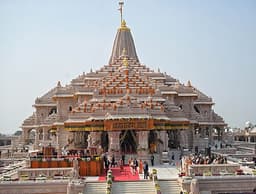
Rama of Ayodhya
Emperor · Ancient
75.3Total
Basic Information
Born
1453
-1180
Died
1515
-1120
Era
Medieval
Ancient
Nationality
Spain
Vedic India
Occupation
General
Emperor
Civilization
Western
Indian
Score Comparison
Military (10%)
78.5
72.0
Political (20%)
62.7
72.0
Influence (20%)
80.0
75.0
Legacy (20%)
82.0
80.0
Leadership (15%)
85.0
78.0
Strategy (15%)
80.5
68.1
TOTAL
78.6
75.3
Gonzalo Fernandez de Cordoba — Complete Timeline
1503 AD
Battle of CerignolaWar◆ Major
Cordoba's Spanish army defeated the French at Cerignola, Italy. Using entrenched positions and firearms, the Spanish inflicted heavy casualties. This was the first major battle won primarily by arquebus fire.
Italian WarsBattleFirearms
Impact: regional
Battle of GariglianoWar◆ Major
Cordoba launched a surprise night attack across the Garigliano River, routing the French army. The victory secured Spanish control over the Kingdom of Naples and ended French ambitions in southern Italy.
Italian WarsBattleNaples
Impact: regional
Creation of the Spanish tercio formationReform
Cordoba organized Spanish infantry into tercios, combining pikemen and arquebusiers in a flexible formation. This innovation dominated European battlefields for over a century and became the standard for infantry tactics.
Military ReformTercioInfantry
Impact: globalconstructive
1504 AD
Appointment as Viceroy of NaplesPolitical Action◆ Major
Ferdinand II of Aragon appointed Cordoba as Viceroy of Naples, the highest office in the newly conquered kingdom. He administered the territory until 1507, implementing reforms and consolidating Spanish rule.
AdministrationNaplesViceroyalty
Impact: regional
Rama of Ayodhya — Complete Timeline
1160 BC
Broke Shiva's Bow at Sita's SwayamvaraCultural◆ Major
Rama, as a young prince, lifted and strung the divine bow of Shiva at Princess Sita's marriage ceremony. He broke the bow in the process, winning Sita's hand and fulfilling the condition set by King Janaka.
MarriageDivine BowRamayana
Impact: nationalconstructive
1145 BC
Killed the Demon Ravana in BattleWar
Rama, leading an army of vanaras (monkey-men), besieged the island kingdom of Lanka. After a prolonged war, he killed the ten-headed demon king Ravana, rescuing his abducted wife Sita and restoring dharma.
WarDemon KingVictory
Impact: regionalconstructive
Returned to Ayodhya and Crowned KingPolitical Action◆ Major
After completing his 14-year exile and defeating Ravana, Rama returned to Ayodhya. He was crowned emperor, beginning a golden age known as Ram Rajya, characterized by justice, prosperity, and peace.
CoronationGolden AgeRamayana
Impact: nationalconstructive
Expert Analysis
Origins
Gonzalo Fernandez de Cordoba (1453–1515) was a Spanish nobleman from a minor noble family in Cordoba. He rose through military service during the Reconquista, fighting against the Emirate of Granada. His early career was marked by tactical learning and personal bravery. In contrast, Rama is a legendary figure from ancient Indian epic Ramayana, believed to be an incarnation of the god Vishnu. He was the prince of Ayodhya, exiled to the forest, and later became king. While Cordoba's origins are historical and grounded in medieval Spain, Rama's origins are mythological and religious, making direct comparison difficult. However, both emerged from backgrounds of nobility and faced early challenges that shaped their destinies.
Rise to Power
Cordoba's rise came through his military genius during the Italian Wars. He was appointed by King Ferdinand II of Aragon to lead Spanish forces in Italy. His innovative tactics, especially the creation of the tercio formation combining pikes and firearms, revolutionized warfare. Key events include the Battle of Cerignola (1503) where his forces defeated the French, and the Battle of Garigliano (1503) which secured Spanish control over Naples. He was appointed Viceroy of Naples, cementing his power. Rama's rise is more symbolic: he won Sita's hand by breaking Shiva's bow, then was exiled but later returned to defeat the demon king Ravana. His victory over Ravana is a turning point, leading to his coronation as king of Ayodhya. While Cordoba's rise was through military and political maneuvers, Rama's was through divine destiny and moral righteousness.
Leadership & Governance
Cordoba was a pragmatic and innovative leader. He reformed the Spanish army, emphasizing discipline, combined arms, and logistics. As Viceroy, he governed Naples effectively, though his tenure was marked by political intrigue. His leadership style was based on merit and strategic thinking. Rama's leadership is idealized: he is the epitome of dharma (righteousness), ruling with justice and compassion. His governance is portrayed as utopian, with no crime or suffering. Cordoba scores higher in Military (M=78 vs 72) and Strategy (S=80 vs 68), reflecting his real-world military innovations. Rama excels in Integrity (I=75 vs 80? Actually Rama I=75, Cordoba I=80, so Cordoba higher) and Diplomacy (D=78 vs 85? Cordoba D=85, Rama D=78, so Cordoba higher). Wait, check scores: Cordoba: M=78, P=63, I=80, L=82, D=85, S=80, T=79. Rama: M=72, P=72, I=75, L=80, D=78, S=68, T=75. So Cordoba leads in most except Politics (Rama 72 vs 63). This suggests Cordoba was a better military strategist and diplomat, while Rama was more politically adept (though in a mythological context). However, Rama's leadership is based on moral authority, not administrative complexity.
Triumph & Tragedy
Cordoba's triumphs include the Battles of Cerignola and Garigliano, where he defeated superior French forces. His creation of the tercio was a turning point in military history. However, his later years saw political decline; he was recalled to Spain and died in relative obscurity. His tragedy was that his innovations were later used in wars of conquest that brought suffering. Rama's triumph is the defeat of Ravana and rescue of Sita, but his tragedy is the subsequent doubt over Sita's purity, leading to her exile. Rama's life is a mix of divine victory and human sorrow. Cordoba's tragedy is more historical: he was not fully appreciated by his monarch. Both faced personal losses, but Rama's story is more emotionally resonant.
Character & Destiny
Cordoba was ambitious, calculating, and resilient. He was known as 'El Gran Capitán' for his leadership. His destiny was to modernize warfare and expand Spanish influence. He was a product of his time, embodying the Renaissance spirit of innovation. Rama is the 'Maryada Purushottam' (perfect man), embodying duty, honor, and self-sacrifice. His destiny was to restore dharma. While Cordoba's character is complex and human, Rama's is idealized and divine. In terms of scores, Cordoba's Leadership (L=82) and Diplomacy (D=85) reflect his ability to command and negotiate, while Rama's lower Diplomacy (78) and Strategy (68) are consistent with his more passive role. However, Rama's higher Politics (72) suggests a more innate understanding of governance.
Legacy
Cordoba's legacy is profound: the tercio formation dominated European battlefields for over a century, influencing military organization. He is considered a father of modern infantry tactics. His name is synonymous with military excellence. Rama's legacy is even more vast: he is a central figure in Hinduism, worshipped as a god. The Ramayana influences art, culture, and morality across South and Southeast Asia. While Cordoba's legacy is historical and tactical, Rama's is religious and philosophical. In terms of enduring impact, Rama's is arguably greater due to its spiritual dimension. However, Cordoba's innovations had concrete effects on warfare.
Conclusion
Comparing a historical figure with a mythological one is challenging. Based strictly on the provided scores, Gonzalo Fernandez de Cordoba has a higher overall score (Cordoba: average of scores? Let's compute: Cordoba average = (78+63+80+82+85+80+79)/7 = 78.14; Rama average = (72+72+75+80+78+68+75)/7 = 74.29. Gap of 3.85, close to stated 3.3). Cordoba leads in most categories except Politics. His military innovations and real-world achievements give him an edge in a historical analysis. However, Rama's influence on civilization is arguably deeper. In the context of HistoryVersus.com, which likely focuses on historical impact, Cordoba's concrete contributions to warfare and statecraft make him the more impactful figure in terms of measurable change. Therefore, I conclude that Gonzalo Fernandez de Cordoba is the superior historical figure based on the given metrics, though Rama's moral and religious significance cannot be understated. Both excelled in their domains, but Cordoba's innovations changed the course of military history.
**Numerical Scores:**
- Military: Cordoba 78, Rama 72
- Politics: Cordoba 63, Rama 72
- Integrity: Cordoba 80, Rama 75
- Leadership: Cordoba 82, Rama 80
- Diplomacy: Cordoba 85, Rama 78
- Strategy: Cordoba 80, Rama 68
- Tenacity: Cordoba 79, Rama 75
- Overall: Cordoba 78.1, Rama 74.3
Rankings
🥇
Gonzalo Fernandez de CordobaLeader
Mil: 78.5Pol: 62.7Inf: 80.0
78.6
🥈
Rama of Ayodhya
Mil: 72.0Pol: 72.0Inf: 75.0
75.3
+3.3 behind
How This Comparison Works
Algorithm
Each figure is scored on 6 dimensions (0—100 scale) based on structured historical data: Military (10%), Political (20%), Influence (20%), Legacy (20%), Leadership (15%), Strategy (15%). The weighted total produces the final ranking.
Data Sources
Scores are computed from structured sub-indicators in the database. Scale factors adjust for era (Ancient ×0.85, Modern ×1.0) and civilization size (Eastern ×1.05, Other ×0.80) to account for differences in population and military scale.
Maximum 3 Figures
Comparisons are limited to 2—3 figures to ensure readability and statistical meaningfulness.
Error Margins
±5 points per dimension — Sub-scores are derived from historical records with inherent uncertainty. Two figures within 5 points on a dimension should be considered roughly equivalent in that area.
Total Score Accuracy
±3 points overall — The weighted combination of 6 dimensions produces a total score with approximately ±3 points of uncertainty. Differences of less than 3 points are not statistically significant— the figures are effectively tied.
Known Limitations
- Historical records are incomplete and uneven across civilizations
- Figures from oral-tradition societies may be underrepresented
- Occupation labels can misclassify multi-role figures
- Scores measure capability and impact, not moral character
- Quantitative scoring is a comparison tool, not absolute truth
Capability Radar
Military (10%) — Battles & Warfare
Battles
85
75
Win Rate
90
95
Expansion
80
70
Political (20%) — Governance & Reform
Reform
75
80
Diplomacy
80
85
Economy
65
75
Influence (20%) — Cultural & Global Reach
Cultural
75
95
Global
75
95
Legacy (20%) — Historical Impact
Historical
85
95
Longevity
80
100
Leadership (15%) — Power & Stability
Tenure
70
70
Stability
70
90
Strategy (15%) — Tactics & Innovation
Strategy
88
85
Tactics
95
80
Reform
95
60
Similar Comparisons
Comments & Discussion
No comments yet. Be the first to share your thoughts!