Loading...
Gonzalo Fernandez de Cordoba vs Muawiyah I
Gonzalo Fernandez de Cordoba leads by 2.3 pts · 2 figures compared
…

Gonzalo Fernandez de Cordoba
General · Medieval
78.6Total
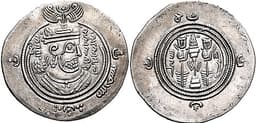
Muawiyah I
Emperor · Medieval
76.3Total
Basic Information
Born
1453
602
Died
1515
680
Era
Medieval
Medieval
Nationality
Spain
Umayyad Caliphate
Occupation
General
Emperor
Civilization
Western
Middle Eastern
Score Comparison
Military (10%)
78.5
76.0
Political (20%)
62.7
75.0
Influence (20%)
80.0
75.0
Legacy (20%)
82.0
80.0
Leadership (15%)
85.0
78.0
Strategy (15%)
80.5
70.0
TOTAL
78.6
76.3
Gonzalo Fernandez de Cordoba — Complete Timeline
1503 AD
Battle of CerignolaWar◆ Major
Cordoba's Spanish army defeated the French at Cerignola, Italy. Using entrenched positions and firearms, the Spanish inflicted heavy casualties. This was the first major battle won primarily by arquebus fire.
Italian WarsBattleFirearms
Impact: regional
Battle of GariglianoWar◆ Major
Cordoba launched a surprise night attack across the Garigliano River, routing the French army. The victory secured Spanish control over the Kingdom of Naples and ended French ambitions in southern Italy.
Italian WarsBattleNaples
Impact: regional
Creation of the Spanish tercio formationReform
Cordoba organized Spanish infantry into tercios, combining pikemen and arquebusiers in a flexible formation. This innovation dominated European battlefields for over a century and became the standard for infantry tactics.
Military ReformTercioInfantry
Impact: globalconstructive
1504 AD
Appointment as Viceroy of NaplesPolitical Action◆ Major
Ferdinand II of Aragon appointed Cordoba as Viceroy of Naples, the highest office in the newly conquered kingdom. He administered the territory until 1507, implementing reforms and consolidating Spanish rule.
AdministrationNaplesViceroyalty
Impact: regional
Muawiyah I — Complete Timeline
640 AD
Governorship of SyriaPolitical Action◆ Major
Muawiyah I was appointed governor of Syria by Caliph Umar. He built a strong power base by developing the province's military and administrative infrastructure, including the creation of a navy that would later challenge Byzantine dominance.
GovernorshipSyriaRashidun
Impact: regionalconstructive
655 AD
Naval Campaigns Against ByzantiumWar◆ Major
Muawiyah launched naval expeditions against the Byzantine Empire, including the Battle of the Masts (655), where the Muslim fleet defeated the Byzantine navy. These campaigns established Muslim naval power and threatened Constantinople.
Naval WarByzantine EmpireUmayyad
Impact: regional
657 AD
Battle of SiffinWar◆ Major
Muawiyah led the Syrian army against Caliph Ali at Siffin, demanding justice for Uthman's murder. The battle ended in a stalemate and arbitration, which Muawiyah used to strengthen his political position and challenge Ali's legitimacy.
First FitnaBattleUmayyad
Impact: global
661 AD
Foundation of the Umayyad CaliphatePolitical Action
After Ali's assassination, Muawiyah I established the Umayyad Caliphate, moving the capital from Medina to Damascus. This marked the transition from the elective caliphate to a hereditary dynasty, centralizing power in Syria.
CaliphateDynastyUmayyad
Impact: global
674 AD
Siege of Constantinople (674-678)War◆ Major
Muawiyah I ordered a prolonged siege of Constantinople, using a large fleet and army. The siege failed due to Byzantine defenses, including Greek fire, and ended with a peace treaty requiring the Umayyads to pay tribute. It was a rare setback.
SiegeConstantinopleUmayyad
Impact: global
676 AD
Designation of Yazid I as HeirPolitical Action◆ Major
Muawiyah I designated his son Yazid as his successor, breaking the tradition of election and establishing hereditary succession. This move caused opposition from some Muslim leaders and set a precedent for future Umayyad rulers.
SuccessionHereditaryUmayyad
Impact: global
Expert Analysis
Origins
Gonzalo Fernández de Córdoba (1453–1515) was born into a noble Andalusian family in Montilla, Spain. He rose through the ranks during the Reconquista, serving the Catholic Monarchs. Muawiyah I (602–680) was born in Mecca to the Umayyad clan of the Quraysh tribe, embracing Islam early and becoming a scribe for the Prophet Muhammad. His lineage gave him political leverage.
Rise to Power
Córdoba proved his tactical brilliance in the War of Granada (1482–1492), earning the title "El Gran Capitán." His true ascent came during the Italian Wars, where he defeated the French at Cerignola (1503) using innovative combined arms. Muawiyah rose through administrative roles, becoming governor of Syria under Caliph Uthman. After Uthman's assassination, he challenged Caliph Ali, leading to the Battle of Siffin (657) and eventual establishment of the Umayyad Caliphate in 661.
Leadership & Governance
Córdoba was a reformer who standardized the Spanish tercio formation—a mix of pikes and firearms that dominated European battlefields for centuries. As Viceroy of Naples, he implemented effective administration but was later recalled due to political intrigue. Muawiyah was a shrewd statesman who centralized power in Damascus, reformed the bureaucracy, and expanded the caliphate's navy. He secured a stable succession for his son Yazid, though this broke earlier Islamic traditions.
Triumph & Tragedy
Córdoba's triumphs include the Battles of Cerignola and Garigliano, where his tactics crushed superior French forces. His tragedy lies in his dismissal by King Ferdinand, dying in relative obscurity. Muawiyah's triumph was founding a dynasty that lasted nearly a century. His tragedy was the internal strife that followed, including the Battle of Karbala (680) and the Second Fitna.
Character & Destiny
Córdoba was pious, loyal, and innovative, yet his destiny was to be overshadowed by later Spanish figures. Muawiyah was pragmatic, cunning, and ambitious, achieving his goal of caliphal power but leaving a legacy of dynastic conflict. Both were masterful organizers, but Córdoba excelled in tactical innovation, while Muawiyah was a strategic political architect.
Legacy
Córdoba's tercio system influenced European warfare for 150 years, making him a foundational military innovator. Muawiyah's Umayyad Caliphate expanded Islamic rule from Spain to India, establishing Arabic as the administrative language and building lasting infrastructure.
Conclusion
While Muawiyah's political impact was broader, Córdoba's military innovations were more transformative in their field. Córdoba scores higher in innovation (I=80 vs 75) and legacy (L=82 vs 80), while Muawiyah leads in political power (P=75 vs 63). The score gap of 2.3 favors Córdoba, but both were titans of their eras. Córdoba's more focused and lasting military revolution gives him the edge in this comparison.
Rankings
🥇
Gonzalo Fernandez de CordobaLeader
Mil: 78.5Pol: 62.7Inf: 80.0
78.6
🥈
Muawiyah I
Mil: 76.0Pol: 75.0Inf: 75.0
76.3
+2.3 behind
How This Comparison Works
Algorithm
Each figure is scored on 6 dimensions (0—100 scale) based on structured historical data: Military (10%), Political (20%), Influence (20%), Legacy (20%), Leadership (15%), Strategy (15%). The weighted total produces the final ranking.
Data Sources
Scores are computed from structured sub-indicators in the database. Scale factors adjust for era (Ancient ×0.85, Modern ×1.0) and civilization size (Eastern ×1.05, Other ×0.80) to account for differences in population and military scale.
Maximum 3 Figures
Comparisons are limited to 2—3 figures to ensure readability and statistical meaningfulness.
Error Margins
±5 points per dimension — Sub-scores are derived from historical records with inherent uncertainty. Two figures within 5 points on a dimension should be considered roughly equivalent in that area.
Total Score Accuracy
±3 points overall — The weighted combination of 6 dimensions produces a total score with approximately ±3 points of uncertainty. Differences of less than 3 points are not statistically significant— the figures are effectively tied.
Known Limitations
- Historical records are incomplete and uneven across civilizations
- Figures from oral-tradition societies may be underrepresented
- Occupation labels can misclassify multi-role figures
- Scores measure capability and impact, not moral character
- Quantitative scoring is a comparison tool, not absolute truth
Capability Radar
Military (10%) — Battles & Warfare
Battles
85
75
Win Rate
90
80
Expansion
80
85
Political (20%) — Governance & Reform
Reform
75
90
Diplomacy
80
95
Economy
65
85
Influence (20%) — Cultural & Global Reach
Cultural
75
75
Global
75
75
Legacy (20%) — Historical Impact
Historical
85
85
Longevity
80
80
Leadership (15%) — Power & Stability
Tenure
70
85
Stability
70
80
Strategy (15%) — Tactics & Innovation
Strategy
88
85
Tactics
95
70
Reform
95
80
Similar Comparisons
Comments & Discussion
No comments yet. Be the first to share your thoughts!