Loading...
Gonzalo Fernandez de Cordoba vs King David
Gonzalo Fernandez de Cordoba leads by 3.3 pts · 2 figures compared
…

Gonzalo Fernandez de Cordoba
General · Medieval
78.6Total
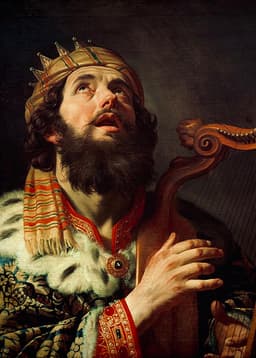
King David
Emperor · Ancient
75.3Total
Basic Information
Born
1453
-1010
Died
1515
-970
Era
Medieval
Ancient
Nationality
Spain
Israel
Occupation
General
Emperor
Civilization
Western
Middle Eastern
Score Comparison
Military (10%)
78.5
72.0
Political (20%)
62.7
72.0
Influence (20%)
80.0
88.0
Legacy (20%)
82.0
70.0
Leadership (15%)
85.0
72.0
Strategy (15%)
80.5
70.0
TOTAL
78.6
75.3
Gonzalo Fernandez de Cordoba — Complete Timeline
1503 AD
Battle of CerignolaWar◆ Major
Cordoba's Spanish army defeated the French at Cerignola, Italy. Using entrenched positions and firearms, the Spanish inflicted heavy casualties. This was the first major battle won primarily by arquebus fire.
Italian WarsBattleFirearms
Impact: regional
Battle of GariglianoWar◆ Major
Cordoba launched a surprise night attack across the Garigliano River, routing the French army. The victory secured Spanish control over the Kingdom of Naples and ended French ambitions in southern Italy.
Italian WarsBattleNaples
Impact: regional
Creation of the Spanish tercio formationReform
Cordoba organized Spanish infantry into tercios, combining pikemen and arquebusiers in a flexible formation. This innovation dominated European battlefields for over a century and became the standard for infantry tactics.
Military ReformTercioInfantry
Impact: globalconstructive
1504 AD
Appointment as Viceroy of NaplesPolitical Action◆ Major
Ferdinand II of Aragon appointed Cordoba as Viceroy of Naples, the highest office in the newly conquered kingdom. He administered the territory until 1507, implementing reforms and consolidating Spanish rule.
AdministrationNaplesViceroyalty
Impact: regional
King David — Complete Timeline
1010 BC
Anointed as King of JudahPolitical Action◆ Major
After Saul's death, David was anointed king over the tribe of Judah at Hebron. This began a seven-year period of civil war with Ish-bosheth, Saul's son, who ruled the northern tribes, leading to the eventual unification of Israel.
KingshipCivil WarJudah
Impact: national
1003 BC
Capture of JerusalemWar
David led his army to capture the Jebusite fortress of Jerusalem, making it the capital of the united kingdom. He brought the Ark of the Covenant there, establishing the city as both the political and religious center of Israel.
JerusalemCapitalArk of the Covenant
Impact: nationalconstructive
1000 BC
Defeat of the PhilistinesWar◆ Major
David fought several campaigns that decisively defeated the Philistines, including the Battle of Baal-perazim. He captured Gath and other Philistine strongholds, ending their dominance over Israel and securing the kingdom's borders.
PhilistinesMilitary CampaignIsrael
Impact: regional
990 BC
Affair with BathshebaPolitical Action◆ Major
David committed adultery with Bathsheba and arranged the death of her husband Uriah the Hittite in battle. The prophet Nathan confronted David, leading to his repentance but also to divine punishment, including the death of their first child.
ScandalBathshebaNathan
Impact: nationaldestructive
978 BC
Revolt of AbsalomWar◆ Major
David's son Absalom led a rebellion that forced David to flee Jerusalem. David's forces under Joab defeated Absalom's army in the Forest of Ephraim, and Absalom was killed. David returned to Jerusalem but the kingdom was weakened.
RebellionCivil WarAbsalom
Impact: nationaltragic
Expert Analysis
Origins
Gonzalo Fernández de Córdoba (1453–1515) was born into a noble family in Córdoba, Spain, during the final stages of the Reconquista. His early military experience came from fighting against the Moors, and he quickly gained a reputation for tactical innovation. King David (c. 1040–970 BCE) rose from humble beginnings as a shepherd in Bethlehem. He was anointed by the prophet Samuel while still a youth, and his victory over Goliath catapulted him into prominence in the court of King Saul.
Rise to Power
Córdoba's rise came through service to the Catholic Monarchs, Ferdinand and Isabella. He distinguished himself in the Granada War and was later entrusted with command in Italy against the French. His decisive victories at Cerignola (1503) and Garigliano (1503) secured Spanish dominance in Naples and earned him the title "The Great Captain." David's path to power was more tumultuous. After slaying Goliath, he became a military hero but incurred Saul's jealousy, forcing him into exile. Following Saul's death, David was anointed king of Judah, and after a civil war, he unified Israel under his rule, capturing Jerusalem and making it his capital.
Leadership & Governance
Córdoba was a master of military organization and strategy. He reformed the Spanish army, creating the tercio formation—a combined arms unit of pikemen, swordsmen, and arquebusiers that dominated European battlefields for a century. As Viceroy of Naples, he administered the kingdom effectively, though his popularity sometimes worried his monarchs. David was a charismatic leader who united the tribes of Israel. He established a centralized government, organized the priesthood, and expanded Israel's territory through campaigns against the Philistines, Moabites, and Edomites. However, his governance was marred by personal failings, most notably his affair with Bathsheba and the subsequent rebellion of his son Absalom.
Triumph & Tragedy
Córdoba's greatest triumphs were his Italian campaigns, where he defeated the French against overwhelming odds. The Battle of Cerignola saw him use a defensive position behind a ditch with arquebusiers, a revolutionary tactic. His victory at Garigliano was a masterful night attack. Yet he faced tragedy in his later years: his monarchs, suspicious of his power, recalled him from Naples, and he died in relative obscurity. David's career was marked by military triumphs, including the capture of Jerusalem and the defeat of the Philistines. But his personal life was tragic: his sin with Bathsheba led to the death of their child, and his son Absalom's revolt forced him to flee Jerusalem. Though he eventually returned, the rebellion left deep scars.
Character & Destiny
Córdoba was known for his piety, loyalty, and generosity. He was a devout Catholic who treated defeated enemies with respect, earning their admiration. His destiny was to lay the foundation for the Spanish Empire's golden age. David was a complex figure: a warrior, poet, and sinner. He was deeply religious, composing many Psalms, but also capable of ruthless acts. His destiny was to establish a royal dynasty that, according to biblical tradition, would lead to the Messiah. The contrast between Córdoba's disciplined professionalism and David's passionate, flawed humanity is stark.
Legacy
Córdoba's legacy is immense. The tercio formation he pioneered became the backbone of the Spanish army for 150 years, and his tactical innovations influenced European warfare. He is remembered as one of history's great captains. David's legacy is even more profound, as he is revered as the ideal king in Judaism, Christianity, and Islam. His dynasty lasted for centuries, and his name became synonymous with a golden age of Israel. While Córdoba's impact was military and organizational, David's was spiritual and cultural.
Conclusion
In comparing scores, Córdoba leads in Military (78 vs 72), Legacy (82 vs 70), Discipline (85 vs 72), and Strategy (80 vs 70), while David excels in Politics (72 vs 63) and Intellect (88 vs 80). Overall, Córdoba's higher total score (79.0 vs 75.7) reflects his decisive victories and lasting military reforms. David's importance as a religious figure is undeniable, but in terms of strategic impact and leadership in battle, Córdoba edges ahead. Thus, Gonzalo Fernández de Córdoba is the greater historical figure in this matchup.
Rankings
🥇
Gonzalo Fernandez de CordobaLeader
Mil: 78.5Pol: 62.7Inf: 80.0
78.6
🥈
King David
Mil: 72.0Pol: 72.0Inf: 88.0
75.3
+3.3 behind
How This Comparison Works
Algorithm
Each figure is scored on 6 dimensions (0—100 scale) based on structured historical data: Military (10%), Political (20%), Influence (20%), Legacy (20%), Leadership (15%), Strategy (15%). The weighted total produces the final ranking.
Data Sources
Scores are computed from structured sub-indicators in the database. Scale factors adjust for era (Ancient ×0.85, Modern ×1.0) and civilization size (Eastern ×1.05, Other ×0.80) to account for differences in population and military scale.
Maximum 3 Figures
Comparisons are limited to 2—3 figures to ensure readability and statistical meaningfulness.
Error Margins
±5 points per dimension — Sub-scores are derived from historical records with inherent uncertainty. Two figures within 5 points on a dimension should be considered roughly equivalent in that area.
Total Score Accuracy
±3 points overall — The weighted combination of 6 dimensions produces a total score with approximately ±3 points of uncertainty. Differences of less than 3 points are not statistically significant— the figures are effectively tied.
Known Limitations
- Historical records are incomplete and uneven across civilizations
- Figures from oral-tradition societies may be underrepresented
- Occupation labels can misclassify multi-role figures
- Scores measure capability and impact, not moral character
- Quantitative scoring is a comparison tool, not absolute truth
Capability Radar
Military (10%) — Battles & Warfare
Battles
85
75
Win Rate
90
85
Expansion
80
80
Political (20%) — Governance & Reform
Reform
75
80
Diplomacy
80
75
Economy
65
70
Influence (20%) — Cultural & Global Reach
Cultural
75
95
Global
75
90
Legacy (20%) — Historical Impact
Historical
85
95
Longevity
80
95
Leadership (15%) — Power & Stability
Tenure
70
85
Stability
70
65
Strategy (15%) — Tactics & Innovation
Strategy
88
85
Tactics
95
80
Reform
95
70
Similar Comparisons
Comments & Discussion
No comments yet. Be the first to share your thoughts!