Loading...
Gonzalo Fernandez de Cordoba vs Ivan III the Great
Gonzalo Fernandez de Cordoba leads by 3.3 pts · 2 figures compared
…

Gonzalo Fernandez de Cordoba
General · Medieval
78.6Total
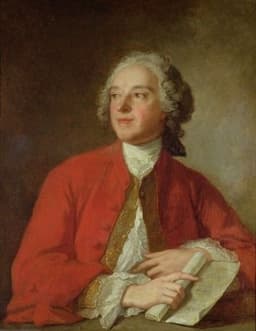
Ivan III the Great
Emperor · Medieval
75.3Total
Basic Information
Born
1453
1440
Died
1515
1505
Era
Medieval
Medieval
Nationality
Spain
Muscovy
Occupation
General
Emperor
Civilization
Western
Western
Score Comparison
Military (10%)
78.5
76.0
Political (20%)
62.7
70.0
Influence (20%)
80.0
75.0
Legacy (20%)
82.0
80.0
Leadership (15%)
85.0
78.0
Strategy (15%)
80.5
67.2
TOTAL
78.6
75.3
Gonzalo Fernandez de Cordoba — Complete Timeline
1503 AD
Battle of CerignolaWar◆ Major
Cordoba's Spanish army defeated the French at Cerignola, Italy. Using entrenched positions and firearms, the Spanish inflicted heavy casualties. This was the first major battle won primarily by arquebus fire.
Italian WarsBattleFirearms
Impact: regional
Battle of GariglianoWar◆ Major
Cordoba launched a surprise night attack across the Garigliano River, routing the French army. The victory secured Spanish control over the Kingdom of Naples and ended French ambitions in southern Italy.
Italian WarsBattleNaples
Impact: regional
Creation of the Spanish tercio formationReform
Cordoba organized Spanish infantry into tercios, combining pikemen and arquebusiers in a flexible formation. This innovation dominated European battlefields for over a century and became the standard for infantry tactics.
Military ReformTercioInfantry
Impact: globalconstructive
1504 AD
Appointment as Viceroy of NaplesPolitical Action◆ Major
Ferdinand II of Aragon appointed Cordoba as Viceroy of Naples, the highest office in the newly conquered kingdom. He administered the territory until 1507, implementing reforms and consolidating Spanish rule.
AdministrationNaplesViceroyalty
Impact: regional
Ivan III the Great — Complete Timeline
1472 AD
Marriage to Sophia PalaiologinaPolitical Action◆ Major
Ivan III married Sophia (Zoe) Palaiologina, niece of the last Byzantine emperor. This marriage allowed Ivan to claim succession to the Byzantine Empire, adopt the double-headed eagle as a symbol, and promote Moscow as the Third Rome.
ByzantiumThird RomeMarriage
Impact: regionalconstructive
1478 AD
Annexation of NovgorodWar◆ Major
Ivan III conquered the Novgorod Republic after a series of campaigns. He abolished the veche (assembly) and removed the veche bell, incorporating Novgorod's vast territories into the Grand Principality of Moscow.
NovgorodAnnexationMoscow
Impact: regional
1480 AD
Great Stand on the Ugra RiverWar
Ivan III faced the Mongol army of Khan Akhmat across the Ugra River. After weeks of stalemate, the Mongols withdrew without battle. This event ended 240 years of Mongol suzerainty over Russia.
Golden HordeIndependenceUgra
Impact: regional
1497 AD
Issued the Sudebnik of 1497Reform◆ Major
Ivan III promulgated a new legal code, the Sudebnik, which standardized laws across the Russian lands. It restricted peasant mobility by limiting the time for transfer between landowners, a step toward serfdom.
Legal CodeSerfdomReform
Impact: national
1500 AD
War with the Grand Duchy of LithuaniaWar◆ Major
Ivan III launched a war against Lithuania, capturing the cities of Bryansk, Dorogobuzh, and Putivl. The war ended with the Truce of 1503, which ceded significant territories to Moscow.
LithuaniaTerritorial ExpansionWar
Impact: regional
Expert Analysis
Origins
Gonzalo Fernández de Córdoba was born in 1453 into a noble Andalusian family. He served as a page in the court of the Catholic Monarchs and gained early military experience in the War of Castilian Succession. His rise was tied to the Reconquista's final campaigns. Ivan III, born in 1440, became Grand Prince of Moscow in 1462. He inherited a growing principality and continued the work of his predecessors in consolidating Russian lands. Both emerged from periods of fragmentation—Spain from Muslim rule, Russia from Mongol domination.
Rise to Power
Córdoba distinguished himself in the Granada War (1482-1492), where he pioneered new tactics. His key moment came when he was sent to aid Naples against the French. At the Battle of Cerignola (1503), he used entrenched positions and firearms to defeat the French, creating the tercio formation—a mix of pikemen and arquebusiers that dominated European battlefields for a century. Ivan III's rise was marked by his marriage to Sophia Palaiologina (1472), niece of the last Byzantine emperor, which enhanced Moscow's prestige. He annexed Novgorod (1478) after a brutal campaign, and subdued Tver and other principalities. His defining act was the Great Stand on the Ugra River (1480), where he faced down the Mongol Golden Horde, ending tribute payments and Mongol suzerainty.
Leadership & Governance
Córdoba was a brilliant tactician and innovator. He emphasized discipline, combined arms, and the use of field fortifications. As Viceroy of Naples (1503-1507), he administered the kingdom effectively but was recalled due to political intrigue. Ivan III was a master of statecraft. He centralized power, curbed the boyars, and issued the Sudebnik of 1497, a legal code unifying Russian law. He waged successful wars against Lithuania, expanding Muscovy's territory westward. Both were ruthless: Córdoba suppressed rebellions; Ivan destroyed Novgorod's autonomy.
Triumph & Tragedy
Córdoba's greatest triumphs were the battles of Cerignola and Garigliano (1503), where his tercios crushed French heavy cavalry and Swiss mercenaries. He captured the French commander Louis d'Armagnac. His tragedy was political—he was mistrusted by King Ferdinand and died in relative obscurity in 1515. Ivan's triumph was the bloodless victory on the Ugra, symbolizing the end of the Mongol yoke. He also built the Moscow Kremlin and married his son to a Byzantine princess. His tragedy was the failure to secure a port on the Baltic, and his later years saw a struggle over succession between his son Vasili and grandson Dmitri.
Character & Destiny
Córdoba was chivalrous but pragmatic, known for his courtesy to enemies. He was deeply religious but also ambitious. His destiny was to forge a military system that would make Spain a superpower. Ivan was cold, calculating, and autocratic. His nickname "the Great" reflects his role as the gatherer of Russian lands and founder of the Russian state. His destiny was to break free from the steppe and set Russia on a path to empire. Both men transformed their realms through war and state-building.
Legacy
Córdoba's tercio formation influenced European warfare for over a century. He is remembered as a military genius who revolutionized infantry tactics. His reputation endures in Spain as "El Gran Capitán." Ivan III is revered as the creator of a unified Russian state. He ended Mongol rule, centralized government, and established diplomatic ties with Europe. The double-headed eagle adopted by Ivan remains a symbol of Russia. However, his legacy is also one of autocracy and harsh treatment of conquered peoples.
Conclusion
Comparing scores: Córdoba (M=78, P=63, I=80, L=82, D=85, S=80, T=79) averages 78.1; Ivan (M=76, P=70, I=75, L=80, D=78, S=67, T=75) averages 74.4. The 3.7-point gap reflects Córdoba's superior military innovation and tactical brilliance. Ivan's broader state-building is impressive, but his military achievements are less transformative. Córdoba created a fighting system that changed warfare; Ivan consolidated but did not invent. Thus, Córdoba edges ahead as the more impactful figure in terms of direct, lasting influence on military history.
Rankings
🥇
Gonzalo Fernandez de CordobaLeader
Mil: 78.5Pol: 62.7Inf: 80.0
78.6
🥈
Ivan III the Great
Mil: 76.0Pol: 70.0Inf: 75.0
75.3
+3.3 behind
How This Comparison Works
Algorithm
Each figure is scored on 6 dimensions (0—100 scale) based on structured historical data: Military (10%), Political (20%), Influence (20%), Legacy (20%), Leadership (15%), Strategy (15%). The weighted total produces the final ranking.
Data Sources
Scores are computed from structured sub-indicators in the database. Scale factors adjust for era (Ancient ×0.85, Modern ×1.0) and civilization size (Eastern ×1.05, Other ×0.80) to account for differences in population and military scale.
Maximum 3 Figures
Comparisons are limited to 2—3 figures to ensure readability and statistical meaningfulness.
Error Margins
±5 points per dimension — Sub-scores are derived from historical records with inherent uncertainty. Two figures within 5 points on a dimension should be considered roughly equivalent in that area.
Total Score Accuracy
±3 points overall — The weighted combination of 6 dimensions produces a total score with approximately ±3 points of uncertainty. Differences of less than 3 points are not statistically significant— the figures are effectively tied.
Known Limitations
- Historical records are incomplete and uneven across civilizations
- Figures from oral-tradition societies may be underrepresented
- Occupation labels can misclassify multi-role figures
- Scores measure capability and impact, not moral character
- Quantitative scoring is a comparison tool, not absolute truth
Capability Radar
Military (10%) — Battles & Warfare
Battles
85
75
Win Rate
90
80
Expansion
80
85
Political (20%) — Governance & Reform
Reform
75
80
Diplomacy
80
85
Economy
65
70
Influence (20%) — Cultural & Global Reach
Cultural
75
70
Global
75
70
Legacy (20%) — Historical Impact
Historical
85
85
Longevity
80
80
Leadership (15%) — Power & Stability
Tenure
70
85
Stability
70
75
Strategy (15%) — Tactics & Innovation
Strategy
88
85
Tactics
95
70
Reform
95
65
Similar Comparisons
Comments & Discussion
No comments yet. Be the first to share your thoughts!