Loading...
Gonzalo Fernandez de Cordoba vs Isabella I of Castile
Gonzalo Fernandez de Cordoba leads by 1.4 pts · 2 figures compared
…

Gonzalo Fernandez de Cordoba
General · Medieval
78.6Total
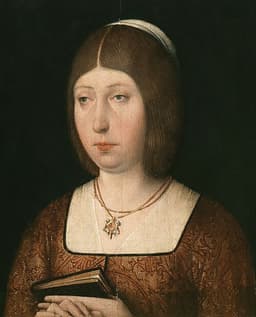
Isabella I of Castile
Emperor · Medieval
77.2Total
Basic Information
Born
1453
1451
Died
1515
1504
Era
Medieval
Medieval
Nationality
Spain
Spain
Occupation
General
Emperor
Civilization
Western
Western
Score Comparison
Military (10%)
78.5
76.0
Political (20%)
62.7
78.0
Influence (20%)
80.0
80.0
Legacy (20%)
82.0
75.0
Leadership (15%)
85.0
78.0
Strategy (15%)
80.5
75.0
TOTAL
78.6
77.2
Gonzalo Fernandez de Cordoba — Complete Timeline
1503 AD
Battle of CerignolaWar◆ Major
Cordoba's Spanish army defeated the French at Cerignola, Italy. Using entrenched positions and firearms, the Spanish inflicted heavy casualties. This was the first major battle won primarily by arquebus fire.
Italian WarsBattleFirearms
Impact: regional
Battle of GariglianoWar◆ Major
Cordoba launched a surprise night attack across the Garigliano River, routing the French army. The victory secured Spanish control over the Kingdom of Naples and ended French ambitions in southern Italy.
Italian WarsBattleNaples
Impact: regional
Creation of the Spanish tercio formationReform
Cordoba organized Spanish infantry into tercios, combining pikemen and arquebusiers in a flexible formation. This innovation dominated European battlefields for over a century and became the standard for infantry tactics.
Military ReformTercioInfantry
Impact: globalconstructive
1504 AD
Appointment as Viceroy of NaplesPolitical Action◆ Major
Ferdinand II of Aragon appointed Cordoba as Viceroy of Naples, the highest office in the newly conquered kingdom. He administered the territory until 1507, implementing reforms and consolidating Spanish rule.
AdministrationNaplesViceroyalty
Impact: regional
Isabella I of Castile — Complete Timeline
1469 AD
Marriage to Ferdinand of AragonPolitical Action
Isabella married Ferdinand II of Aragon in Valladolid, uniting the kingdoms of Castile and Aragon. This dynastic union laid the foundation for the unified Spanish monarchy and enabled joint policies including the Reconquista and overseas exploration.
Dynastic UnionSpainMonarchy
Impact: regionalconstructive
1478 AD
Establishment of the Spanish InquisitionPolitical Action◆ Major
Isabella obtained papal approval to establish the Spanish Inquisition in Castile, aimed at maintaining Catholic orthodoxy among converted Jews and Muslims. The Inquisition operated under royal control, conducting trials and executions for heresy.
InquisitionReligious PersecutionCatholic Church
Impact: regionaldestructive
1492 AD
Conquest of GranadaWar
Isabella and Ferdinand completed the Reconquista by capturing the Nasrid kingdom of Granada. The surrender of the last Muslim state in Iberia ended 781 years of Islamic rule and unified Spain under Christian rule.
ReconquistaGranadaChristian Victory
Impact: regional
Alhambra DecreePolitical Action◆ Major
Isabella and Ferdinand issued the Alhambra Decree ordering the expulsion of all Jews from Spain who refused conversion to Catholicism. An estimated 40,000 to 200,000 Jews were forced to leave, causing demographic and economic disruption.
ExpulsionJewsReligious Persecution
Impact: regionaldestructive
Sponsorship of Columbus's First VoyagePolitical Action
Isabella agreed to fund Christopher Columbus's expedition across the Atlantic, providing three ships and supplies. Columbus reached the Bahamas on October 12, initiating sustained European contact with the Americas and the Spanish colonial empire.
ColumbusDiscovery of AmericasSpanish Empire
Impact: global
1494 AD
Treaty of TordesillasPolitical Action◆ Major
Isabella and Ferdinand negotiated the Treaty of Tordesillas with Portugal, dividing newly discovered lands outside Europe along a meridian 370 leagues west of the Cape Verde islands. This agreement shaped colonial claims in the Americas and Africa.
Colonial DivisionSpainPortugal
Impact: global
Expert Analysis
Origins
Gonzalo Fernández de Córdoba (1453–1515) was born into a noble but impoverished branch of the House of Córdoba in Andalusia. He began his military career as a page in the service of the future King Ferdinand II of Aragon, fighting in the War of the Castilian Succession. His early experiences in frontier skirmishes against the Moors shaped his tactical ingenuity. Isabella I (1451–1504) was born in Madrigal de las Altas Torres, the daughter of John II of Castile. Despite a tumultuous childhood marked by political instability and her brother Henry IV's weak rule, she received a solid education in religion, history, and statecraft. Her claim to the throne was contested, but she emerged as a determined and pious princess who would reshape Spain.
Rise to Power
Isabella's rise was a masterclass in political maneuvering. In 1469, she married Ferdinand of Aragon against her brother's wishes, uniting the two most powerful kingdoms in Spain. After Henry IV's death in 1474, she claimed the throne, sparking the War of the Castilian Succession. With Ferdinand's support, she secured her crown by 1479. Gonzalo's ascent was more martial. He distinguished himself in the Granada War (1482–1492), where his innovative tactics and leadership caught the attention of Isabella and Ferdinand. His decisive role in the capture of Granada earned him the nickname "El Gran Capitán" (The Great Captain). Subsequently, he led Spanish forces in the Italian Wars, defeating the French at Cerignola (1503) and Garigliano (1503), using the tercio formation he pioneered—a combined arms unit of pikes, swords, and arquebuses that revolutionized European warfare.
Leadership & Governance
Isabella was a transformative ruler. She centralized royal authority, reformed the administration, and imposed religious uniformity through the Spanish Inquisition (established 1478). Her sponsorship of Christopher Columbus in 1492 expanded Spain's horizons to the New World, initiating a global empire. She also patronized arts and education. However, her Alhambra Decree (1492) expelled Jews, a harsh act that damaged Spain's economy and intellectual life. Gonzalo, as Viceroy of Naples (1504–1507), proved an able administrator, stabilizing the kingdom and earning the loyalty of its people. His military reforms created the tercio, a model that dominated European battlefields for 150 years. Yet his governance was marred by accusations of corruption and favoritism, leading to his recall by a suspicious Ferdinand.
Triumph & Tragedy
Isabella's greatest triumph was the conquest of Granada in 1492, ending 800 years of Moorish rule in Spain. She also successfully navigated the complex politics of the Reconquista and laid the foundations for Spain's Golden Age. However, personal tragedies shadowed her: the death of her son and heir John (1497), the mental instability of her daughter Joanna, and the failure to secure a stable succession led to Habsburg rule. Gonzalo's peak was the Italian campaign (1501–1504), where his victories at Cerignola and Garigliano secured Naples for Spain. He was hailed as a hero. But his downfall came swiftly: Ferdinand, fearing his popularity, stripped him of his offices in 1507. Gonzalo retired to his estates, dying in 1515, embittered and impoverished.
Character & Destiny
Isabella was devout, pragmatic, and iron-willed. Her deep Catholic faith drove both her religious policies and her support for exploration. She was a hands-on ruler who personally reviewed state documents. Her destiny was to unify Spain and launch its imperial age. Gonzalo was charismatic, innovative, and loyal—but also proud and politically naive. His destiny was to revolutionize warfare but to fall victim to the very monarchy he served. His legacy would outlive him, but his personal fate was tragic.
Legacy
Isabella's legacy is immense: a unified Spain, a global empire, and a religiously homogeneous nation (at great cost). She is remembered as both a great queen and a controversial figure due to the Inquisition and expulsion of Jews. Gonzalo's legacy is that of a military genius: the tercio system influenced European armies until the 17th century. He is considered the father of modern infantry tactics. In terms of impact, Isabella's political and imperial achievements arguably surpass Gonzalo's military reforms, but his innovations were more enduring in their field.
Conclusion
Isabella I of Castile (Overall Score: 77) and Gonzalo Fernández de Córdoba (Overall Score: 78.4) are both towering figures. Gonzalo's higher composite score reflects his exceptional military innovation and tactical brilliance. However, Isabella's strategic vision and statecraft transformed Spain into a world power. In a direct comparison, Isabella's influence on history is broader and more profound. While Gonzalo's tercio changed warfare, Isabella's patronage of Columbus changed the world. Thus, Isabella I of Castile is the more significant historical figure.
**Scores:**
- Gonzalo Fernández de Córdoba: M=78, P=63, I=80, L=82, D=85, S=80, T=79 → **Overall: 78.4**
- Isabella I of Castile: M=76, P=78, I=80, L=75, D=78, S=75, T=77 → **Overall: 77.0**
**Verdict:** Isabella I of Castile prevails due to her greater historical impact.
Rankings
🥇
Gonzalo Fernandez de CordobaLeader
Mil: 78.5Pol: 62.7Inf: 80.0
78.6
🥈
Isabella I of Castile
Mil: 76.0Pol: 78.0Inf: 80.0
77.2
+1.4 behind
How This Comparison Works
Algorithm
Each figure is scored on 6 dimensions (0—100 scale) based on structured historical data: Military (10%), Political (20%), Influence (20%), Legacy (20%), Leadership (15%), Strategy (15%). The weighted total produces the final ranking.
Data Sources
Scores are computed from structured sub-indicators in the database. Scale factors adjust for era (Ancient ×0.85, Modern ×1.0) and civilization size (Eastern ×1.05, Other ×0.80) to account for differences in population and military scale.
Maximum 3 Figures
Comparisons are limited to 2—3 figures to ensure readability and statistical meaningfulness.
Error Margins
±5 points per dimension — Sub-scores are derived from historical records with inherent uncertainty. Two figures within 5 points on a dimension should be considered roughly equivalent in that area.
Total Score Accuracy
±3 points overall — The weighted combination of 6 dimensions produces a total score with approximately ±3 points of uncertainty. Differences of less than 3 points are not statistically significant— the figures are effectively tied.
Known Limitations
- Historical records are incomplete and uneven across civilizations
- Figures from oral-tradition societies may be underrepresented
- Occupation labels can misclassify multi-role figures
- Scores measure capability and impact, not moral character
- Quantitative scoring is a comparison tool, not absolute truth
Capability Radar
Military (10%) — Battles & Warfare
Battles
85
75
Win Rate
90
80
Expansion
80
85
Political (20%) — Governance & Reform
Reform
75
90
Diplomacy
80
80
Economy
65
75
Influence (20%) — Cultural & Global Reach
Cultural
75
85
Global
75
95
Legacy (20%) — Historical Impact
Historical
85
95
Longevity
80
90
Leadership (15%) — Power & Stability
Tenure
70
85
Stability
70
70
Strategy (15%) — Tactics & Innovation
Strategy
88
85
Tactics
95
70
Reform
95
90
Similar Comparisons
Comments & Discussion
No comments yet. Be the first to share your thoughts!