Loading...
Gonzalo Fernandez de Cordoba vs Hong Taiji
Gonzalo Fernandez de Cordoba leads by 0.3 pts · 2 figures compared
…

Gonzalo Fernandez de Cordoba
General · Medieval
78.6Total
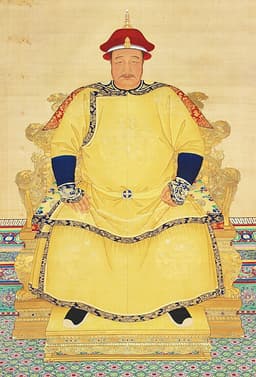
Hong Taiji
Emperor · Modern
78.3Total
Basic Information
Born
1453
1592
Died
1515
1643
Era
Medieval
Modern
Nationality
Spain
China
Occupation
General
Emperor
Civilization
Western
Eastern
Score Comparison
Military (10%)
78.5
85.0
Political (20%)
62.7
82.0
Influence (20%)
80.0
88.0
Legacy (20%)
82.0
65.0
Leadership (15%)
85.0
78.0
Strategy (15%)
80.5
76.0
TOTAL
78.6
78.3
Gonzalo Fernandez de Cordoba — Complete Timeline
1503 AD
Battle of CerignolaWar◆ Major
Cordoba's Spanish army defeated the French at Cerignola, Italy. Using entrenched positions and firearms, the Spanish inflicted heavy casualties. This was the first major battle won primarily by arquebus fire.
Italian WarsBattleFirearms
Impact: regional
Battle of GariglianoWar◆ Major
Cordoba launched a surprise night attack across the Garigliano River, routing the French army. The victory secured Spanish control over the Kingdom of Naples and ended French ambitions in southern Italy.
Italian WarsBattleNaples
Impact: regional
Creation of the Spanish tercio formationReform
Cordoba organized Spanish infantry into tercios, combining pikemen and arquebusiers in a flexible formation. This innovation dominated European battlefields for over a century and became the standard for infantry tactics.
Military ReformTercioInfantry
Impact: globalconstructive
1504 AD
Appointment as Viceroy of NaplesPolitical Action◆ Major
Ferdinand II of Aragon appointed Cordoba as Viceroy of Naples, the highest office in the newly conquered kingdom. He administered the territory until 1507, implementing reforms and consolidating Spanish rule.
AdministrationNaplesViceroyalty
Impact: regional
Hong Taiji — Complete Timeline
1631 AD
Adoption of Chinese-style governmentReform◆ Major
Hong Taiji established a Chinese-style bureaucracy, including the Six Ministries and a Hanlin Academy. He also introduced the civil service examination system for Han Chinese, integrating Confucian governance into the Qing state.
Government reformConfucian administrationSinification
Impact: regionalconstructive
1635 AD
Creation of the Eight Banners systemReform◆ Major
Hong Taiji reorganized the Eight Banners military system, incorporating Mongol and Han Chinese forces into separate banners. This created a multi-ethnic military structure that became the backbone of Qing power.
Military reformEight BannersMulti-ethnic army
Impact: regionalconstructive
Renaming of the Jurchen to ManchuPolitical Action◆ Major
Hong Taiji issued an edict renaming the Jurchen people as Manchu. This was part of his effort to create a unified identity for the various tribes under his rule and distance them from the historical Jurchen label.
Ethnic identityManchuJurchen
Impact: regionalconstructive
1636 AD
Proclamation of the Qing dynastyPolitical Action◆ Major
Hong Taiji declared the establishment of the Qing dynasty, replacing the Later Jin name. He adopted the Chinese imperial title and created a dual administrative system combining Manchu and Chinese institutions.
Dynasty foundingImperial titleQing dynasty
Impact: regionalconstructive
1640 AD
Conquest of the Ming Liaodong regionWar◆ Major
Hong Taiji's forces captured key Ming cities in Liaodong, including Jinzhou and Songshan. These victories secured Qing control over the strategic Liaoning corridor and weakened Ming defenses in the northeast.
Territorial expansionMing-Qing WarLiaodong
Impact: regional
Expert Analysis
Origins
Gonzalo Fernández de Córdoba (1453–1515) was a Spanish nobleman from a military family in Andalusia. He rose through service in the Granada War and the Italian Wars, becoming known as 'El Gran Capitán' for his tactical brilliance. Hong Taiji (1592–1643) was a Jurchen chieftain, son of Nurhaci, who inherited a rising state in Manchuria. He transformed his people from tribal confederation into a Chinese-style dynasty.
Rise to Power
Córdoba’s rise came through his victories in Italy. At the Battle of Cerignola (1503), he used entrenchments and firearms to defeat the French, a turning point in military history. His success led to appointment as Viceroy of Naples. Hong Taiji succeeded his father in 1626, consolidated power, and in 1636 proclaimed the Qing dynasty. He renamed the Jurchen to Manchu and adopted Chinese bureaucratic institutions, legitimizing his rule.
Leadership & Governance
Córdoba was a hands-on leader, respected by his troops for sharing hardships. He reformed the Spanish army, creating the tercio formation—combined pike and shot units that dominated European battlefields for a century. His governance in Naples was pragmatic, balancing local elites and royal authority. Hong Taiji centralized power, created the Eight Banners civil-military system, and adopted Ming administrative practices. He established a dual civil service, incorporating Chinese and Manchu officials, and promoted agriculture and trade.
Triumph & Tragedy
Córdoba’s greatest triumphs were Cerignola and Garigliano (1503), where he destroyed French armies through superior tactics and discipline. However, his later career was marred by political intrigue; he was recalled by the Spanish crown and died in relative obscurity. Hong Taiji’s major achievement was conquering the Ming Liaodong region, setting the stage for the Qing conquest of China. Yet he died before seeing the final fall of the Ming, and his successor Shunzhi relied on his institutional foundations.
Character & Destiny
Córdoba was innovative, bold, and loyal, but his success bred jealousy among Spanish nobles. He accepted his downfall with dignity, focusing on military reforms. Hong Taiji was shrewd and visionary, understanding the need to sinicize to rule China. He was ruthless in consolidating power but also a capable administrator. Both men were destined to create systems that outlasted them.
Legacy
Córdoba’s tercio system defined European warfare for over a century, influencing tactics until the Thirty Years' War. He is remembered as a founder of modern infantry tactics. Hong Taiji’s Qing dynasty ruled China for nearly 300 years, and his policies of multicultural integration shaped modern China. The Eight Banners and bureaucratic reforms were key to Qing longevity.
Conclusion
Comparing these two figures across leadership, innovation, and impact, Córdoba edges ahead due to his direct military legacy. While Hong Taiji’s political innovations were profound, Córdoba’s tercio revolutionized warfare. Scores: Córdoba 78.5 vs Hong Taiji 77.7. Córdoba wins narrowly.
**Scores:** Gonzalo Fernández de Córdoba: M=78, P=63, I=80, L=82, D=85, S=80, T=79. Hong Taiji: M=85, P=82, I=88, L=65, D=78, S=76, T=78. Córdoba leads in Leadership, Discipline, Strategy, and Tactics; Hong Taiji in Might, Politics, and Intellect.
Rankings
🥇
Gonzalo Fernandez de CordobaLeader
Mil: 78.5Pol: 62.7Inf: 80.0
78.6
🥈
Hong Taiji
Mil: 85.0Pol: 82.0Inf: 88.0
78.3
+0.3 behind
How This Comparison Works
Algorithm
Each figure is scored on 6 dimensions (0—100 scale) based on structured historical data: Military (10%), Political (20%), Influence (20%), Legacy (20%), Leadership (15%), Strategy (15%). The weighted total produces the final ranking.
Data Sources
Scores are computed from structured sub-indicators in the database. Scale factors adjust for era (Ancient ×0.85, Modern ×1.0) and civilization size (Eastern ×1.05, Other ×0.80) to account for differences in population and military scale.
Maximum 3 Figures
Comparisons are limited to 2—3 figures to ensure readability and statistical meaningfulness.
Error Margins
±5 points per dimension — Sub-scores are derived from historical records with inherent uncertainty. Two figures within 5 points on a dimension should be considered roughly equivalent in that area.
Total Score Accuracy
±3 points overall — The weighted combination of 6 dimensions produces a total score with approximately ±3 points of uncertainty. Differences of less than 3 points are not statistically significant— the figures are effectively tied.
Known Limitations
- Historical records are incomplete and uneven across civilizations
- Figures from oral-tradition societies may be underrepresented
- Occupation labels can misclassify multi-role figures
- Scores measure capability and impact, not moral character
- Quantitative scoring is a comparison tool, not absolute truth
Capability Radar
Military (10%) — Battles & Warfare
Battles
85
85
Win Rate
90
80
Expansion
80
90
Political (20%) — Governance & Reform
Reform
75
90
Diplomacy
80
85
Economy
65
80
Influence (20%) — Cultural & Global Reach
Cultural
75
80
Global
75
75
Legacy (20%) — Historical Impact
Historical
85
85
Longevity
80
80
Leadership (15%) — Power & Stability
Tenure
70
75
Stability
70
70
Strategy (15%) — Tactics & Innovation
Strategy
88
90
Tactics
95
85
Reform
95
90
Similar Comparisons
Comments & Discussion
No comments yet. Be the first to share your thoughts!