Loading...
This comparison has not been analyzed yet.
One-time AI generation (~1 minute). Scores and timeline are already available below.
Gojong of Goryeo vs Narasimhavarman I
Narasimhavarman I leads by 13.8 pts · 2 figures compared
…

Gojong of Goryeo
Emperor · Medieval
50.1Total
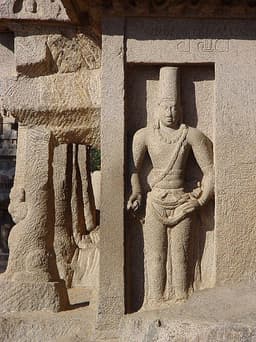
Narasimhavarman I
Emperor · Medieval
63.9Total
Basic Information
Born
1192
630
Died
1259
668
Era
Medieval
Medieval
Nationality
Korea
India
Occupation
Emperor
Emperor
Civilization
Eastern
Indian
Score Comparison
Military (10%)
47.5
82.0
Political (20%)
35.1
72.0
Influence (20%)
54.9
55.0
Legacy (20%)
48.3
55.0
Leadership (15%)
62.2
72.0
Strategy (15%)
50.0
66.3
TOTAL
50.1
63.9
Gojong of Goryeo — Complete Timeline
1231 AD
First Mongol invasion of GoryeoWar
Mongol forces under General Sartaq invaded Goryeo, capturing Kaesong and forcing King Gojong to flee to Ganghwa Island. The invasion devastated the countryside and led to a tributary agreement that was soon broken.
Mongol InvasionWarGoryeo
Impact: regionaldestructive
1232 AD
Relocation of the court to Ganghwa IslandPolitical Action◆ Major
King Gojong moved the royal court and government to Ganghwa Island to resist Mongol demands for submission. The island's natural defenses allowed Goryeo to continue resistance for nearly 30 years.
Capital MoveResistanceGoryeo
Impact: national
1251 AD
Compilation of the Tripitaka KoreanaCultural◆ Major
Under Gojong's patronage, the Buddhist canon was carved onto over 80,000 woodblocks to invoke divine protection against the Mongols. The Tripitaka Koreana remains one of the most complete and accurate versions of the Buddhist scriptures.
Buddhist CanonWoodblocksGoryeo
Impact: globalconstructive
1259 AD
Submission to the Mongol EmpirePolitical Action
After decades of war, King Gojong agreed to submit to the Mongol Empire, sending his son (future King Wonjong) as a hostage. The peace treaty ended the invasions but made Goryeo a vassal state of the Mongols.
SubmissionVassalageMongol Empire
Impact: regionaltragic
Narasimhavarman I — Complete Timeline
640 AD
Patronage of the Mamallapuram Sculpture WorkshopsCultural
Narasimhavarman I established extensive sculpture workshops at Mamallapuram, producing masterpieces like the 'Descent of the Ganges' bas-relief. This patronage made Mamallapuram a center of art and architecture, influencing South Indian temple art.
Art PatronageSculpturePallava Culture
Impact: regionalconstructive
642 AD
Destruction of Vatapi (Badami)War◆ Major
Narasimhavarman I invaded the Chalukya capital of Vatapi (Badami) and destroyed it, avenging his father's defeat. This victory established Pallava dominance over the Chalukyas and earned him the title 'Mamalla' (great wrestler).
Pallava-Chalukya WarMilitary VictoryCapital Destruction
Impact: regionaldestructive
650 AD
Construction of the Pancha Rathas at MamallapuramCultural◆ Major
Narasimhavarman I commissioned the Pancha Rathas, five monolithic rock-cut temples at Mamallapuram, each carved from a single boulder. These structures represent different architectural styles and are a UNESCO World Heritage site, showcasing Pallava art.
Rock-cut ArchitecturePallava ArtUNESCO Heritage
Impact: regionalconstructive
660 AD
Naval Expedition to Sri LankaWar◆ Major
Narasimhavarman I sent a naval expedition to Sri Lanka to support the deposed king Manavamma against the usurper. The Pallava fleet helped restore Manavamma to the throne, demonstrating Pallava naval power and influence in the Indian Ocean.
Naval ExpeditionSri LankaPallava Influence
Impact: regional
This comparison has not been analyzed yet.
One-time AI generation (~1 minute). Scores and timeline are already available below.
Rankings
🥇
Narasimhavarman ILeader
Mil: 82.0Pol: 72.0Inf: 55.0
63.9
🥈
Gojong of Goryeo
Mil: 47.5Pol: 35.1Inf: 54.9
50.1
+13.8 behind
How This Comparison Works
Algorithm
Each figure is scored on 6 dimensions (0—100 scale) based on structured historical data: Military (10%), Political (20%), Influence (20%), Legacy (20%), Leadership (15%), Strategy (15%). The weighted total produces the final ranking.
Data Sources
Scores are computed from structured sub-indicators in the database. Scale factors adjust for era (Ancient ×0.85, Modern ×1.0) and civilization size (Eastern ×1.05, Other ×0.80) to account for differences in population and military scale.
Maximum 3 Figures
Comparisons are limited to 2—3 figures to ensure readability and statistical meaningfulness.
Error Margins
±5 points per dimension — Sub-scores are derived from historical records with inherent uncertainty. Two figures within 5 points on a dimension should be considered roughly equivalent in that area.
Total Score Accuracy
±3 points overall — The weighted combination of 6 dimensions produces a total score with approximately ±3 points of uncertainty. Differences of less than 3 points are not statistically significant— the figures are effectively tied.
Known Limitations
- Historical records are incomplete and uneven across civilizations
- Figures from oral-tradition societies may be underrepresented
- Occupation labels can misclassify multi-role figures
- Scores measure capability and impact, not moral character
- Quantitative scoring is a comparison tool, not absolute truth
Capability Radar
Military (10%) — Battles & Warfare
Battles
40
75
Win Rate
20
80
Expansion
10
70
Political (20%) — Governance & Reform
Reform
30
68
Diplomacy
35
72
Economy
25
65
Influence (20%) — Cultural & Global Reach
Cultural
30
75
Global
30
55
Legacy (20%) — Historical Impact
Historical
50
72
Longevity
40
68
Leadership (15%) — Power & Stability
Tenure
60
70
Stability
20
70
Strategy (15%) — Tactics & Innovation
Strategy
25
72
Tactics
30
78
Reform
15
65
Similar Comparisons
Comments & Discussion
No comments yet. Be the first to share your thoughts!