Loading...
Gisco of Carthage vs Wei Yan
Wei Yan leads by 3.4 pts · 2 figures compared
…

Gisco of Carthage
General · Ancient
41.8Total
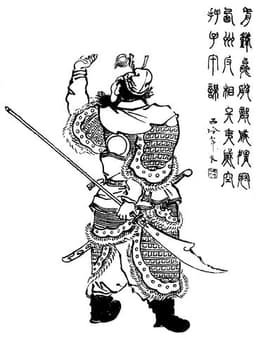
Wei Yan
General · Ancient
45.2Total
Basic Information
Born
-240
175
Died
-202
234
Era
Ancient
Ancient
Nationality
Carthage
China
Occupation
General
General
Civilization
Western
Eastern
Score Comparison
Military (10%)
50.0
52.5
Political (20%)
35.0
35.0
Influence (20%)
45.5
48.6
Legacy (20%)
34.2
42.5
Leadership (15%)
51.7
46.3
Strategy (15%)
38.6
50.0
TOTAL
41.8
45.2
Gisco of Carthage — Complete Timeline
203 BC
Battle of the Great PlainsWar◆ Major
Gisco commanded the Carthaginian army at the Battle of the Great Plains in North Africa. Scipio Africanus's Roman army defeated Gisco's forces, forcing Carthage to recall Hannibal from Italy and leading to the end of the Second Punic War.
Second Punic WarBattleCarthaginian Defeat
Impact: regional
Wei Yan — Complete Timeline
219 AD
Wei Yan's Appointment as Governor of HanzhongPolitical Action◆ Major
After Liu Bei conquered Hanzhong, he appointed Wei Yan as the governor of this strategic region, bypassing the more senior Zhang Fei. Wei Yan successfully defended Hanzhong against Wei attacks for years, proving his competence.
AppointmentDefenseHanzhong
Impact: regionalconstructive
228 AD
Wei Yan's Northern Expeditions under Zhuge LiangWar◆ Major
Wei Yan served as a frontline commander in Zhuge Liang's Northern Expeditions against Wei. He proposed the risky 'Ziwu Valley' plan to attack Chang'an directly, but Zhuge Liang rejected it. Wei Yan's forces achieved several tactical victories.
ExpeditionMilitary CampaignStrategy
Impact: regional
234 AD
Wei Yan's Rebellion and DeathPolitical Action◆ Major
After Zhuge Liang's death, Wei Yan clashed with the chief of staff Yang Yi over command. Wei Yan burned the retreat route and was accused of rebellion. He was defeated, captured, and executed by Ma Dai. The historical accuracy of his 'rebellion' is debated.
RebellionExecutionPower Struggle
Impact: nationaltragic
Expert Analysis
Origins
Gisco of Carthage emerged from the aristocratic military tradition of Carthage, a powerful maritime empire in the western Mediterranean. Born into a noble family, likely in the late 3rd century BCE, Gisco's early life was shaped by Carthage's ongoing struggle with Rome during the Second Punic War. His formative experiences included serving under the Barcid family, though specific details of his youth are scarce. In contrast, Wei Yan was born in the late 2nd century CE in the late Eastern Han dynasty, a period of turmoil in China. He rose from obscurity, possibly from the commoner class, and joined the warlord Liu Bei's forces. Wei Yan's early military career was marked by his martial prowess and loyalty, which caught Liu Bei's attention.
Rise to Power
Gisco's rise came during the later stages of the Second Punic War. After Hannibal's invasion of Italy, Carthage sent reinforcements to Spain and then to North Africa. Gisco was appointed to command the Carthaginian army in North Africa around 203 BCE, facing the Roman general Scipio Africanus. His key turning point was the Battle of the Great Plains, where his forces were decisively defeated. Wei Yan's rise was more meteoric. In 219 CE, after Liu Bei conquered Hanzhong, he appointed Wei Yan as governor of this strategic region, bypassing the more senior Zhang Fei. This appointment demonstrated Liu Bei's trust in Wei Yan's abilities. Wei Yan successfully defended Hanzhong against Cao Wei's forces, solidifying his reputation. He later served as a frontline commander under Zhuge Liang during the Northern Expeditions.
Leadership & Governance
Gisco's leadership style reflected traditional Carthaginian military practices, relying on mercenary armies and phalanx formations. His governance approach was typical of Carthaginian commanders, prioritizing loyalty through pay and promises. However, his defeat at the Great Plains (scoring 38.6 in strategy) highlighted his inability to adapt to Scipio's flexible tactics. Wei Yan, scoring 50.0 in strategy, proposed innovative but risky plans, such as the Ziwu Valley attack on Chang'an. His leadership was characterized by boldness and a strong sense of honor, but he struggled with political maneuvering, as seen in his conflict with Yang Yi. Wei Yan's governance of Hanzhong was effective, maintaining stability and defense against Wei.
Triumph & Tragedy
Gisco's greatest success was being entrusted with a major command against Rome, but his tragedy was his decisive defeat at the Great Plains, which led to Carthage's collapse in Africa. He failed to coordinate with Numidian allies and was outmaneuvered by Scipio. Wei Yan's triumphs included his successful defense of Hanzhong and his role in multiple Northern Expeditions, where he scored 52.5 in military. His tragedy came after Zhuge Liang's death in 234 CE: he clashed with Yang Yi, burned the retreat route, and was accused of rebellion, leading to his execution. Historians debate whether he truly rebelled or was a victim of political intrigue.
Character & Destiny
Gisco was a competent but unexceptional general, lacking the tactical genius of Scipio. His character was typical of Carthaginian nobility, but he could not overcome Roman discipline. Wei Yan was bold, proud, and impulsive. His refusal to submit to Yang Yi sealed his fate. Chinese historian Chen Shou noted that Wei Yan was 'valiant but lacked strategy,' a judgment that aligns with his scores (leadership 46.3). His character led to his tragic end, whereas Gisco's mediocrity led to obscurity.
Legacy
Gisco's legacy is minimal; he is remembered only as the commander defeated at the Great Plains. His defeat contributed to Carthage's loss of the war, but his personal impact is negligible. Wei Yan's legacy is more complex. In Chinese history, he is remembered as a capable but rebellious general. His story is debated in historical circles, and he appears in the novel 'Romance of the Three Kingdoms' as a tragic figure. Wei Yan's scores (total 45.2) reflect his greater influence compared to Gisco (41.8).
Conclusion
Wei Yan had a greater impact than Gisco of Carthage. Although both were defeated, Wei Yan's role in Shu Han's military campaigns and the controversy surrounding his death have kept his memory alive. Gisco's defeat was a footnote in Carthage's fall, while Wei Yan's story raises questions about loyalty and command. With a total score of 45.2 vs 41.8, Wei Yan edges out Gisco in military, influence, and legacy. The clear position is that Wei Yan, despite his flaws, was a more significant historical figure.
Rankings
🥇
Wei YanLeader
Mil: 52.5Pol: 35.0Inf: 48.6
45.2
🥈
Gisco of Carthage
Mil: 50.0Pol: 35.0Inf: 45.5
41.8
+3.4 behind
How This Comparison Works
Algorithm
Each figure is scored on 6 dimensions (0—100 scale) based on structured historical data: Military (10%), Political (20%), Influence (20%), Legacy (20%), Leadership (15%), Strategy (15%). The weighted total produces the final ranking.
Data Sources
Scores are computed from structured sub-indicators in the database. Scale factors adjust for era (Ancient ×0.85, Modern ×1.0) and civilization size (Eastern ×1.05, Other ×0.80) to account for differences in population and military scale.
Maximum 3 Figures
Comparisons are limited to 2—3 figures to ensure readability and statistical meaningfulness.
Error Margins
±5 points per dimension — Sub-scores are derived from historical records with inherent uncertainty. Two figures within 5 points on a dimension should be considered roughly equivalent in that area.
Total Score Accuracy
±3 points overall — The weighted combination of 6 dimensions produces a total score with approximately ±3 points of uncertainty. Differences of less than 3 points are not statistically significant— the figures are effectively tied.
Known Limitations
- Historical records are incomplete and uneven across civilizations
- Figures from oral-tradition societies may be underrepresented
- Occupation labels can misclassify multi-role figures
- Scores measure capability and impact, not moral character
- Quantitative scoring is a comparison tool, not absolute truth
Capability Radar
Military (10%) — Battles & Warfare
Battles
10
45
Win Rate
10
40
Expansion
5
30
Political (20%) — Governance & Reform
Reform
5
10
Diplomacy
5
20
Economy
5
10
Influence (20%) — Cultural & Global Reach
Cultural
5
30
Global
5
10
Legacy (20%) — Historical Impact
Historical
10
35
Longevity
5
30
Leadership (15%) — Power & Stability
Tenure
5
30
Stability
5
15
Strategy (15%) — Tactics & Innovation
Strategy
10
50
Tactics
15
55
Reform
5
20
Similar Comparisons
Comments & Discussion
No comments yet. Be the first to share your thoughts!